North of 61 and standing by on channel 69

It’s been 18 days on an Arctic island and just over a month above 60°North. Team Shrub has faced every element, from sub-zero temperatures to Arctic heat, storms, bugs and wildlife. But, what brings us North? In this blog post, we will introduce you to our Team Shrub crew, give you insight into this year’s research, and bring you along on our adventures so far in the field season.

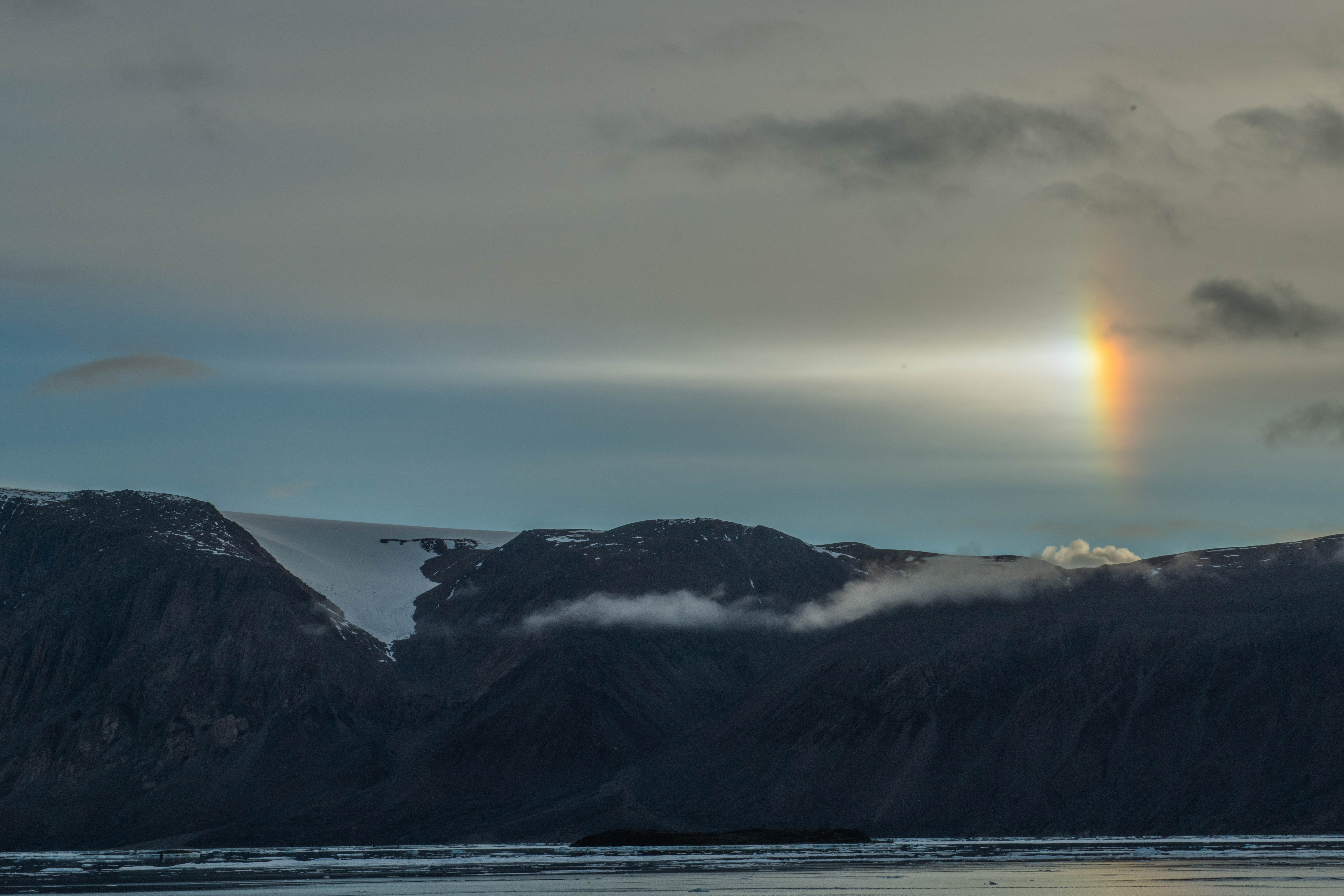
Midnight sun in Kluane. Photo by Alex Beauchemin (left). Midnight sun on Qikiqtaruk. Photo by Isla Myers-Smith (right).

As the North continues to experience a rapidly changing climate, extreme weather events are predicted to increase in frequency, fundamentally altering the lives of plants, animals and ultimately people. Team Shrub is working to understand how tundra ecosystems are responding to these changes. This summer’s research will help us figure out how the above and below-ground responses of tundra plant communities ripple across food webs to insects, birds, and mammals, and how Arctic heatwaves reshape permafrost landscapes. What will a later summer – in contrast to recent years -mean for the timing of plant and animal life here on Qikiqtaruk and down in Kluane? Only time will tell. Stay tuned to find out.
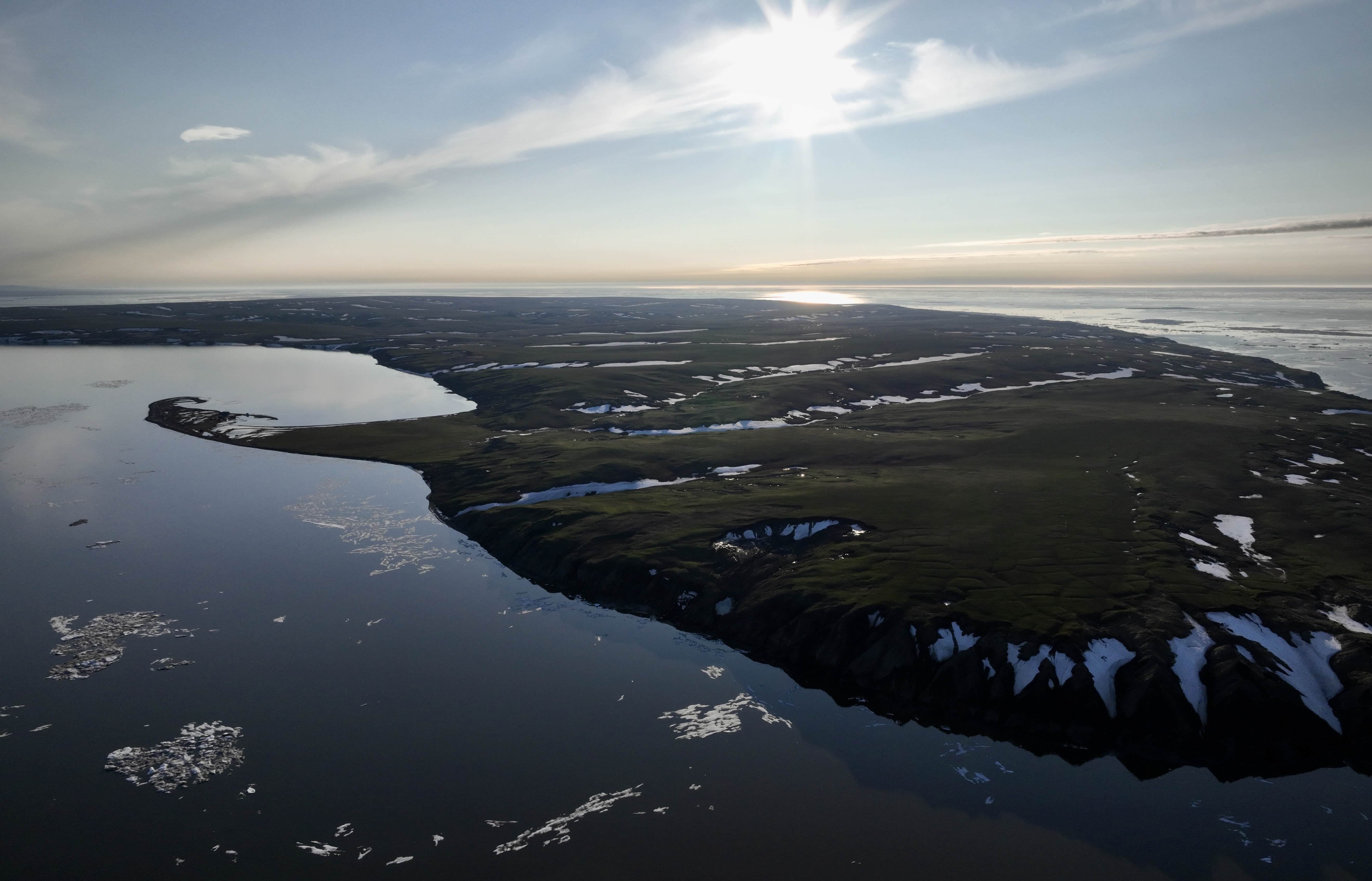
Qikiqtaruk – Herschel Island from the air on a sunny evening in late June. Photo by Ciara Norton.

This summer, we’re launching the fieldwork of the Canada Excellence Research Chair on ‘The Global Ecology of Northern Ecosystems’, continuing our work on the NERC TundraTime project, the RESILIENCE Synergy grant, the Porcupine Caribou Knowledge Hub Project, and beginning the field asset collection for National Geographic Society Funded ‘Communicating Arctic climate change impacts using immersive virtual reality’.

This past year saw the transition of Team Shrub from the University of Edinburgh to the University of British Columbia. Led by Isla, this year’s field crew consists of three undergraduate students, three recent graduates and two masters students who will join the team in July. With many in Team Shrub new to the Canadian Territories and the Arctic, the extended hours of summer daylight and cooler temperatures of Northern life are a first-in-a-lifetime experience. Once again, this year’s field crew is split between Team Southern Shrub, in the Kluane Lake Region, and Team Northern Shrub, on Qikiqtaruk – Herschel Island. 
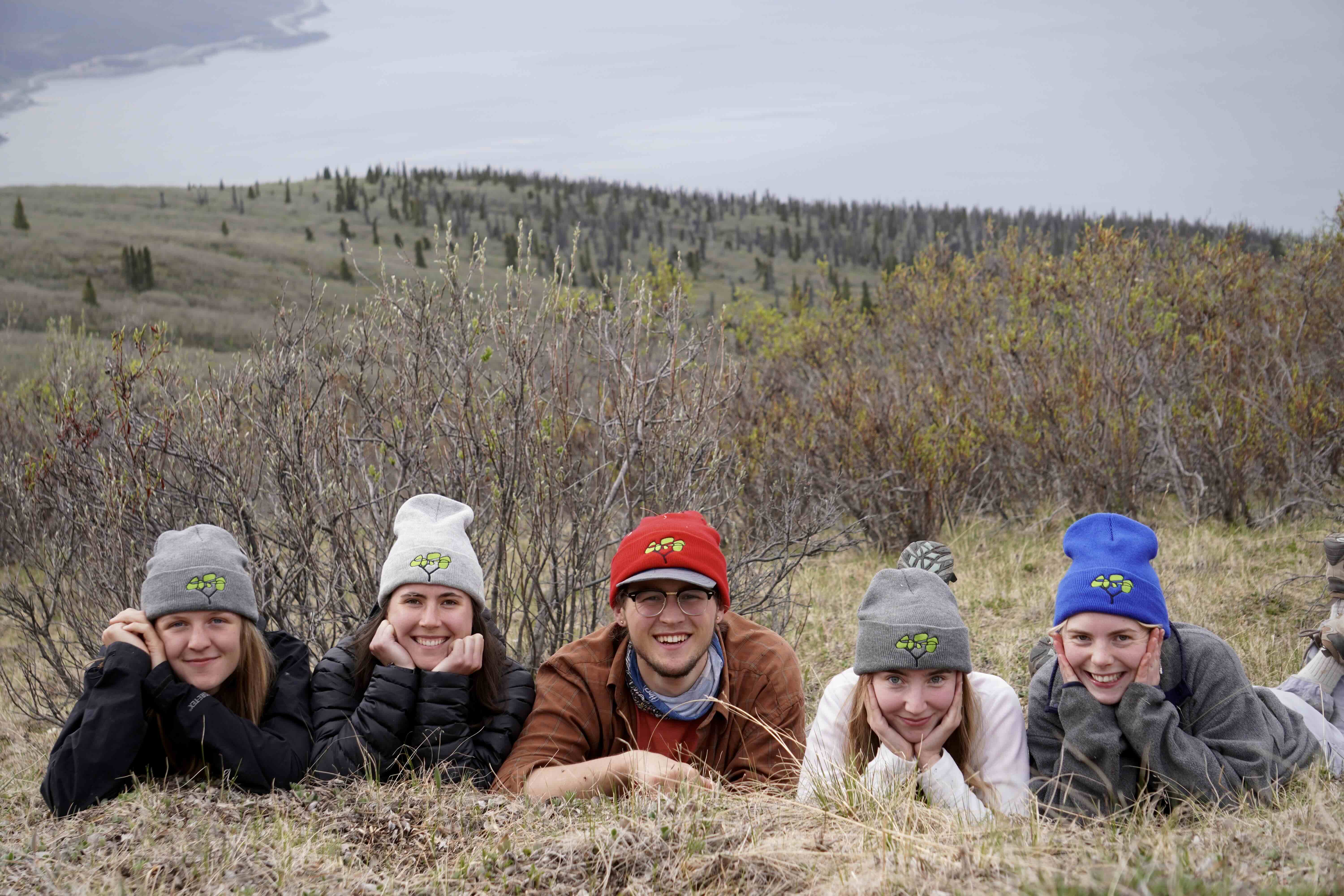
Group photo of everyone on the Kluane Plateau in early June except Alex (the photographer) and Isla (back at camp). Photo by Alex Beauchemin.

Tundra Time

Capturing tundra phenology above and below ground in a warming Tundra

This is the final field season of the Tundra Time project. This project takes place at both of our field sites on either side of the Yukon Territory. In Kluane and on Qikiqtaruk, we’ve got the phenocams all set up to measure the timing of plant growth across the summer. And, in the coming days we will be removing the first of this summer’s in-growth cores to measure the timing of root growth below ground. With two teams working at two sites, our work on this project can progress in tandem. If you want to get a sneak peak of the results of this project, check out Elise’s (Dr. Elise Gallois, that is) new preprint ‘Tundra vegetation community, not microclimate, controls asynchrony of above and belowground phenology’.

Park Rangers Gina and Phillip collecting phenology data on the long-term monitoring transect. Photo by Isla Myers-Smith.

KLUANE LAKE – Team Southern Shrub

Team Southern Shrub consists of Anya and Lauren, both recent UBC Environmental Science and Sustainability graduates. Before joining the team, Anya has three seasons of tundra field experience under her belt and Lauren has done participated in climate change research and advocacy. 

At Kluane Lake, the common garden experiment continues for an eleventh year. Common garden experiments involve collecting plant individuals from geographically differentiated populations and growing them together under shared conditions. Set up by Team Shrub in 2013, the Kluane Lake common garden is used to determine the growth rates of three key willow species driving alpine and Arctic shrubification (Arctic willow – Salix arctica, Richard’s willow – Salix richardsonii and Diamond Leaf willow – Salix pulchra) under warmer climate conditions than where their source populations were located. 

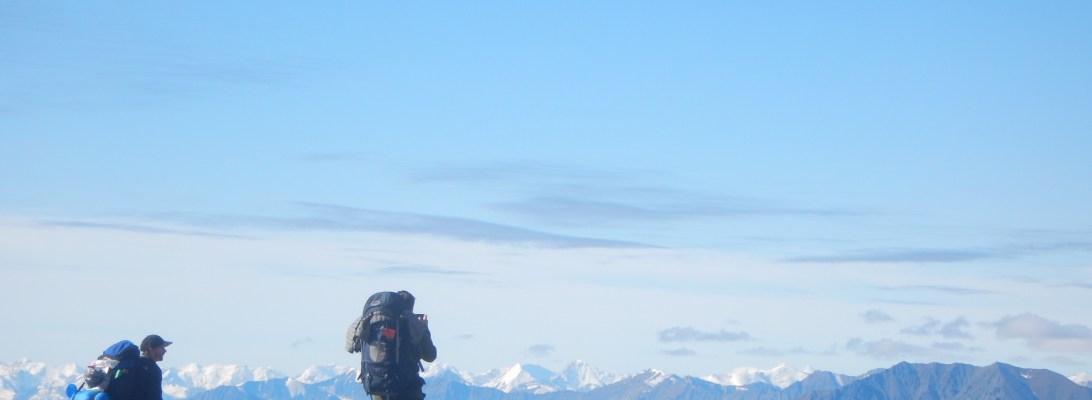
Team Shrub on the Kluane Plateau. Photo by Ciara Norton (left). Anya and Lauren on the top of the Plateau. Photo by Lauren Moody (right).

Arctic shrubs from Qikiqtaruk – Herschel Island (70°N) and alpine shrubs from the Kluane Plateau (61°N) were transplanted into the warmer environment of the Kluane Lake Region, well within the boreal forest – an environment which experiences summer temperatures 3-5ºC warmer than either source environment. The common garden helps inform predictions of shrub growth and phenology as the climate warms. Do willows grow longer and larger under warmer conditions? Or is willow growth restricted by genetic adaptation to local environments?

Willows across the growing season in the Common Garden Experiment in 2021. Video by Team Shrub.

On the Kluane Plateau, we are studying patterns of seed predation along an elevational gradient and contributing to a cross-continental study spanning the Americas. How do patterns of seed predation vary with elevation and latitude? We’re carrying out the protocols at the northernmost site in this experiment to find out. Preliminary findings confirm that seeds are eaten to a greater extent at lower latitudes, indicating greater pressures on plant reproduction towards the equator versus at higher latitudes.

The Kluane Range Mountains in the Southern Yukon. Photo by Elias Bowman.

PikARU Project

Monitoring Pika Abundance with Autonomous Recording Units

Undergraduate thesis student Charlotte will be joining the Arctic crew for the first Qikiqtaruk trip before migrating to Kluane for the remainder of the field season. New this year for the Kluane team is the PikARU Project, led by Charlotte in collaboration with the Environmental Sustainability division of the Government of Yukon. Collared pikas (Ochotona collaris) are small mammals that have been designated a species of Special Concern by COSEWIC due to their sensitivity to environmental change. 

Pikas are the inspiration for Pikachu, hence the project title “PikARU.” Shrubification may pose risks to the species because it has the potential to remove their preferred forage plants – forbs and graminoids – but the population-level response of pikas to vegetation change is unknown. Our crew will use autonomous recording units (ARUs) to study collared pikas in the Southern and Central Yukon, capturing the small mammal’s “meep”-sounding vocalizations. This will give us an idea of the abundance of pikas at each of our research sites. Could ARUs be a key tool for monitoring pika population health over time as they experience the effects of a changing environment?

A collared pika sits on a talus rock in the Southern Yukon. Photo by Cameron Eckert.

QIKIQTARUK – Team Northern Shrub

In the Arctic, it’s been a chilly start to the 2024 field season. After the exceptionally warm summer of 2023 in the western Arctic, spring of 2024 was marked by the highest June sea ice cover along the North Slope of the Yukon in over two decades. We’ve been surrounded by sea ice for the first weeks of our field season. The cooler temperatures are atypical, and spring is around three weeks later than in recent years.

The sea ice surrounding Qikiqtaruk in June. Videography by Ciara Norton.

Up in the Arctic, Team Northern Shrub is continuing its monitoring of tundra plant responses to climate change. We’re using long-term plots to monitor changes to plant traits, phenology, and community structure. We’re also continuing the upkeep of our muskox-beloved phenocams. In recent days, the temperatures have warmed. The snow has been melting, the sea ice is moving offshore and summer has arrived. To keep up with the changing seasons, we’ve been running around the tundra capturing the timing of plant growth and pollinator and bird activity with wildlife cams, autonomous recording units and phenocams.

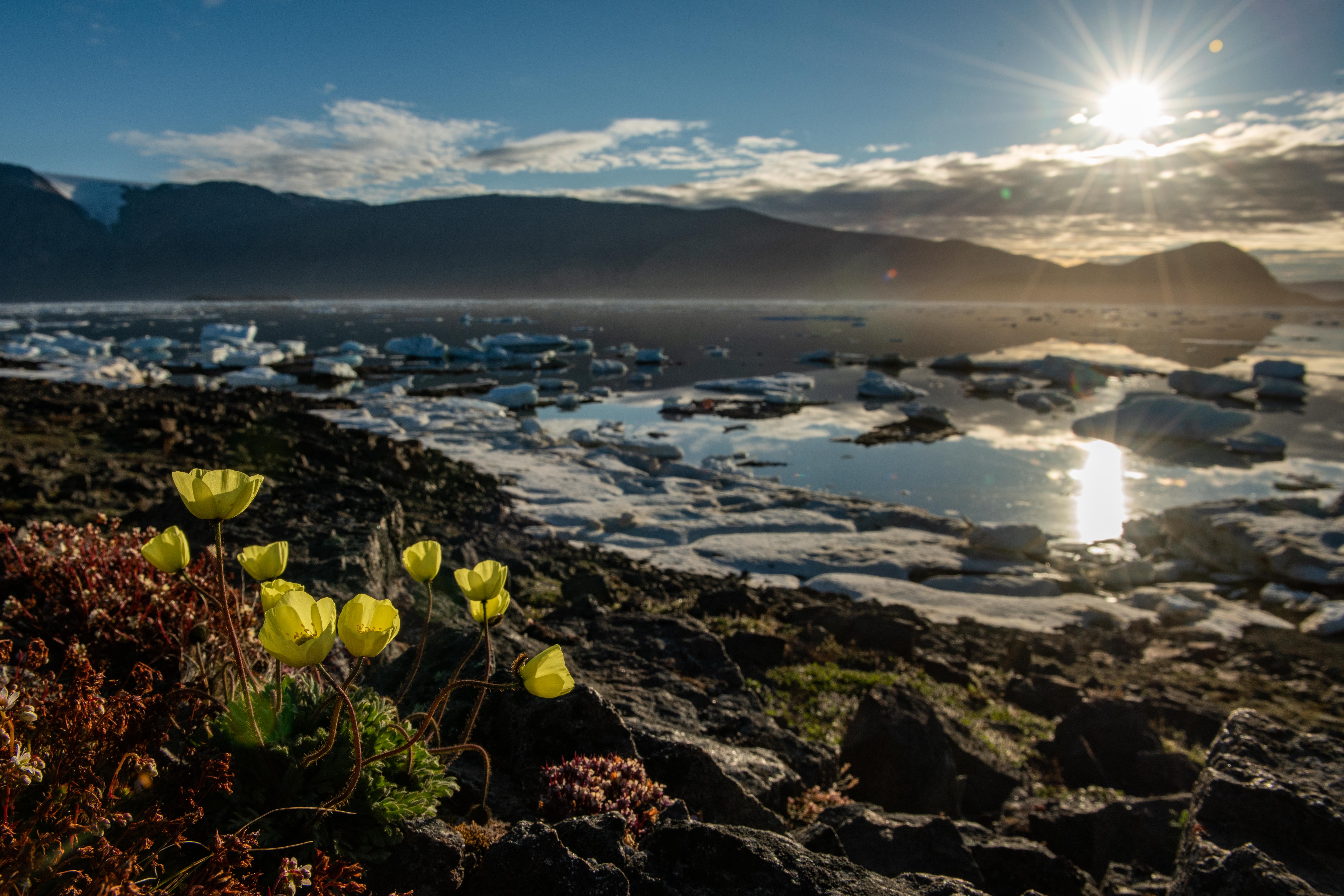
Here on Qikiqtaruk, with the delayed summer, early season plants are only just starting to flower. These Arctic gems are rare sights, often having already completed their life cycle by the time Team Shrub arrives. Being here for the very start of spring means that this year, we can capture the full summer cycles of flowering plants, pollinators and birds. Will the remainder of the growing season be pushed back due to the later spring, or will plant phenology catch up? Only time will tell.

A pollinator camera aka TURTLE, or Tetrapodal Underside Recorder-Trailcam Linkages for Ecoaccoustics, successfully installed on Qikiqtaruk. Are they muskox proof? We’ll have to wait and see. Photo by Isla Myers-Smith.

Tundra THAW Project

Tundra Terrain Hazards From Arctic Warming

Heat events associated with climate change have led to massive disturbance events in permafrost landscapes. In July of 2023, an extreme heat event on Qikiqtaruk led to the formation of over 700 landslides across the island. These landslides are called active layer detachments (ALDs) and occur when dramatic permafrost thaw triggers the active layer of the tundra to slide downslope. These landslides have left dramatic scars on the landscape spanning across the island. 

East Gully Creek flows out into the ocean in June 2024 on Qikiqtaruk. Photo by Ciara Norton.

Qikiqtaruk is also home to one of the largest retrogressive thaw slumps (RTSs) in the world, another form of mass movement which results from permafrost degradation. The incoming research data coordinator, Ciara, is leading a project that monitors permafrost disturbance across the island, through both mapping the progression of the RTSs and ALDs over the summer and characterizing their morphologies. What drives the occurrence of active layer disturbance events, and how do active layer detachments progress over time? Will the ALDs progress into RTSs?
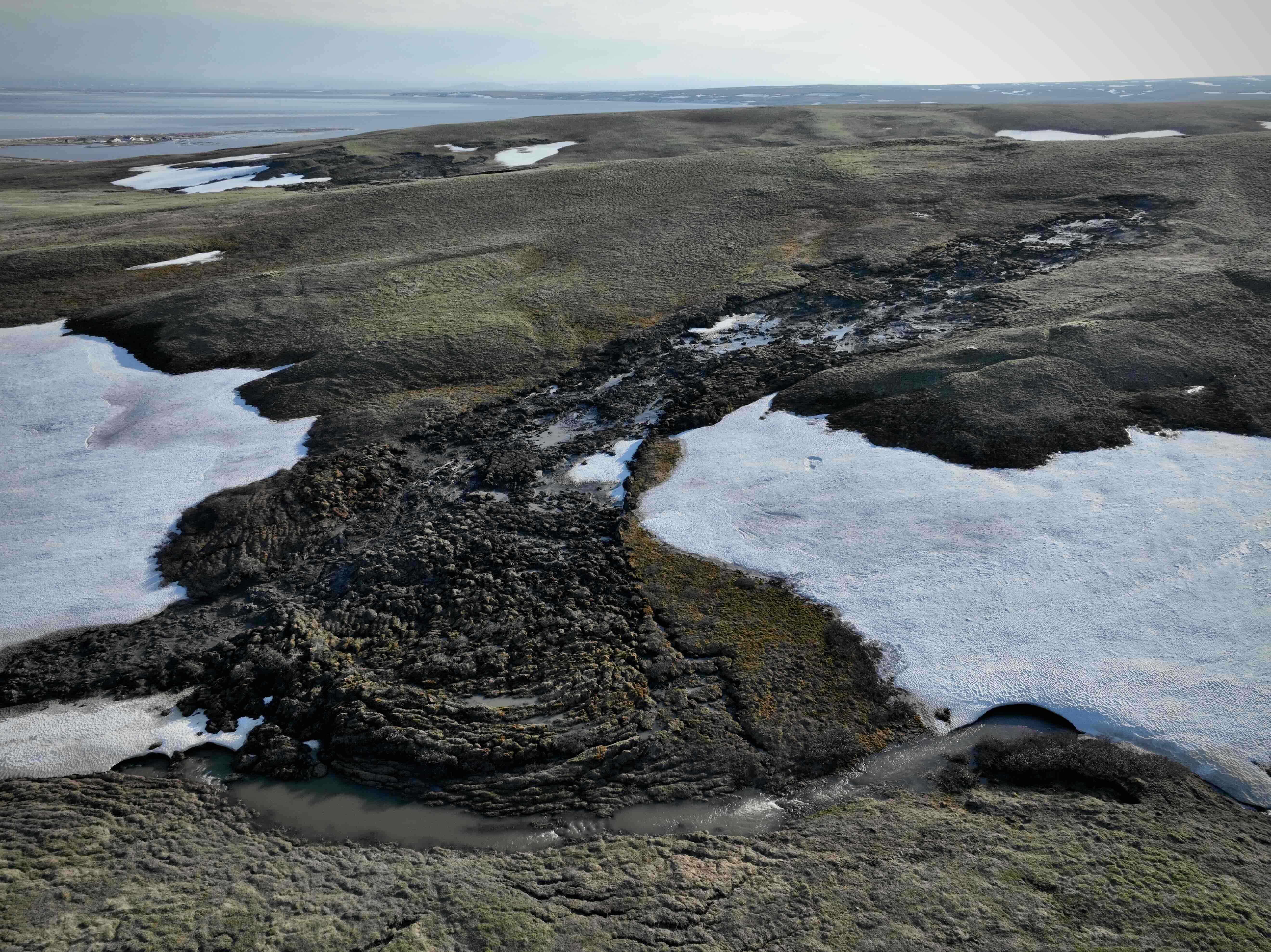
An Active Layer Detachment that formed in August 2023 thaws out of the snow pack in June 2024. Photo Ciara Norton.

Tundra BUZZ Project

Tundra Bumblebee Unoccupied Study of Zoophily Through Zooacoustics

Plant-pollinator interactions are a key part of Arctic food webs. Insect pollinators fertilize plants, allowing them to develop fruits and set seed. Berries feed wildlife, from migratory birds to muskoxen and caribou. Without pollinators, Arctic life would not exist in the way that we know it. 

As tundra plant phenology shifts forward under a warming Arctic, how does pollinator phenology change? Is shrubification reshaping pollinator communities? The Tundra BUZZ Project aims to uncover the workings of Arctic responses to climate change at the insect scale. Undergraduate thesis student Alex will be investigating bumblebee activity and phenology in relation to plant flowering time through the use of ecoacoustics and wildlife cameras.

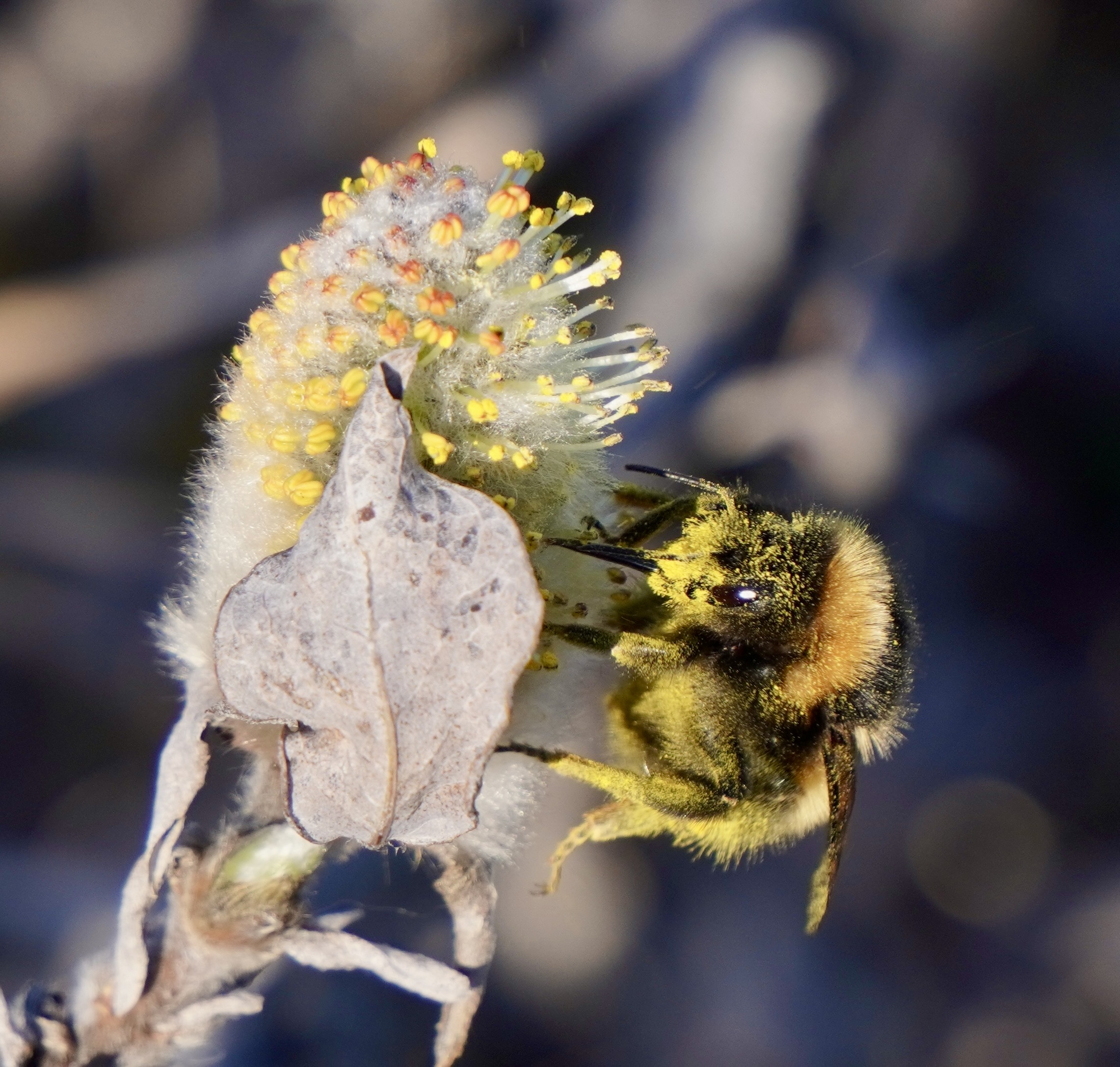
The TURTLE setup used by the Tundra BUZZ experiment and the BANQUISE Project on Qikiqtaruk (left). A bumblebee of the Arctic subgenus Alpinobombus covered in pollen from Salix richardsonii (right). Photos by Alex Beauchemin.

BANQUISE Project

Bird Abundance and Nesting on Qikiqtaruk Under Icey Seasonal Environments

Every year, birds flock to Qikiqtaruk – Herschel Island in the thousands to forage and breed. Climate change impacts which species, how many individuals and when birds are arriving and nesting on the island. Snowmelt date has been documented as a primary driver of bird and plant phenology, while sea ice dynamics also play an important role (see former Team Shrubber Meagan’s research!). 

For birds on Qikiqtaruk, every variable plays just one part in a complicated story determining their life histories. Using historic and modern records, Elias is quantifying direct and indirect impacts of environmental variables on bird abundance and nesting timing. With the addition of audio recorders and wildlife cameras to existing observations within the park, Elias will be able to tease apart how breeding birds are responding to the warming Arctic.

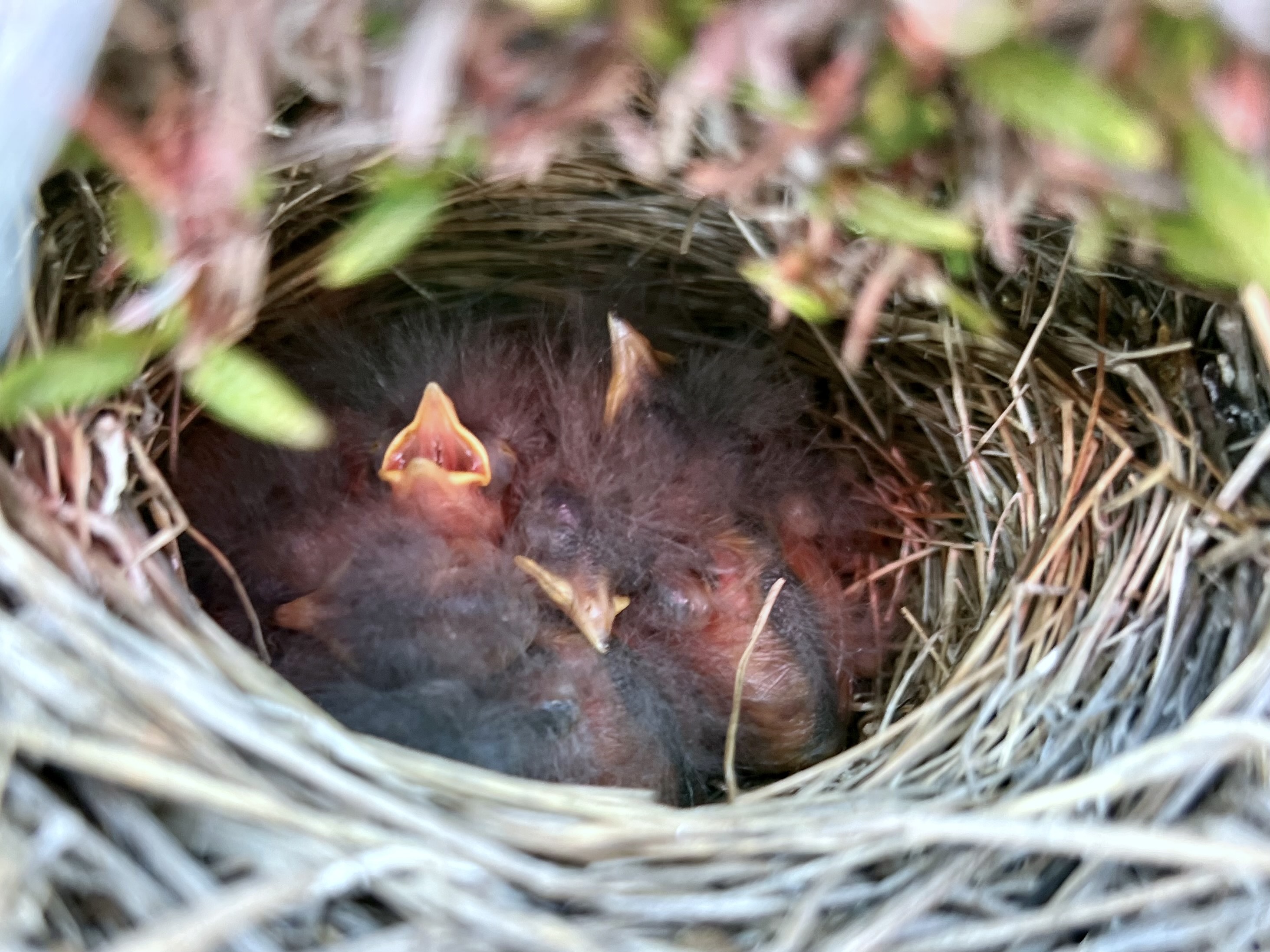
A Lapland Longspur calls in front of an audio recording TURTLE device. Photo by Elias Bowman (left). Savannah sparrow chicks in their nest on Qikiqtaruk – Herschel Island. Photo by Isla Myers-Smith (right).

Masters students Sarah and Micah will be joining the team later in the field season. Sarah will be studying drivers of borealization in Kluane while Micah will be focused on flooding on Qikiqtaruk. Stay tuned for updates on their projects later in the summer.

As we work away on our research, we will also collect imagery, video, sound and 360 visuals to capture this rapidly changing tundra environment. These assets will contribute to the next phase of our National Geographic Society funded project ‘Communicating Arctic climate change impacts using immersive virtual reality’. We’ve recently launched a website for this project, and we’re keen to figure out how best to share Arctic climate change impacts through virtual reality.

The tundra in 3D. These visuals were produced using drone data and animation as a part of the National Geographic Society Meridian Grant ‘Communicating Arctic climate change impacts using immersive virtual reality’. Visuals by Ivar Studios and the project team.

For more information on how climate change is altering Arctic and alpine ecosystems across the Yukon, keep an eye out for more Team Shrub blog posts this summer!

Signal’s House standing by on channel six nine in the Canadian Arctic.

Words by Alex, Charlotte, Elias, Ciara, Anya, Lauren and Isla

Signal’s House, our island home, from the air on a foggy day in June. Photo by Ciara Norton.

Team Shrub Represents at BES

‘Twas the week before Christmas, when all through the planet,
Not a university was stirring, not even a hamlet;

The posters were hung on the poster boards with care,
In hopes that ecologists soon would be there;

The PhD students were nestled all snug in their beds;
While visions of statistical models danced in their heads;

‘Twas the BES Conference, at the end of the year,
This was the conference to bring ecological cheer,

What a week it was – I can tell from the posts,
And for those of us who missed it, we feel it the most,

But the ecology remains, for those that are keen,
In this humble blog post, for all to be seen.

And I hear you exclaim, ere I sit down to write —
“Happy holidays to all, and to all a good night!”

Isla adapts a classic poem

The British Ecological Society Conference has wrapped in Edinburgh and Team Shrub (if not me) was there! Here are some of the photos of the action so that you too can join from afar, if you didn’t make it to BES 2022 yourself.

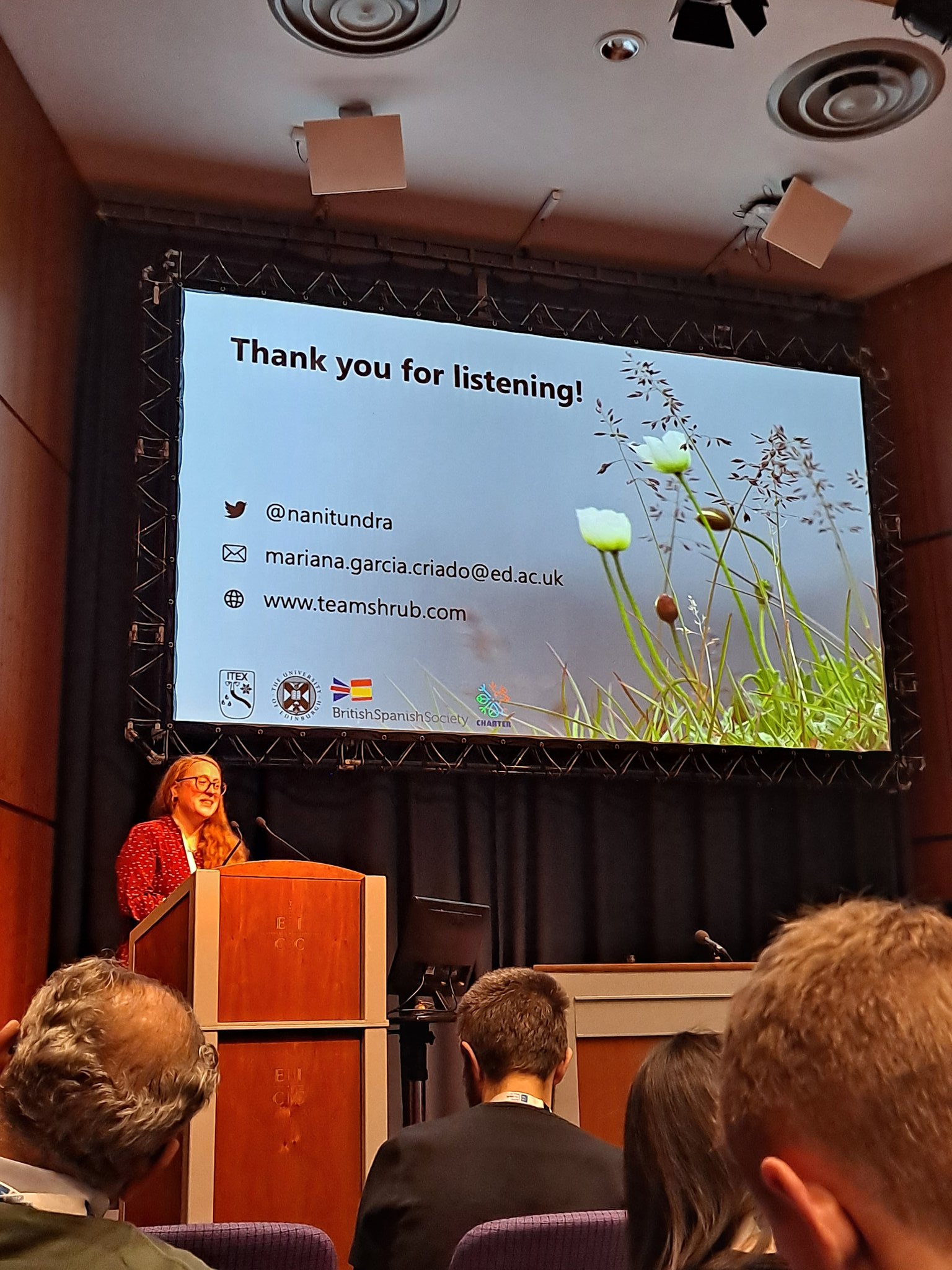
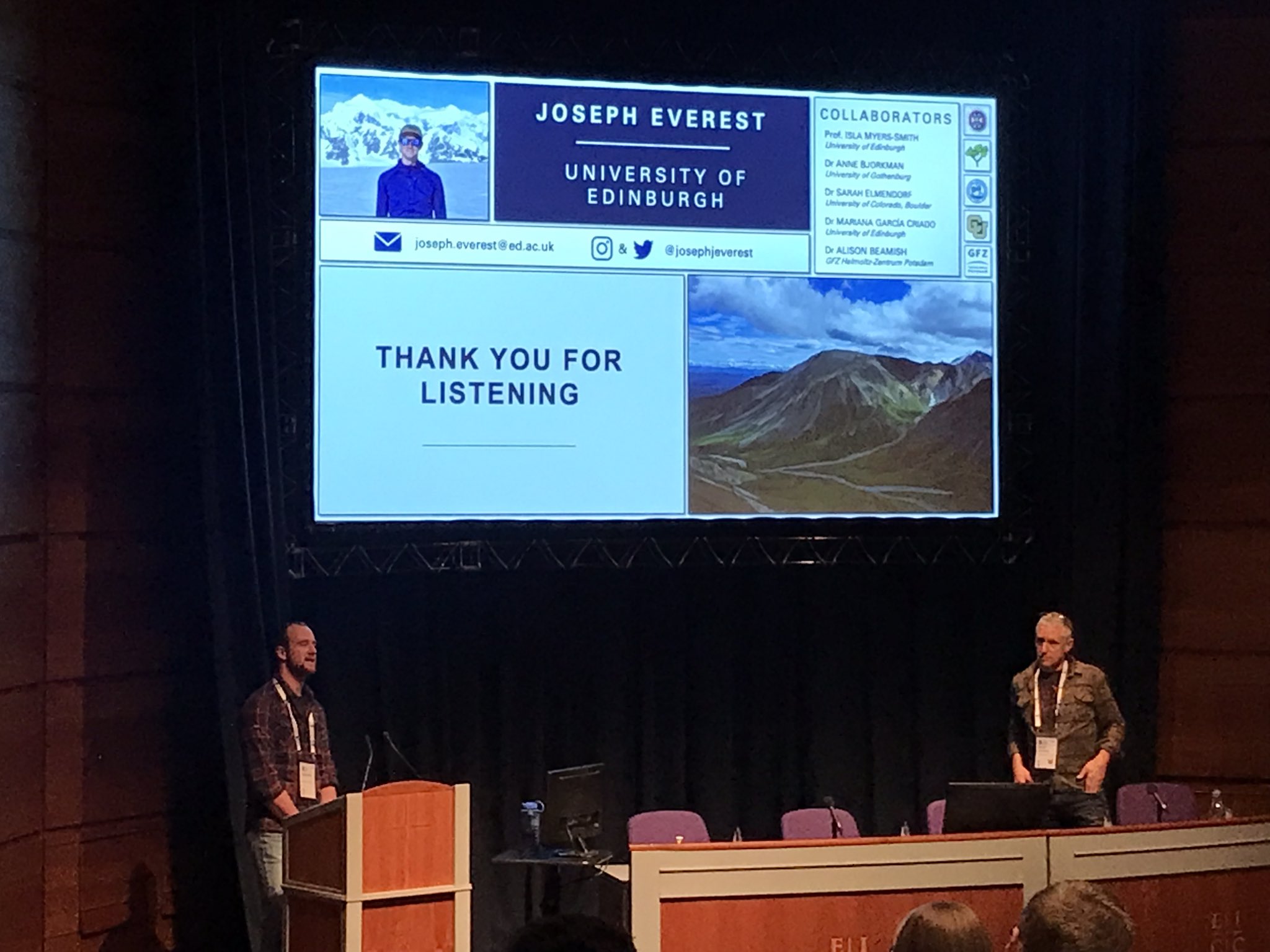
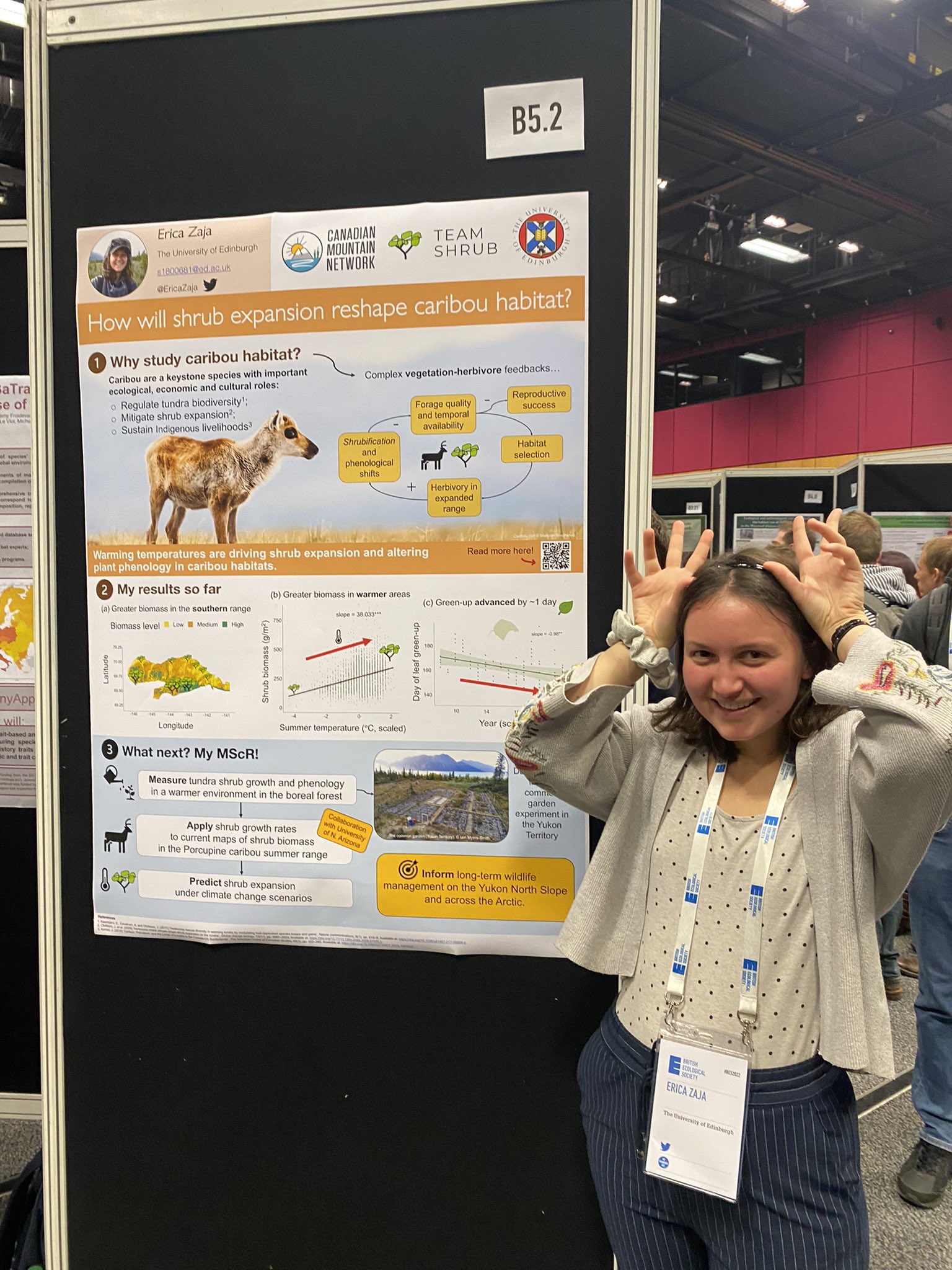
Team Shrub attended BES in style this year with presentations by postdoc Mariana García Criado and PhD student Joseph Everest and former lab member Schmidt Fellow Gergana Daskalova and posters by PhD student Elise Gallois and MSc by research students Erica Zaja and Jiri Subrt. Here is a rundown of the different Team Shrub contributions, so you can catch up.

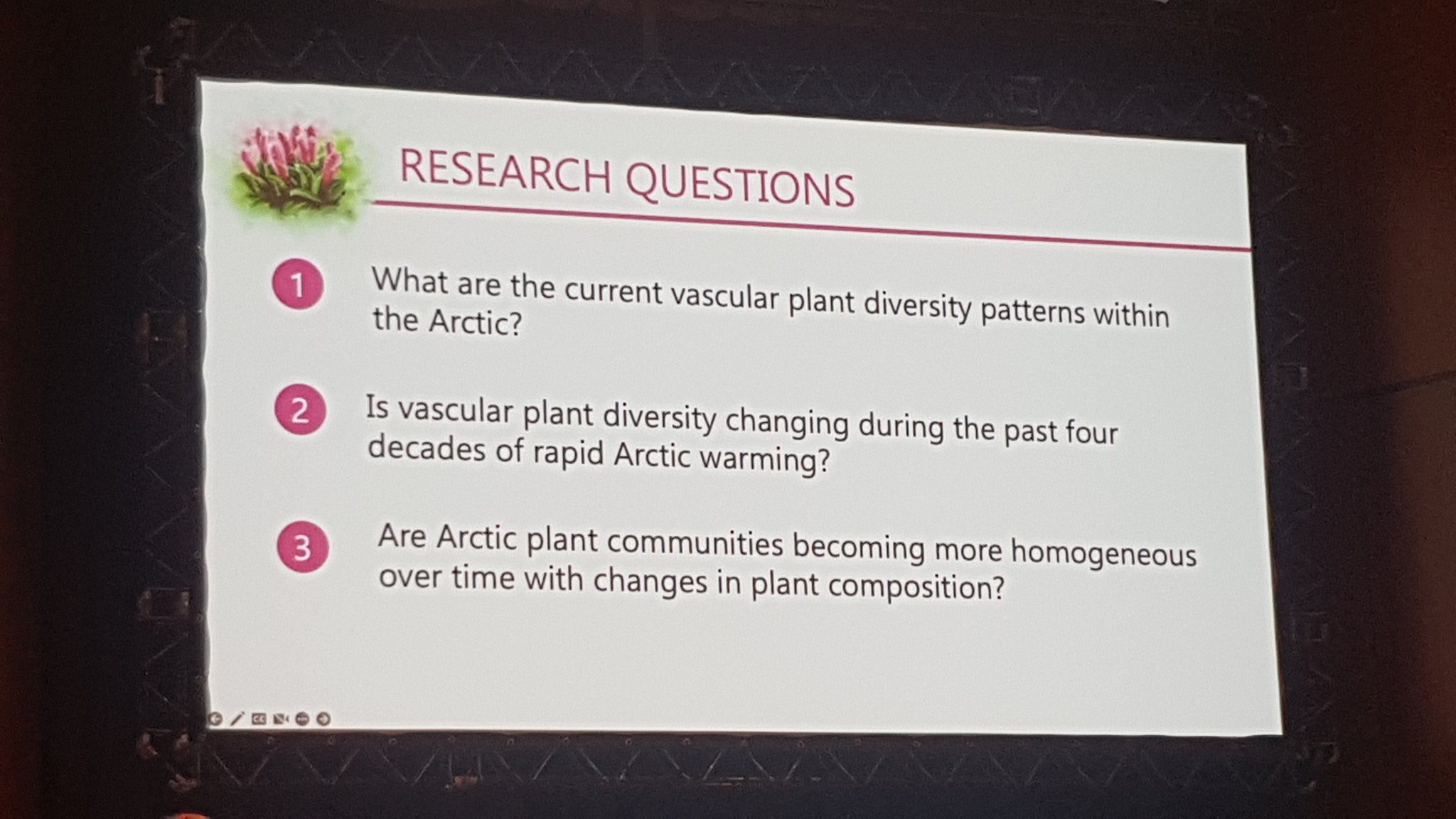
Plant diversity dynamics across temporal and spatial scales in a warming Arctic‘ by Mariana García Criado

Co-authors: Mariana García Criado (University of Edinburgh), Isla Myers-Smith (University of Edinburgh), Anne Bjorkman (University of Gothenburg), Sarah Elmendorf (University of Colorado Boulder), Signe Normand (Aarhus University)

The Arctic is experiencing unprecedented warming rates, and plant communities are responding through abundance, phenology and distribution shifts. However, biodiversity spatial patterns and its direction of change over time remain unquantified. Using a database with 37,452 records of vascular plant composition from 1,327 plots across four decades, we explore how multiple biodiversity axes vary across space and time. We found that Arctic species richness decreases as latitude increases, but overall species richness has not changed over time. Species trajectories were related to climate, with warmer and drier areas experiencing fewer local extinctions. Plant community abundance change was pronounced, and increasing shrub dominance corresponded with extinctions and reduced diversity. However, Arctic plant communities have not homogenized, and are more resilient when they have a diverse and even composition. Overall, our results suggest limited biodiversity change, but indicate early signs of directional biotic changes that could result in Arctic biodiversity tipping points.

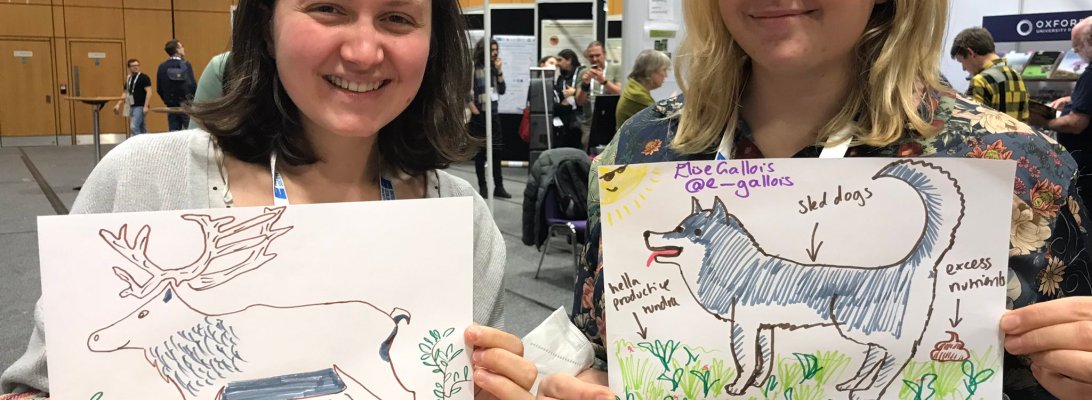
Paws for thought: Impact of dog yards on tundra greening in Svalbard‘ by Elise Gallois

Co-authors: Elise Gallois (University of Edinburgh), Jesamine Bartlett (NINA), Kristine Bakke Westergaard (NTNU), Logan Berner (Northern Arizona University)

Dog-sledding in High Arctic Svalbard is a key tourist attraction, and pony trekking and the keeping of livestock is also in practice in the central areas of the archipelago. Animal husbandry waste disposal practises – particularly those involving the disposal of animal faeces – hugely enrich soils with excess nutrients. Here, we utilise NDVI (normalised difference vegetation index) analysis to explore the impact of both abandoned and contemporary animal husbandry on Svalbard’s tundra. We found that while peak-season greenness was increasing across all of our study sites, the greening signal was enhanced at active dog-yards and historic animal husbandry sites. Across sites, the date of tundra greening has shifted earlier, and the date of plant senescence has shifted slightly later between 1986-2021. Our results suggest an immediate positive impact of nutrient enrichment from animal husbandry on tundra productivity, and a lasting impact of nutrient enrichment at abandoned animal husbandry sites.

This poster comes with it’s own Spotify Playlist – check it out and listen along!

https://open.spotify.com/playlist/6Rmq52EPg3JH2JcH3r7RGb

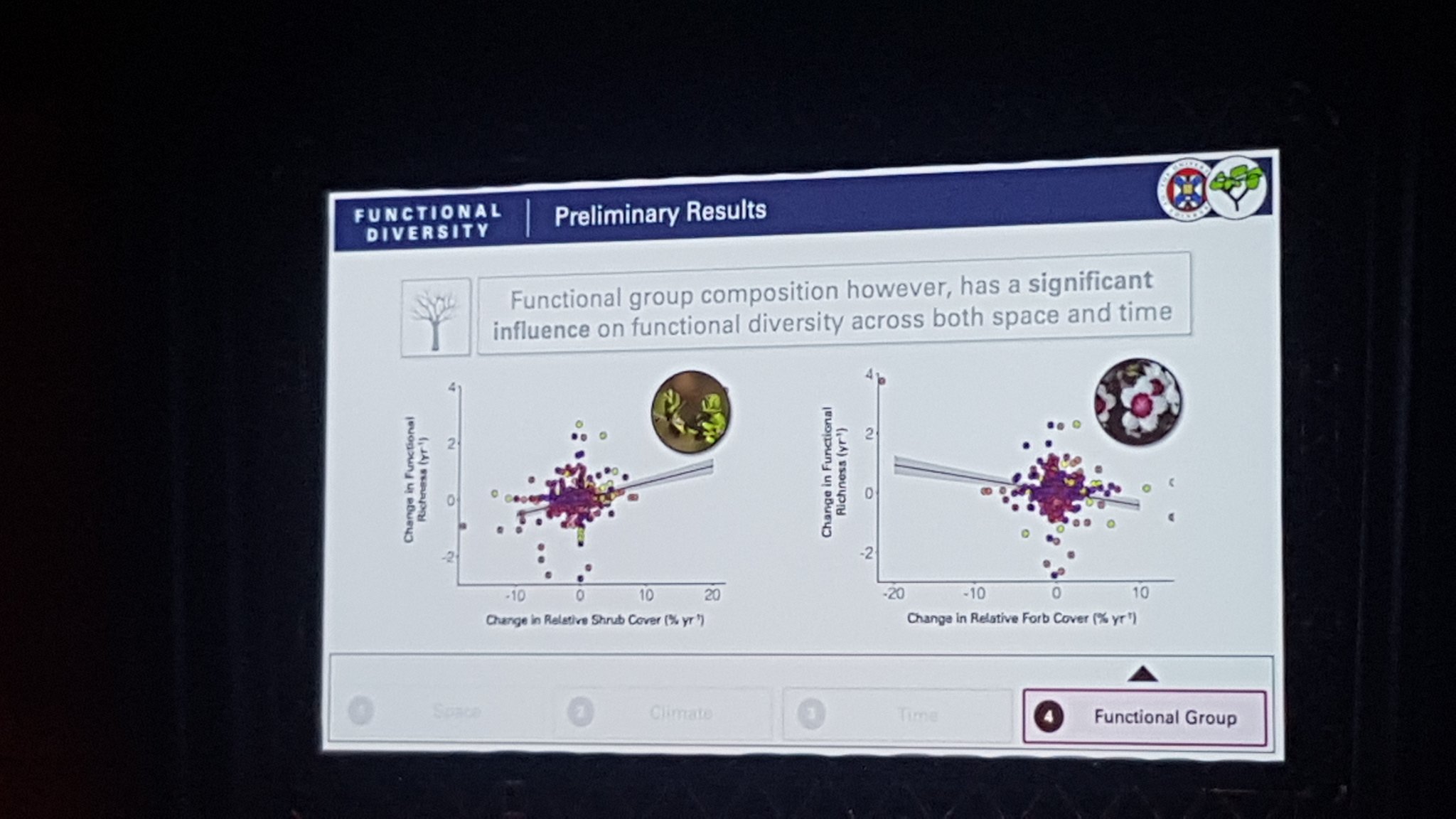
Shrubification not climate is the main driver of tundra functional diversity across space and time‘ by Joseph Everest’

Co-authors: Joseph Everest (University of Edinburgh), Isla Myers-Smith (University of Edinburgh), Anne Bjorkman (University of Gothenburg), Sarah Elmendorf (University of Colorado Boulder), Mariana García Criado (University of Edinburgh)

A tundra-wide vegetation regime shift is underway in response to accelerating Arctic warming. Greening and browning, phenological shifts and functional trait change are relatively well documented, however resulting impacts on ecosystem function remain unclear. Functional diversity encompasses the range, variability and evenness of key functional traits and captures responses in tundra processes and ecosystem functions. We analysed biogeographic patterns and change over time in tundra plant functional diversity across sites over decades of change. We found that trends in species richness and its dominant drivers are not mirrored in functional diversity metrics. Instead, spatial and temporal patterns in plant functional diversity are controlled by the dominance of different functional groups within plots and the variation in key functional traits, such as plant height. Our results suggest that continued tundra compositional change (e.g., shrubification) with warming will drive changes to ecosystem functions despite slower rates of change in tundra plant biodiversity.

How will shrub expansion reshape caribou habitat?’ by Erica Zaja

Co-authors: Erica Zaja (University of Edinburgh), Isla Myers-Smith (University of Edinburgh), Mariana García Criado (University of Edinburgh)

The Arctic is warming three to four times faster than the global average, altering vegetation communities and the timing of lifecycle events. Shrubs are encroaching into wildlife habitats, altering forage quantity, quality, and temporal availability. I used linear models to investigate whether shrub biomass was related to summer temperature and precipitation, and linear mixed effects models to study the change in timing of shrub leaf emergence in the Porcupine Caribou Herd’s (PCH) (Rangifer tarandus granti) Alaskan summer range. I showed that shrub biomass was greater in warmer and wetter areas, and that the timing of leaf emergence advanced in one out of four sites within the range. These findings suggest that climate change might further increase shrub encroachment and advance the timing of shrub green-up within the caribou summer range. This study can inform caribou habitat conservation and contribute to the protection of Indigenous livelihoods depending on the PCH.

Human depopulation has stronger impacts on plant biodiversity in lowland versus mountain villages‘ by Gergana Daskalova

Co-authors: Gergana Daskalova (International Institute for Applied Systems Analysis, IIASA), Piero Visconti (International Institute for Applied Systems Analysis, IIASA), Volker Radeloff (University of Wisconsin-Madison), K. Vassilev (Bulgarian Academy of Sciences), B. Genova (Bulgarian Academy of Sciences), M. Nazarov (Bulgarian Academy of Sciences)

Rural populations around the world have nearly halved in the last century, leaving behind abandoned land with unknown consequences for biodiversity. Focusing on Bulgaria, the quickest depopulating country in the world, we quantified plant biodiversity across 120 sites and 30 villages along a human depopulation gradient. In lowland areas, depopulating villages supported higher plant richness than those with increasing human populations. In montane regions, species richness was similar across fully abandoned villages and villages with decreasing or stable human presence. We found lower species richness in villages that had been abandoned further in the past. In both lowlands and mountains, villages with stable human presence had distinct plant species composition from that of depopulating villages. The heterogeneous ecological fingerprint of human depopulation needs to be incorporated in biodiversity scenarios to capture both the benefits and threats that land abandonment poses for biodiversity.

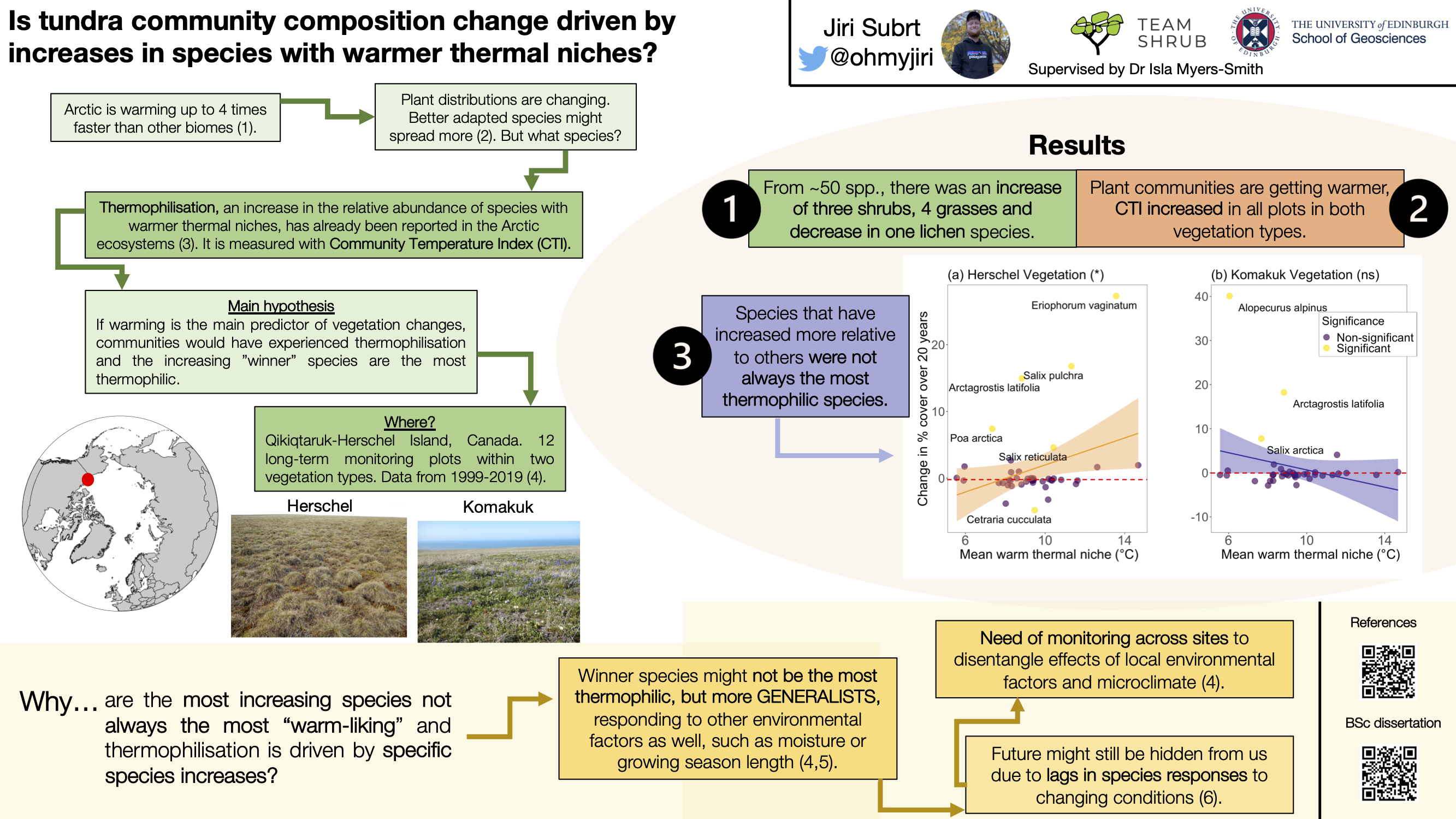
Is tundra community composition change driven by increases in species with warmer thermal niches?‘ by Jiri Subrt

Co-authors: Jiri Subrt (University of Edinburgh), Isla Myers-Smith (University of Edinburgh)

Arctic is experiencing rapid warming, impacting vegetation communities. Thermophilisation, the increase of warm-loving species in response to warming was detected across the Arctic. There is heterogeneity in site-specific responses to warming and uncertainty on whether vegetation responds primarily to warming. I studied thermophilisation and vegetation changes on Qikiqtaruk Island, Canada. I analysed vegetation composition data and calculated how plant community temperatures changed from 1999 to 2019. My results indicate that plant communities exhibit a signal of vegetation cover change in response to warming and species that have increased more relative to others are not always the most thermophilic. My findings suggest that warming is likely not the only predictor of vegetation changes in tundra. My findings also highlight that vegetation responses are heterogeneous, influenced by local environmental factors, and may experience lags. This study emphasises the importance of long-term monitoring of the Arctic to predict the response of vegetation to warming.

Storytelling with Data – Data visualisation meets graphic design to tell scientific stories

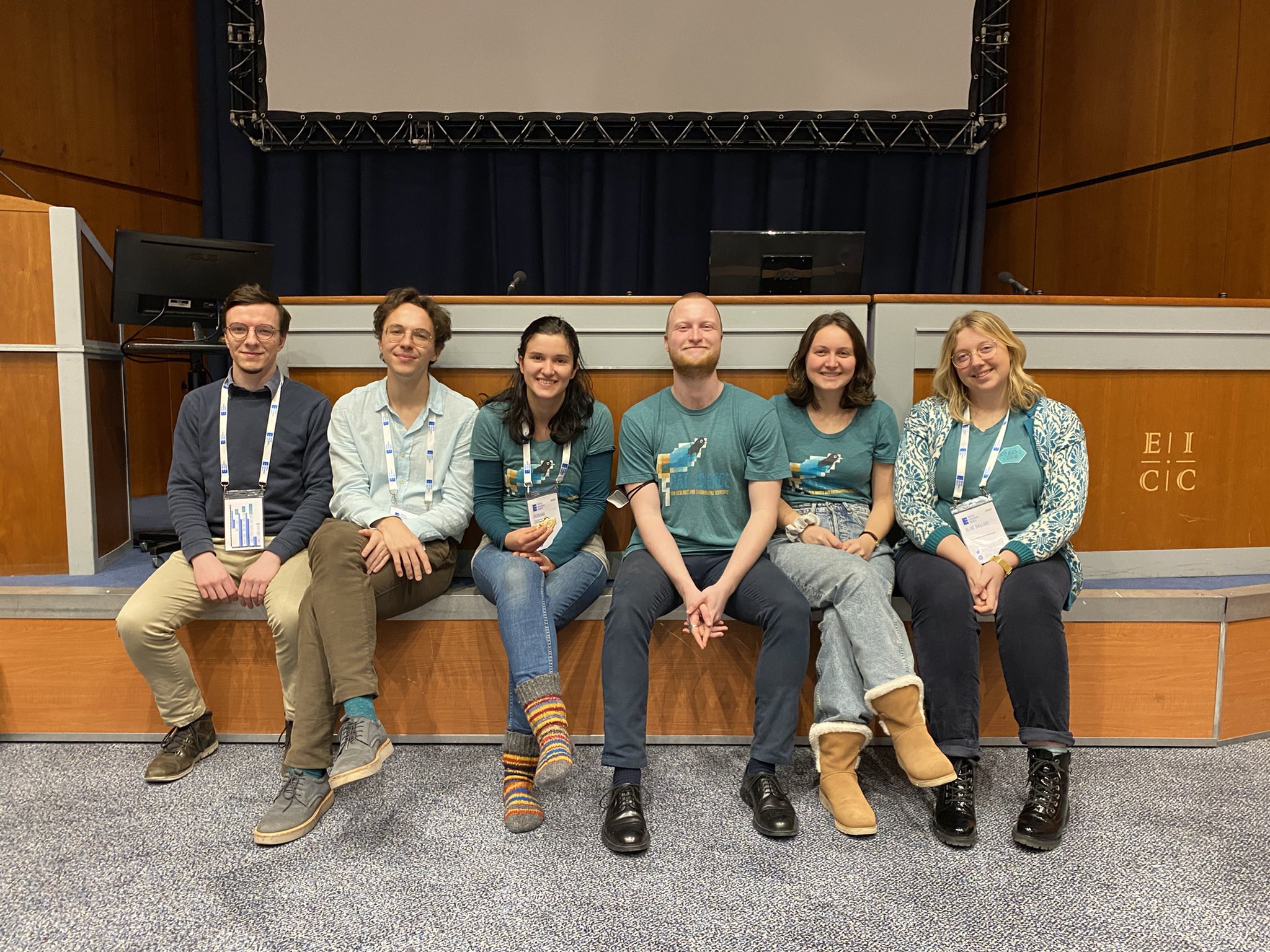
Members of Team Shrub lead a Coding Club workshop on Data Visualisation. It looks like it was a very successful workshop, though the team does look exhausted by the end!

Our workshop is for anyone wanting to amplify their data visualisation skills to tell powerful scientific stories. Through individual and team activities and tutorials, we will take participants from figure conceptualisation and graphic design to the weaving of stories and the R code to make it all happen.

If you want to complete this workshop in your own time, you can follow along at the Coding Club website:

https://ourcodingclub.github.io/tutorials/dataviz-storytelling/

Team Shrub also met up with our ArcticHub colleagues Jonathan von Oppen from Aarhus University and Laura Turner from the University of Nottingham.

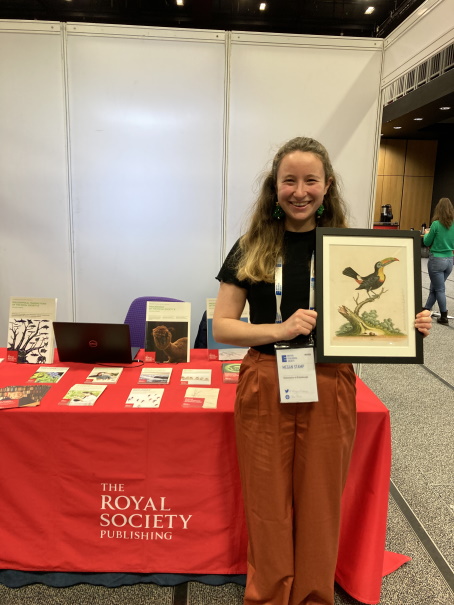
Team Shrub co-supervised PhD student Megan Stamp won a Tucan Print from the Royal Society publishing! Erica and Elise drew their research and are now planning on switching careers to become visual artists.

Shenanigans seem to have been had by all across the week. I wish I’d been there! Here’s to a relaxing holidays and to future conferences in 2023.

Words by Isla and photos by all of the peeps on Twitter!

Life in the High Arctic

Words by Isla Myers-Smith, Photos by Jeff Kerby

Summertime at Alexandra Fjord. 78 degrees north. The sun shines all day long.

Around midnight, you can experience the phenomenon of a double sun where the sun reflects off the still waters of the Fjord. One evening, we even had a quadruple sun with sun dogs – the mirrored sunlight in the air – also reflecting off the waters.

Like everywhere in the Arctic, midnight is the most magical time. But to fill you in on life in the High Arctic, here is our routine as the sun rotates around us in the 24-hour light of an Arctic summer’s day.

DSC_8133.jpg

The mornings are often the coldest time. Temperatures are chilly, fluctuating between zero and 12 degrees. Never go out without your down jacket packed and your hat to hand. The ocean is choked with sea ice and each time the tides rise and fall the ice bergs rotate, melt, and crack to create brand new ice sculptures along the shore. Glaciers flow into the Fjord valleys, with the local Twin Glacier slowly retreating at around five metres a year back up to the permanent ice fields. Ice surrounds you even at the end of July – this is the High Arctic after all.

RUS_2000.jpg

The daily routine keeps us to schedule (unlike in the Western Arctic where we move to “Herschel Time”) with morning (7:30 am) and evening (7:00 pm) “sched.” – a radio communication for all of the remote camps with the logistics coordinators at the Polar Continental Shelf Programme Headquarters in Resolute Bay, Nunavut.

“Hello 26, this is Alexandra Fjord, we hear you 5 by 5, all is well and we have no traffic”.

DSC_3531.jpg

Breakfast times are a chance to catch up with the research crew, analyze our last night’s dreams with the “Dream book” or learn an Inuktitut phrase such as ‘would you like some coffee’? ᑳᐱᑐᕈᒪᕖᑦ? It is also a chance to chat about field research progress and to plan the days and the science with the team. After breakfast and packing it is out to the field – Cassiope, Dryas, Willow, Sax Opp, Fert, or far away Dome are the field sites that one could be heading off to. Or maybe it is a hike farther afield to the glacier or up the fjord valley hill-slopes.

DSC_9119.jpg

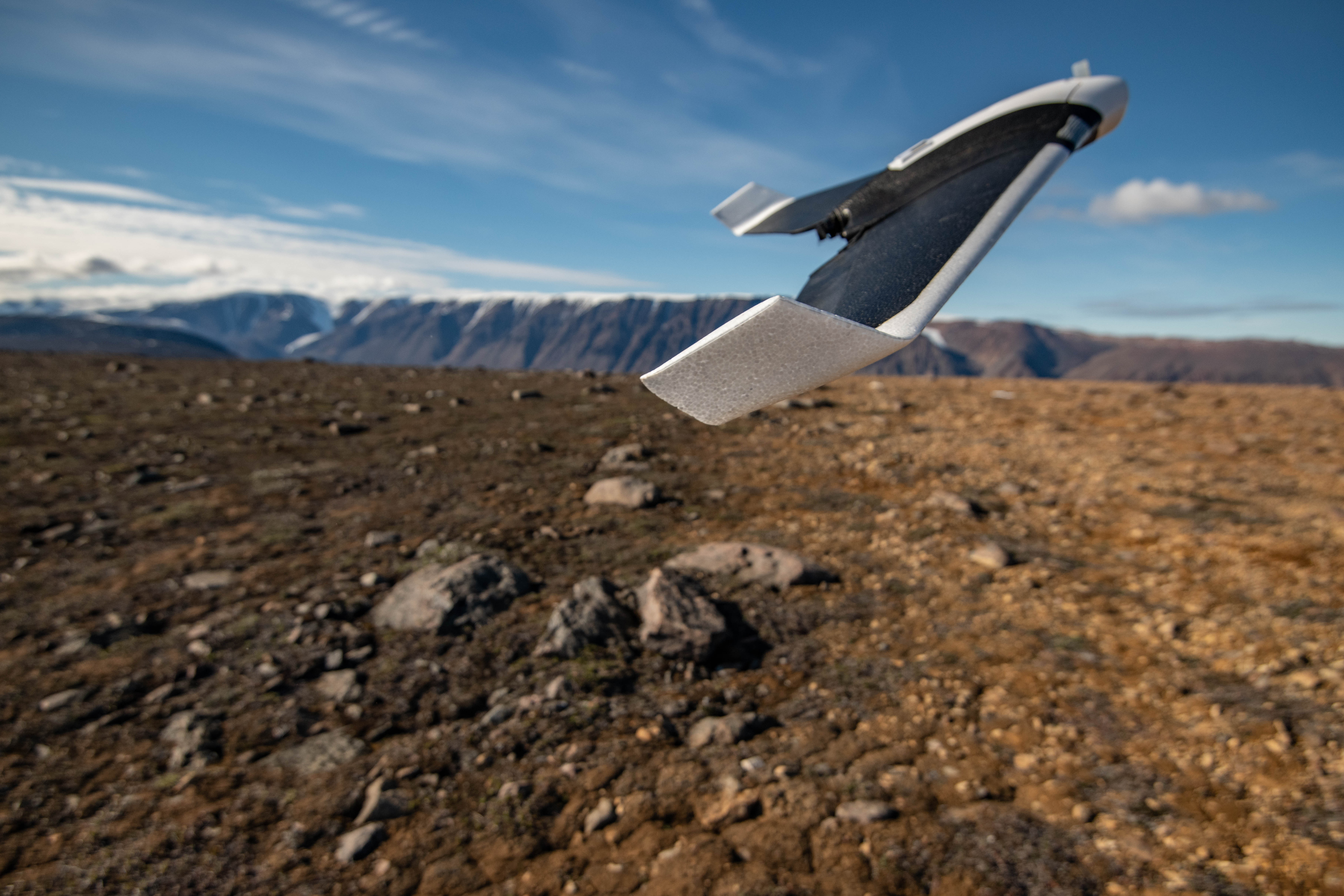
When you are on Team Drone, the packing takes a bit longer and the backpacks are a fair bit heavier with drones, sensors, calibration panels, many batteries, water bottles… and of course lunch! But once you get out there (which often doesn’t take long), and the weather is good, then it’s drones in the air. Drones can be a bit challenging in the High Arctic, only a few hundred km from the magnetic North pole, but more on that in another blog post. We were pretty surprised by how well the data collection went given the potential pitfalls of drone work in this far north, from GPS to weather challenges. All and all it was an incredibly productive trip with over 600 GB of drone data collected!

DSC_9203.jpg

By the middle of the day, you are getting hungry. Time to eat your sandwich and share your daily chocolate bar – will it be a Mars Bar, Twix, Kit Kat or Coffee Crisp? The views are always stunning whichever way you look as you lunch and the skies are always changing. This summer we had a celestial encounter with a massive fireball exploding over the fjord – to find out more check out Jeff’s account of the meteor (in prep!). And if you read the media reports they say that “nobody saw it”, but we did or some of us did!!!

DSC_7396.jpg

Once the fieldwork is done and the sun is moving lower in the sky and towards the North it is time to pack up the drone gear and head back to camp. On the way back to our Arctic home of white-painted wooden RCMP buildings you might chance to see an Arctic hare or our fjord companion the Arctic fox. When you get back to camp you can drop the bags, enjoy the views out across the water and head inside to start some metadata recording and to back up all the drone imagery as the dinner preparations progress.

DSC_2320.jpg

After sched., a leisurely dinner, dishes and once the data are all backed up it could be time for an epic game of Boggle where, if you can’t find actual words, feel free to write down potential new ones like:

Bant (noun) – One unit of banter. e.g., “I met Isla out on the tundra and we had a quick bant before getting back to work”.

Murl (verb) – To spit out one’s tooth paste, but in such a way as there is no spitting involved. Somewhat similar to hurling up your tooth paste, but less active. “We gathered around the slop pit to murl before heading to bed.” (Jeff here: Turns out Murl IS a word. We were close to the correct definition. I want my points!)

Besides, the polar bear ate sections L to M of the dictionary, so if your word starts with any of those letters, no one can prove that your word isn’t real!

DSC_6819.jpg

After murling, enjoying the midnight rays of the sun glancing off the water, and getting ready for bed, the last person has to bar the door with the long plank. Up at Alex Fjord, we are staying in polar bear country and at all times one needs to be aware that we could get a visit from the year-round, white and fluffy inhabitants of this part of the Arctic. The RCMP buildings get annual winter visits from the local bear who has left his nose and paw prints on the windows and walls.

DSC_2322.jpg

The end of the day is closing your eyes with the golden light washing over you from the windows, wishing you could stay up longer, but knowing that 7:30am sched. is just a few short hours away.

DSC_6830

From the ground to the sky: fieldwork in Kluane

Roaming the common garden

Over the last five years, the common garden in Kluane has allowed us to collect data on the growth of different willow species from across Canada. This experiment enables us to better understand how plants grow in a warmer climate. Over the start of this summer, which has been particularly hot in Kluane, we have continued smothering our plants with love by fertilizing and watering them so they would allow us to take all sorts of measurements on them – including phenology, new growth, leaf length and canopy height.

At the moment, one Salix richardsonii individual is the tallest plant in the garden at 156 cm, which makes it the king or queen of the (Arctic) jungle! We will be back in August though so there is still time for other plants to have a go at dethroning it. A close-up view of our willows is spectacular, but I have to say that looking up every once in a while from callipers and measuring tapes and seeing the majestic mountains surrounding Kluane lake does not get old – this is truly is a magical place.

By Mariana

Climbing up mountains

Behind our experiment at the shores of Kluane Lake rise the mountains that gives us a chance to step, in just a few hours, into the tundra. Aside from the abundance of shrubs, grasses and beautiful alpine flowers that are our primary attraction to these climes, we have also over the last few years been helping Anna Hargreaves to examine patterns of herbivory. Laying out seeds and cages, we keep an eye out for critters and flutters, picking and scratching, and most often of all, the scraping of teeth and piles of poo that signify a small mammal has found our caches. This year we have added fake caterpillars to expand the repertoire of munching mementos. All went well with putting out the seeds, though it turned out the fake caterpillars were hard to work with in the summer heat! But we managed. Either way, the birds didn’t seem overly keen – only one, maybe three, caterpillars got pecked. Whatever the task, it hardly matters once atop the mountains: the views are reliably beautiful!

To find out more:

Hargreaves, A., Suarez, E., Mehltreter, K., Myers-Smith, I., Vanderplank, S.E., Slinn, H.L., Vargas-Rodriguez, Y.L., Haeussler, S., David, S., Munoz, J. and Almazan-Nunoz, R.C., 2018. Seed predation increases from the Arctic to the Equator and from high to low elevations. bioRxiv, p.304634.

By Gergana (and Haydn)

Flying drones

Drones! We still have them, none have broken yet. The main task of our test flights while in Kluane was adding the Sequoia multi-spec sensor to the DJI Phantom 4 Pro (editor’s note: for non-drone folks I think that means ‘added a cool camera to a mini helicopter’). The flights were a success with slight glitches that have been corrected by now. The only casualty during our flight operations were my ankles which were not properly protected from the mosquitoes during the first flight at dusk. If anything it was a proper introduction to the bugs that we’ll face while on Qikiqtaruk-Herschel Island. Once all flights were completed, we carried five gallon buckets from the lake to water the community garden through herds of black flies.

Yes, I was sore the next morning.

By Noah

Exploring – from the ground to the sky!

In between measuring leaves, counting seeds and flying drones, we also got to explore the icefields near Kluane – a magical experience! Our favourites included the super high mountains, the rich turquoise colour of the little pools among the ice, and just the all around grandeur of the place. Majestical, as the movie Hunt for the Wilderpeople would put it.

We continued the Team Shrub tradition of a barefoot icefield run – refreshingly brisque! It was quite the contrast to feel the heat of the sun and the chill of the ice at the same time.

We are now off to Qikiqtaruk-Herschel Island for the next, longer stretch of our field season! In less than two hours, us and many boxes are scheduled to depart for Qikiqtaruk. Oh the adventure that lies ahead…we can’t wait!

By Gergana, Mariana and Noah

The Plants of Qikiqtaruk. Part 1: The Shrubs

On a cold and distant island the stars of our science are sleepingBuried under a thick winter blanket, Qikiqtaruk in winter is exactly what many people imagine when I say I work in the Arctic: awash with snowdrifts, locked in sea ice, home for polar bears and not a huge amount else.

ycd234753
Qiqiktaruk in winter

Yet here on Team Shrub we study plants. Come the summer sun, green tendrils of life emerge from the snow and the hardy, beautiful and fascinating plant life of the tundra begins to grow. Diverse in the manner of tropical rainforests it may not be, but these cold lands are nonetheless brimming with more life than you might think, featuring old favourites that adorn the hills of Scotland to wacky monstrosities that seem to spring out of some primeval past.

In this series we will be exploring some of our favourite species from our most northern field site, starting with our namesake: the shrubs.

The Shrubs

What makes a shrub? Such has been the dinnertime conversation at many a Scottish Feast. In short: short. Woody. Multi-stemmed. Sometimes evergreen, sometimes deciduous, always beautiful.

The willows

Qikiqtaruk is home to a grand total of nine willow species. Not bad for an isolated Arctic island. The Salix genus dominates much of the upper shin-high canopy, though you can find yourself wading through some of the bigger fellows. Bjorn even reaches chest height. Deciduous, green-leaved, the willows add a certain magic to the tundra as their fluffy seed spirals in the air on a breezy day, while bright red catkins dot the tundra floor underfoot.

Salix pulchra

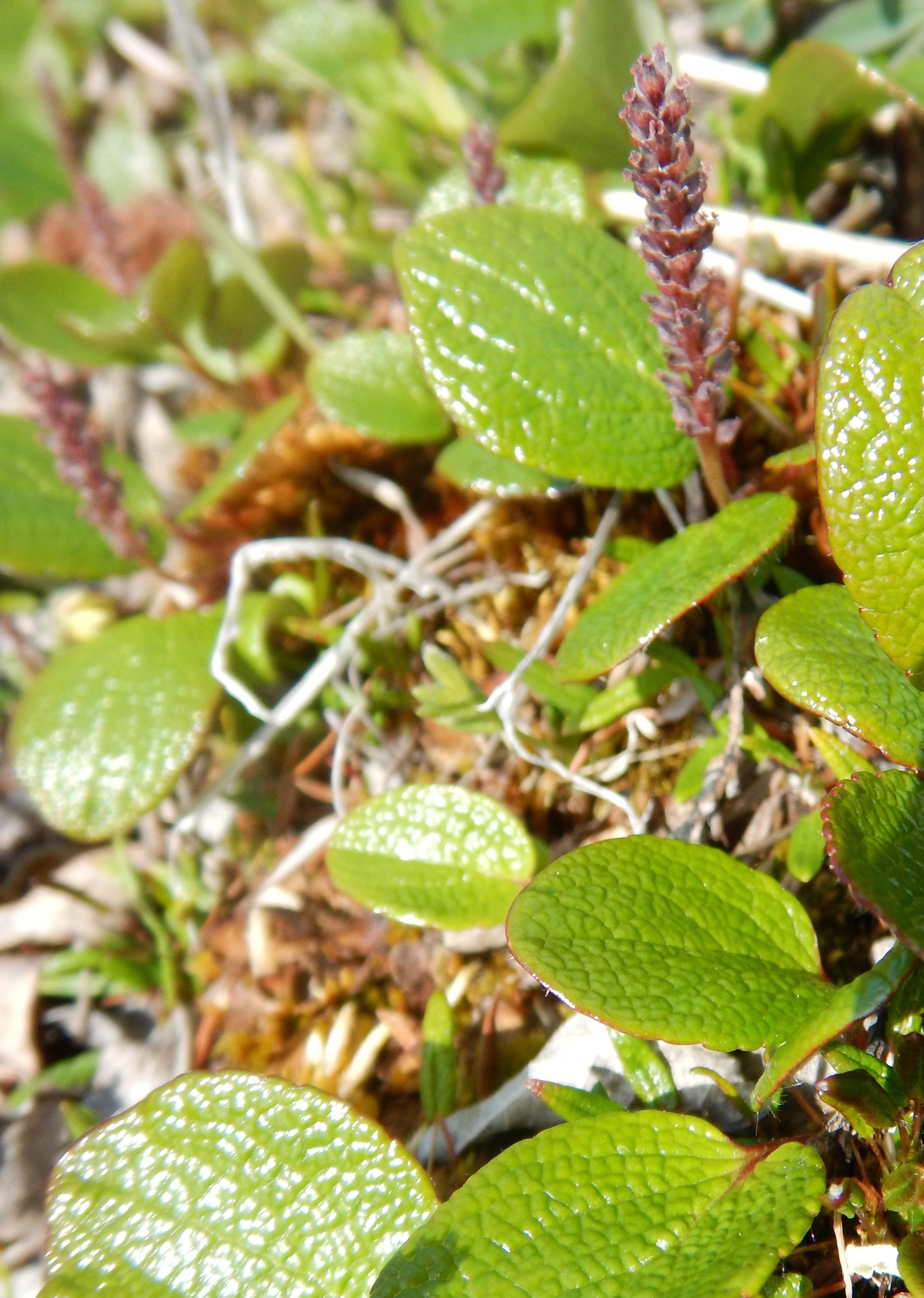
Possibly our favourite shrub on the island. This beautiful willow surely lives up to its name: long ruby stems and startling emerald-bright diamond leaves, giving Salix pulchra its common name, diamond-leaf willow. On Qikiqtaruk Salix pulchra grows mostly along the ground in large, clonal mats that creep between tussocks of cottongrass and shelter small white Stellaria flowers. It’s one to watch though, as further south this willow can reach well over head height. Here, where the weather is sheltered and nutrients seep from the permafrost, Salix pulchra grows faster, bigger, redder, standing out from its neighbours atop the palsas, while on the hilltops we have already seen a tripling in its canopy height since we first started recording in 1999.

IMG_4418
Salix pulchra leaves catching the sunlight. The beautiful willow is a Western Arctic specialist found across tussock tundra and mountain landscapes of the Yukon and Alaska.

Salix richardsonii

One of the giants of Qikiqtaruk, Salix richardsonii, or Richardson’s willow, is the most common tall shrub on the island. It grows mostly in wetter, sheltered areas such as river floodplains, where nutrients flow freely and life is as easy as it gets in this bastion of land in the Arctic ocean. Forming a dense, shrubby canopy of bright green leaves, Salix richardsonii nonetheless has a rather grizzled visage, giving it our nickname ‘Old Man Willow’. Twisted branches and flaking orange-brown bark, flecked with white specks of age or hardship. Fat, hairy stipules easily mark it apart from other willows. A canopy bully, Salix richardsonii is now dominating areas where it can grow, rapidly expanding in many parts of the island as the climate warms.

Orca_floodplain_02_desktop
Encroaching Salix richardsoni is taking over the Ice Creek watershed on Qikiqtaruk. This is one of the tallest willows on the island and elsewhere in the Arctic where in can dominate tundra landscapes with dense, metres tall and sometimes impenetrable thickets of willows.

Salix arctica

This small willow is a remarkable example of the success and resilience of plants in these cold lands. Salix arctica, the Arctic willow, has the most northernmost geographic range of any woody plant, reaching all the way to the north coast of Greenland at 83 degrees north. A ground-hugging, prostrate woody shrub, it spreads woody limbs akimbo, stretching out in all directions along the top of the permafrost. Thin stems become roots, become stems again and it advances clonally, covering much of the surface until it is impossible to tell where one plant begins and another ends. Even if the main “trunk” is destroyed or decays, the plant will not die: an attempt at immortality. Unlike many of the other dwarf willows, Salix arctica eschews the small leaves and catkins of its fellow family members, and sticks to the strategy of the taller shrubs that bigger is better. Big, fat leaves emerge from the brittle stems, which giant fluffy catkins can strike up from the ground surface several times taller than the rest of the plant. Unusually, on Qikiqtaruk even the leaves and stems of Salix arctica strike upwards for the sky, possibly a hybridisation of one kind or another, and can stretch up even as much as 20cm from the soil.

Salix_arctica_flowers
Salix arctica the Arctic willow with flowers blooming in spring. This is one of the most widely distributed plants across the tundra biome found from the Rocky Mountains of Colorado to the very tip of Greenland.

Salix reticulata

Just like Salix arctica, this dwarf willow hugs the floor with brittle stems and clonal creeping growth in all directions. The thick, leathery leaves of this plant give it its common name: net-leaved willow, which are criss-crossed and pocked with deep grooves. Once fallen in winter, these hardy leaves last, resisting decomposition and creating a crunching carpet underfoot.

DSCN4254
The waxy leaves of the net-leaved willow, Salix reticulata. Like with Salix arctica, this is a very widely distributed willow found in much of the Arctic, the Alps and even in Scotland!

Salix polaris and Salix phlebophylla

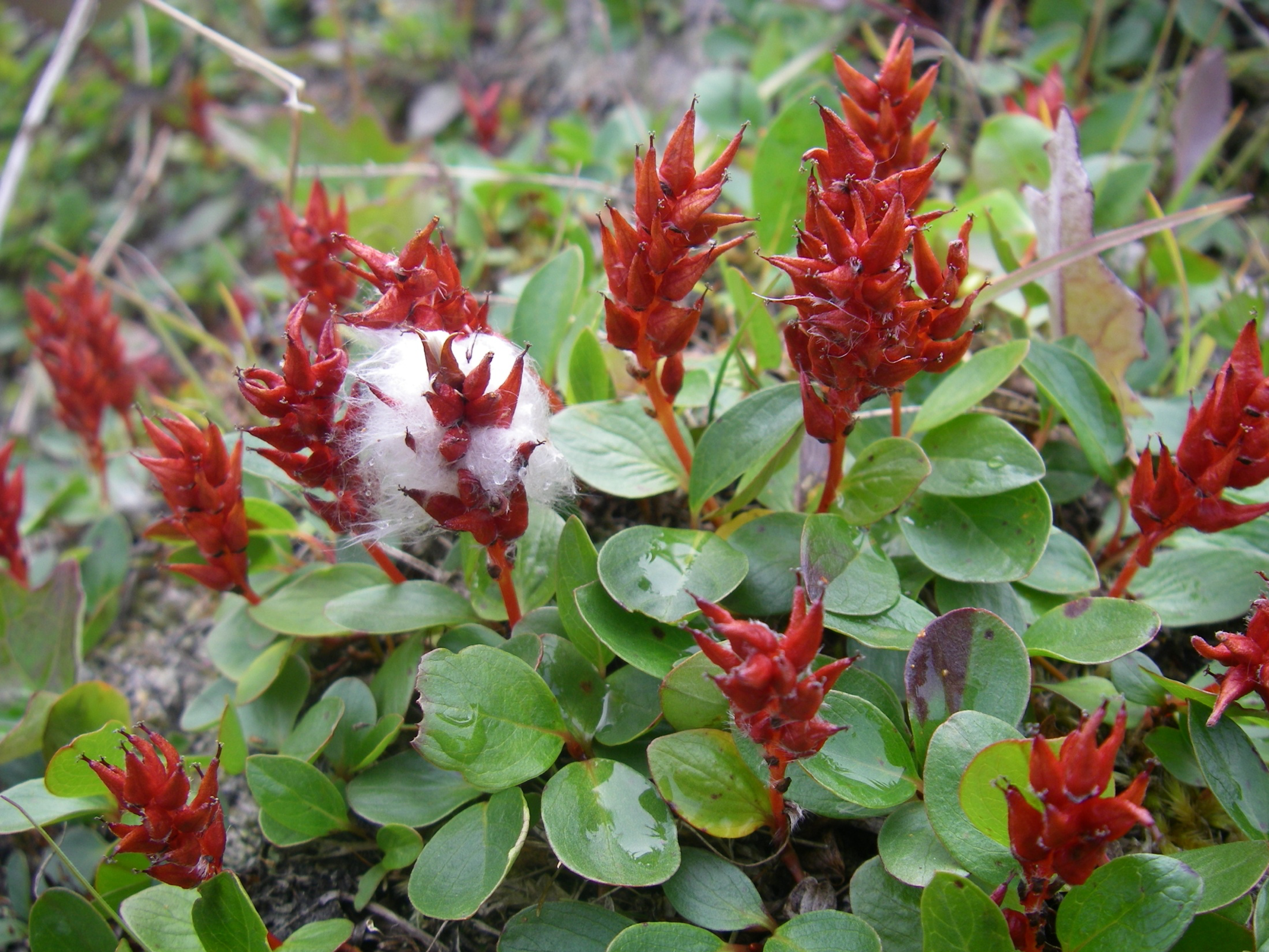
The smallest of Qikiqtaruk’s willows, these two species take you down onto hands and knees to appreciate their tiny round leaves and stalk-like stems. Hugging the ground in dense mats, often on the drier sections of hillsides or edges of tussocks, I often have trouble telling these apart from leaves alone. Yet catch them right in the season, and the red catkins of the polar willow (Salix polaris) stand out as one of the brightest flashes of red on the tundra, flecks of delicate colour, blood-rich, that in a matter of days dissolve into white and wind.

Salix polaris2
The bright red catkins, fluffy white seeds and verdant green leaves of Salix polaris often remind Isla of the colours of Christmas!

DSCN0042 2
The tiny 2 – 4 mm long leaves of Salix phlebophylla covering the ground in a mat. Named for the skeleton leaves it ‘leaves’ behind year after year, this is one of the smallest willows in the world!

Salix glauca and Salix niphoclada

Two of the rarer tall shrubs on Qikiqtaruk, grey willow (Salix glauca) and snow willow (Salix niphoclada) can be a challenge to find, but occasionally stand out on the hillside where some seed has found its way to establishing. The grey-tinged haze of glauca willows sets them apart from the rest, while the sometimes rose-tinged stems and somewhat brighter leaves of niphoclada can cause us headaches when we search for Salix pulchra to sample. These two willows with green leaves covered in fine grey hairs and stems with a blue-green and waxy look to them can be indistinguishable when they have no visible catkins, which is much of the time, so they are often clumped together in our analyses.

Salix glauca
Less majestic than Salix glauca in other parts of the Arctic, here on Qikiqtaruk this willow can only eek out an existence in the warmest microclimates of south-facing slopes.

Salix alaxensis

Finally, the Goliath of Arctic willows. Salix alaxensis grows tall and often somewhat spindly up on Qikiqtaruk, almost buddleia-like, as if it wants to reach the sun and doesn’t care how it gets there. The leaves are grey-green, but a bright, fluffy white underneath – lannate, densely villous or tomentose if you will. Did you know there are over 20 botanical terms for being hairy! Certainly easy to identify. We have only recently discovered Salix alaxensis, the Alaskan willow, on Qikiqtaruk, though since individuals are already well established, thus it must have been evading detection for many decades.

DSCN4807
Isla with a particularly tall Salix alaxensis found on Qikiqtaruk in the summer of 2016 on a particularly buggy walk back from the retrogressive thaw slumps along the coast.

The birches

Betula nana and Betula glandulosa

If you spend much of your time tramping about the high hilltops of Scotland you may already be familiar with dwarf birch. Small, thickety and brittle, the dense brown stems of Betula nana or Betula glandulosa have snagged many a bootlace and tripped many a toe. Still, I love the Betulas for their leaves alone, some of the most perfect forms on the tundra. On Qikiqtaruk, Betula nana holds sway on flatter patches of hilltop; a low growing shrub that announces its presence as a darker green blur on the landscape, or from the waft of crushed Labrador tea underfoot, which tends to grow alongside birch. Unlike many other tundra sites, where Betula has run rampant as the climate warms, it so far seems to be losing out to the willows here, though in some places the dense, spotted branches form an impenetrable tangle across whole swathes of tundra. As for the difference between nana and glandulosa, the latter is taller, larger leaved, greater noduled. Or not, as the case may be – perhaps they are one species after all, marked apart not by genetics but simply variation.

Betula
A very dwarf birch, Betula nana/glandulosa – is it one species or two? – nestled amongst compatriots including Rhododendron tomentosum and Vaccinium vitis-idea (see below).

Tundra tea

Rhododendron tomentosum

A hero of the Arctic smellscape, Rhododendron tomentosum is another favourite of ours. The shrub itself is part beautiful: white flowering baubles full of rich scent, rusted felt underside of leaves, and part ugly: the ash-black branches spindly, frail and commonly dead, dark leaves often matted and speckled, a formless shape creeping amongst better rivals. But altogether outstanding are the leaves themselves. Rhododendron tomentosum, marsh Labrador tea, may not quite have the glamour of its more grandiose and much less marshy southern cousin, but its leaves still bear the scent of a thousand tundra days; that unmistakable and uncapturable spice of terpene and midnight chlorophyll. This is a shrub that makes trait work bearable, and often one that prompts a pocket full of leaves for the walk home.


Ledum
We are crazy about the fragrant smell of Labrador tea (Rhododendron tomentosum), Ledum (its old name), I got to get some!

The berry bearers

Arctostaphylos rubra (Arctous rubra)

One for the photo albums. A. rubra, or bearberry, is certainly one of the more iconic tundra shrubs due to its bright, Rudolph-red leaves that can stain the bare tundra at certain times of year. Another prostrate-growing shrub, the ovate, vein-y leaves can bear a resemblance to the leather coins of Salix reticulata when green, though are stretched and less waxy. It is when the winter begins to draw in that Arctostaphylos rubra sets itself apart as the leaves turn, and formerly invisible patches of bearberry shine out. Red too, the berries that hide in amongst the leaves: a food source for humans and wildlife alike, though their diuretic properties also lend themselves to herbal medicines and may explain the preponderance of stained bear poo littering the tundra in autumn. A closely related species, Arctous alpina, looks almost identical except for the red berries that turn black when ripe.

SAB-3336
The bright red leaves of Arctostaphylos rubra in the autumn intermixed with some Vaccinium uliginosum.

SAB-5686 (1)
Arctous alpina the black berries of alpine or ‘black’ bearberry.

Vaccinium vitis-idea and Vaccinium uliginosum

Another set of plants that will be well known to hillwalkers, the Vaccinium genus is the main fruit bearer for local people and hungry researchers. The smallest, Vaccinium vitis-idea (Ligonberry, cranberry, cowberry – you name it!), carpets the surface with tiny, glossy leaves and even glossier red berries where cover is sparse and soils fairly dry. In places the leaves can turn to a deep, merlot red, or still drip with pink-white cowbell flowers. Harder to find on Qikiqtaruk, Vaccinium uliginosum (blueberry, bilberry etc.) rise higher from the undergrowth where soils are wetter, their berries blue, stems tough brown-green and leaves thinner and more leathery.

^B48AEEF2354C185B4DCB14D1DC227BB40973E76199E5742C7F^pimgpsh_fullsize_distr
Vaccinium vitis-idaea (and Empetrum nigrum). These Arctic cranberries make a delicious pie and jam if you have the patience to pick enough!

Rubus chamaemorus

Cloudberry, baked apple, or knotberry in England and averin in Scotland is best known on Qikiqtaruk as aqpik. This is one of the most prized of berries in this part of the world and when perfectly ripe is a delicious topping to pancakes, makes an excellent jam or is the perfect snack when stopping across the tundra. Quick to turn from unripe to rotten, finding your patch of cloudberries in season on Qikiqtaruk can be a challenge.  It is rare out there, preferring the wetter habitats on the edges of ponds or in ice-wedge terrain.

Cloudberry
The delicate salmon pink berries of ripe aqpik or cloudberry.

Empetrum nigrum

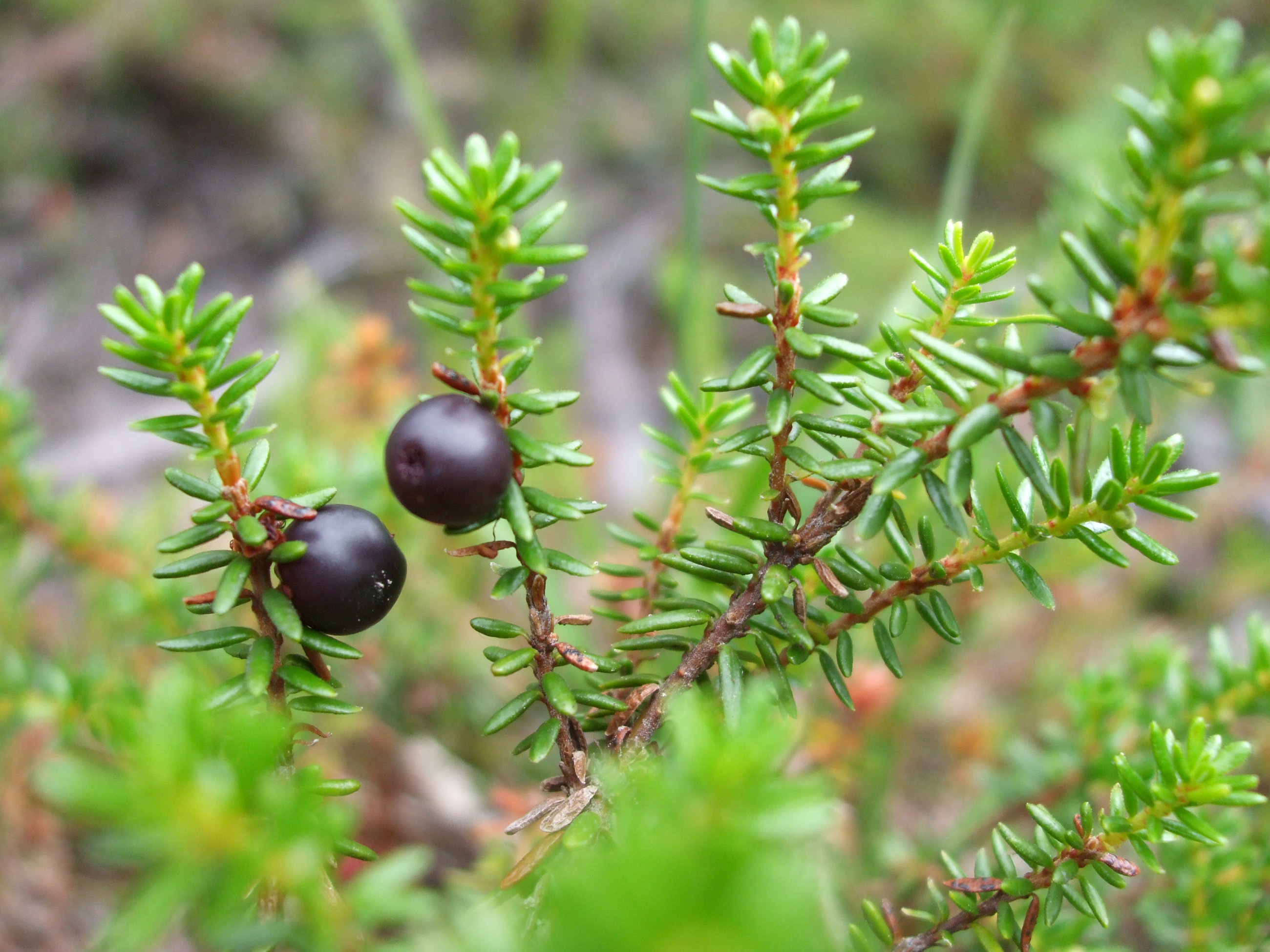
A heathery-looking dwarf shrub that is equally at home in the Scottish Highlands, on mountaintops around the northern hemisphere, under conifer canopies of the boreal forest, and in vast swathes of tundra. Also a clonal shrub, Empetrum nigrum can form dense mats stretching uninterruptedly for meters, or even tens of meters. Its super-power is allelopathy: the leaves contain toxic chemicals which, when leached into the ground after the rain, hinder germination or growth of other plant species. Fun fact: the wood smells delicious when boiled in water (don’t ask, and probably don’t drink).

SAB-7546 (1).jpg
The bright leaves and black berries of Empetrum nigrum

The dwarf evergreens

Dryas integrifolia

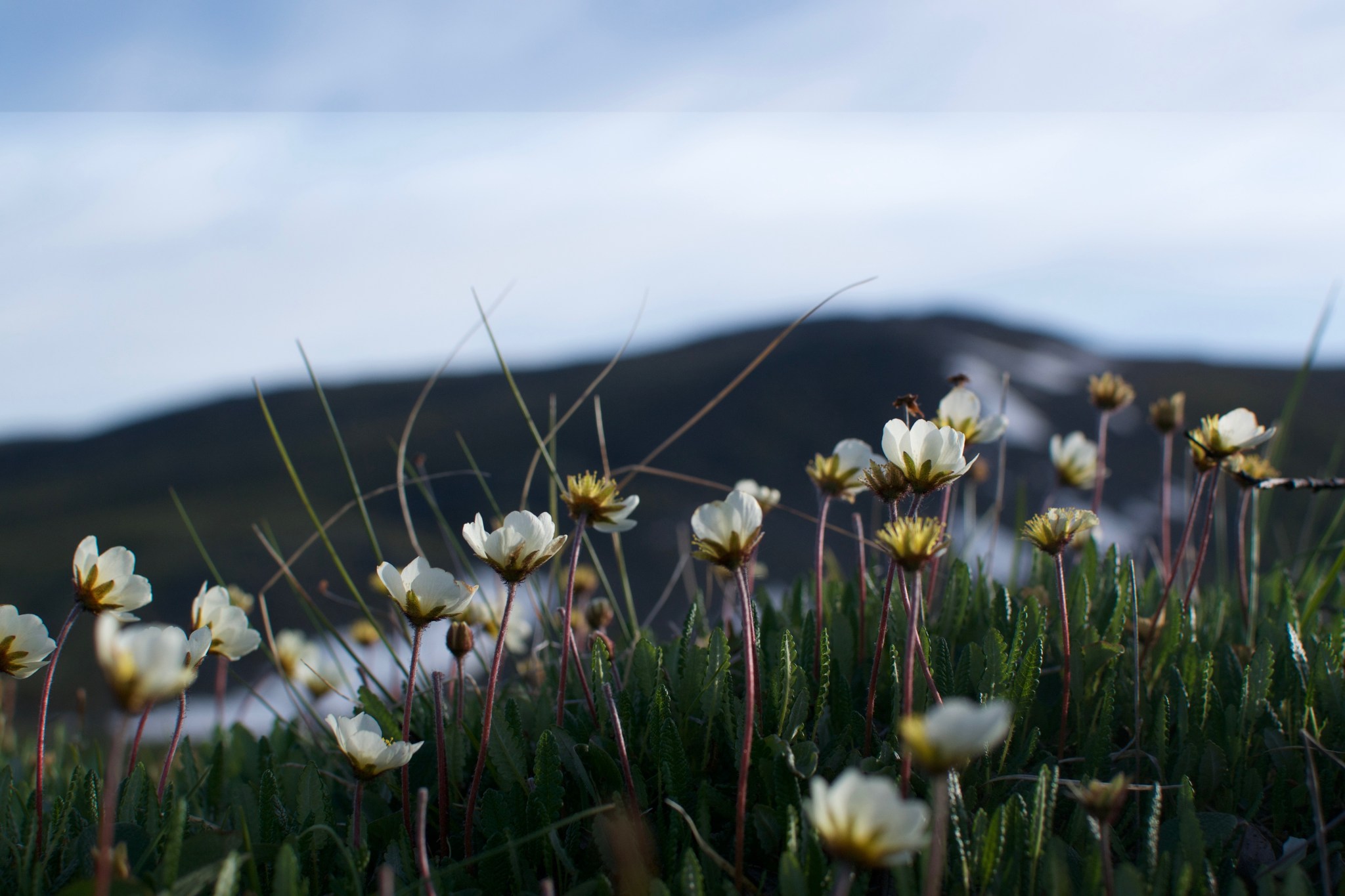
The spear shaped leaves of the mountain avens is to me another iconic shape of the tundra. Whether forming into a sharp coniferous tip, or padded out into the more billowy, deciduous-tree form of Dryas octopetala, these OS map symbols of leaves are unrecognisable wherever they grow. But for many, Dryas integrifolia is best known for its flowers – the perfect white circles that polka-dot the tundra floor – and for the twisted filaments that are the phoenix seedhead, catching the sunrays and diffracting light and themselves across the tundra air.

DSC_0145
The bright white flowers of Dryas integrifolia.

Screenshot 2015-07-30 20.27.06
Twisting filaments of Dryas integrifolia as the flowers set seed at the end of the summer.

Cassiope tetragona

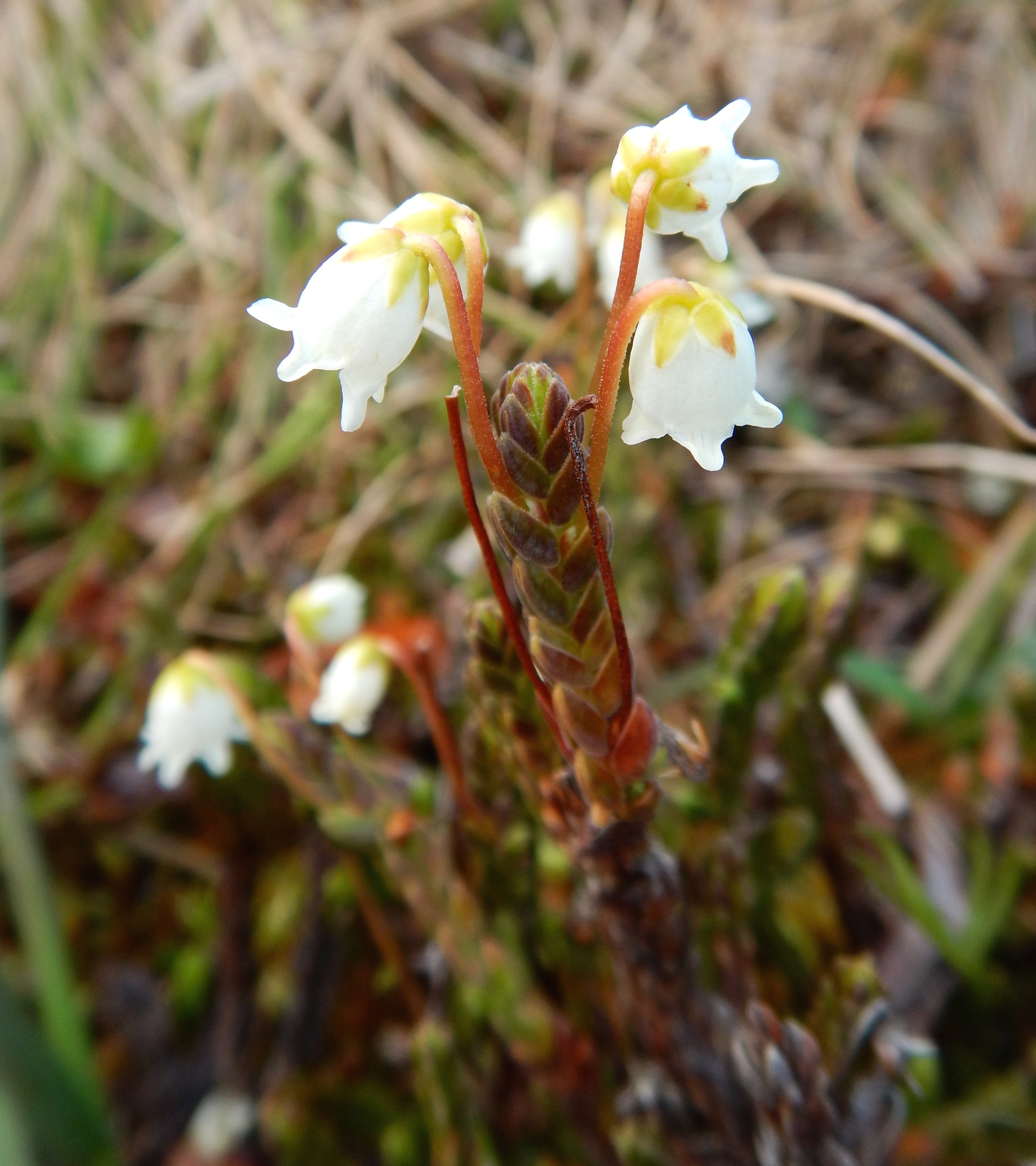
Growing amongst the rocks and along the dry hillsides, the weeping white bells of Arctic bell heather are another distinctive site at the height of a tundra summer. A relative of the glorious purple heather of the Scottish hills, Cassiope tetragona is similarly small and woody, minute spear-shaped leaves wrapped tight into the stem, forming scaly round limbs. As the season turns, these stems gradually shift from green to orange-brown, giving the tundra an almost burnt look, flowers rusting away to leave the brittle seed heads proud to the wind.

Cassiope
Cassiope tetragona with four flower heads as per it’s name is one of the longest lived of tundra shrubs, with individuals being found that can be dated back to over 200 years.

Bonus: The uncategorised

Silene acaulis

If you’ve reached this far, well done for getting to the end. As a special bonus, I’ve included Silene acaulis, better known as moss campion. There is some confusion here as to whether Silene acaulis is best classed as a shrub or a forb. Silene as a genus refers to the campions, delicate flowers of field and rocks, all pink and white and herbaceous green leaves. Yet the harsher climates to which Silene acaulis has adapted produces a hardy, cushion-like shrub, past leaves compressed into woody stems. For myself, I class this bright plant as a forb, yet since I have seen it classed otherwise so under some schemes, it is worth a brief mention here.

DSCN0973.JPG
The resilient and secretive Silene acaulis

Beyond confusion of classification, Silene acaulis is by no means one to be relegated to the bottom of any list. It grows where often nothing else will, building a bivouac out of its own sharp leaves against the elements. Within this thick shell, the plant can grow to engulf surrounding rocks occasionally supporting other tiny plants as they grow through chinks in its armour. Most spectacular are the pink-purple flowers, which at the height of the summer dot these minuscule mountains like dewdrops, or like pins in a pin-cushion. Silene acaulis is rare on Qikiqtaruk – the soft, undulating landscape means there are few surfaces too harsh for competitors. But I have seen one once, in passing, making a mental note to come back to sample it later. I have never found one since.

Silene
A rare find for Qikiqtaruk, a bit of Silene acaulis, spotted by Isla in the summer of 2017.

By Haydn, Sandra and Isla

5 (More) Steps to Becoming an Awesome Field Assistant

Being a field assistant for the first time isn’t always easy. Following on from Izzy’s recent post, here are five more great tips from Cameron on how to be an awesome field assistant (and to have an awesome time).

1. Apply for funding

Being a field assistant costs money. In many cases you might be employed by an organisation, research group or researcher to carry out the role, in which case they will be covering your costs. However, you may be required to (or want to) provide funds yourself. But don’t fret! There are plenty of funding opportunities hidden out there for the proactive field assistant to find. Most funding requires you to submit a proposal outlining what you will be working on and how much you think it will cost. Once you have drawn up a proposal for one funding application it is easy to tailor it for others. Keep an eye on the submission deadlines and apply to as many funds as possible. In my experience, funds for undergraduates aren’t very competitive, so make use of them!

Information for funds available for University of Edinburgh Students can be found here. 

image001
Cameron fishing for funds

2. Take good equipment

When you are setting up experiments in a snowstorm, or climbing mountains before breakfast, you quickly learn to appreciate the value of good equipment. However, if you haven’t been in the field before it can be hard to figure out what sort of stuff to bring with you. For me, the most important bits of kit are good waterproofs, a decent backpack, and an excellent pair of walking boots (we had a pair fall apart this summer). If you are going to spend a lot of time in the field you should treat yourself to some nice gear. It’s totally worth the investment and good quality stuff can really improve your comfort and safety. Why not add the cost of a beautiful jacket and boots into your funding application (for health and safety reasons, of course)?


3. Ask lots of questions

“Why are we digging up old tea bags from the ground and what’s the deal with all of these dead leaves?”

Take the opportunity to learn as much as you can from the people you are working with. Asking questions and figuring out why you are doing a task can really help you get more out of your time in the field and cement knowledge learned in the classroom. You will also likely be working with people further on in their career than you. If you are thinking about a career in academia, take this chance to pick their brains about all aspects of academic life.

image007
Haydn showing us the ways of the shrub


4. Take the bad with the good

 Hopefully you will experience many great things during your time as a field assistant but you might also experience some pretty bad lows. The work can be gruelling and the days long. A healthy mentality is key to enduring the bad moments and enjoying the good. Make sure to talk to your team if you are having difficulties, and look after yourself. It really is worth it at the end.

image009
Conquer your mind and you can conquer the tundra


5. Let yourself be enchanted…

Fieldwork can take you to some truly special locations. We get to explore hidden valleys, shadowy forests, and secret little places far from any path. Please take some time, in-between sampling and recording data, to fully appreciate the wonderful environment and people around you. Not only does this add to your overall experience, it can also turn you into a passionate advocate for these incredible areas. Tell the stories of these places anyway you can, be it on Facebook, in prose, or down the pub. The more people know about your field site, the less likely it will fade into obscurity and be lost.

image011
Soaking up the view

By Cameron

Arctic Change 2017 – Wednesday round-up

IMG_8708.jpg

Another day of snow in Quebec City, another day of Arctic conferencing at Arctic Change 2017. Another packed plenary, hearing from Larry Hinzman on how we can and must adapt as not only the climate changes, but many other factors as well. We heard the fascinating, and certainly complex debate around the ownership and use of the northwest passage. Finally, we stood together to celebrate the work of Dr. Michel Allard, winner of this year’s Weston Family Prize for Lifetime Achievement in Northern Research.

Team Shrub was well represented in the first session of Monitoring, Modeling and Predicting Arctic Biodiversity. Isla made a convincing case for detection of various components of vegetation change and their attribution to warming. Jeff then demonstrated the scaling issues we have when going from ground-based to satellite observations – impressing the audience with drone footage at the same time.
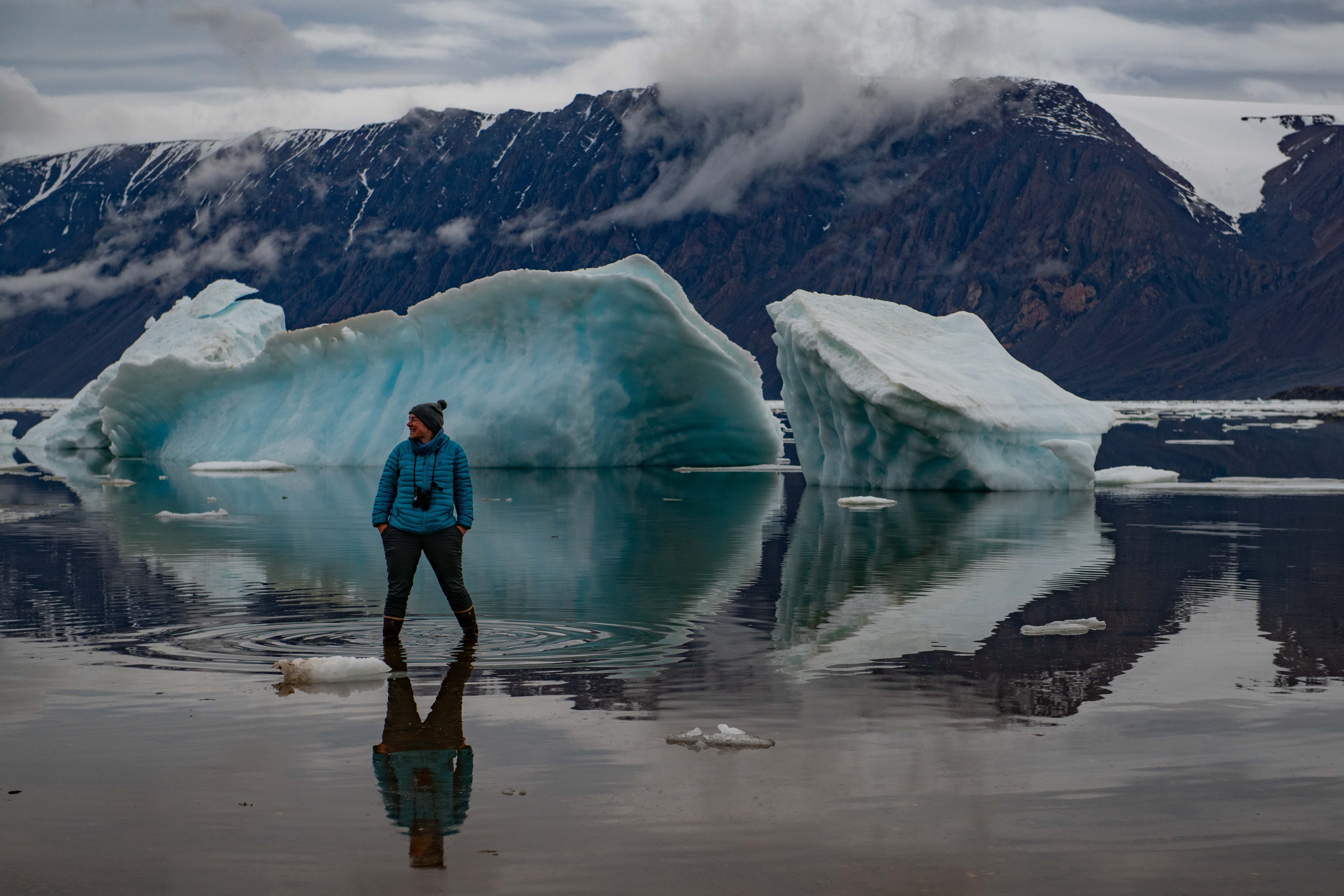
In this session we also heard from Paul Grogan of Queens University with a fascinating talk on birch expansion driven by a decrease in herbivory rather than by increased temperatures. Last up was Pascale Ropars (who first taught me the art of digging shrubs up many years ago), presenting a whole-food-web approach to predicting biodiversity change in Northern Québec.

After a delicious lunch (the food here!) which peaked with three helpings of profiteroles, it was time to go back to the second part of the Arctic Biodiversity session. Katriina O’Kane showed us how species move individually rather than as a community during succession at a glacier’s edge. Cory Wallace and Jennifer Baltzer from the Forest Ecology Research Group at Wilfrid-Laurier also took us on a tour of alder shrubs, topographic variation, and the factors controlling black spruce abundance.

Finally, eyes starting to itch and brains hurting from a day packed full of new knowledge, we heard from Caroline Coch on the role of small catchments for dissolved organic carbon inputs, and from Dustin Whalen on how drones are being used to map coastal erosion in the Arctic.

Haydn, Jakob and myself were still on duty by our posters in the evening. Between lively scientific discussions and running into old friends, the two hours flew by and our team set out hungrily in search of poutine. Unfortunately, my insider knowledge of Québec didn’t extend to knowing Ashton’s opening hours, so the door shut in our disappointed faces. We had to turn to (highly satisfying) falafels eaten on the street in -10 degrees C weather to get back to the conference centre in time for the first screening of Breaking Ice, a documentary that took us on the Canadian research ice-breaker the Amundsen.

IMG_8729.jpg

I suspect Haydn, Jakob, Isla and Andy are in various stages of anticipation for their Thursday talks. Good luck all!

By Sandra

Arctic Change 2017 – Tuesday round-up: Blizzards, Biodiversity and Beluga Snot

The second day of Arctic Change 2017 hit town like the snow storm raging outside the Centre des congrès de Québec. Today the main hall was full, packed right to the edges, as we were welcomed by ArcticNet, Laval University and the Inuit Circumpolar Council.

After the welcome and official opening, Raleigh Seamster from Google Earth, and Joel Heath and Lucassie Arragutainaq from ArcticEider/SIKU demonstrated the power of remote sensing and its potential for community based environmental monitoring in the Arctic. The speakers clearly had to battle the inquisitiveness of researchers as hundreds reached straight for their laptops and phones to immediately check out these awesome tools! Louis Frontier, scientific director of ArcticNet, followed with a reminder that cutting carbon emissions remains paramount for tackling all issues around Climate Change. Anyone not from Norway or Paraguay might have left feeling a little bruised, but despite the world being only 5% of the way towards its renewable goals, there was still a sense of optimism. And indeed, the plenary closed with optimism in full swing with a touching short film on the Schools on Board project of the Canadian research icebreaker Amundsen and the potential future leaders of Arctic policy change.

Screen Shot 2017-12-12 at 22.17.15
Google Earth Timelapse, winding back time on Qikiqtaruk – Herschel Island our Arctic research site.

Refreshed after heaps of pastries and coffee, the conference headed into the first topical sessions. Alas, we can barely scratch the surface of the vast array of talks on offer here. Justine Hudson method’s of assessing Hudson’s Bay’s beluga whale stress level using snot samples was much discussed on twitter and made an engaging talk with videos of curious belugas “donating” their snot to science. Memorable also were Benjamin Lange’s findings that multiyear sea-ice supports much more algae life than first year ice. We on Team Shrub appreciated hearing about Zoe Panchen’s research on tundra plant phenology showing that microclimate matters more than latitude or elevation for flowering in the Canadian High Arctic.  And Team Shrub was also a fan of Esther Frei’s work on plant trait change over time and her beautiful figures!  We also really liked pondering future fox housing using Florence Poulin’s new index of Arctic fox den vulnerability.

The scientific part of the day concluded with the first poster session, with legions of well designed posters (every conference should have such a great reward for poster awesomeness!) and an astonishing amount of great science. Ruminating in front of our fake log fire we remember Jeffery Saarela and Paul Sokoloff’s enthusiastic poster presentation – working with the Canadian’s Museum of Nature, they are sampling plants all across the Arctic islands to improve our understanding of high Arctic biodiversity. Also sticking out was Sarah Shakil’s poster on chemical composition of slump discharge on the Peal Plateau in the Yukon and Christine Anderson’s beautiful poster about her exciting proposed PhD research on shorebirds in a changing Arctic.
Now we are all tired from a long day of sciencing, talking at our posters, braving the still raging blizzard and running away from snow-spitting Quebecois snow ploughs on our way home to the apartment. After two exciting days, we’re looking forward the great Arctic science to come and take up Allen Pope’s challenge to kick him off the top of the twitter leader board. So keep your twitter ears pricked and see you tomorrow!


by Jakob and Team Shrub

p.s. You can also catch up here on what’s happening across the pond at the the Ecology Across Borders conference in Ghent.