North of 61 and standing by on channel 69

It’s been 18 days on an Arctic island and just over a month above 60°North. Team Shrub has faced every element, from sub-zero temperatures to Arctic heat, storms, bugs and wildlife. But, what brings us North? In this blog post, we will introduce you to our Team Shrub crew, give you insight into this year’s research, and bring you along on our adventures so far in the field season.

Midnight sun in Kluane. Photo by Alex Beauchemin (left). Midnight sun on Qikiqtaruk. Photo by Isla Myers-Smith (right).

As the North continues to experience a rapidly changing climate, extreme weather events are predicted to increase in frequency, fundamentally altering the lives of plants, animals and ultimately people. Team Shrub is working to understand how tundra ecosystems are responding to these changes. This summer’s research will help us figure out how the above and below-ground responses of tundra plant communities ripple across food webs to insects, birds, and mammals, and how Arctic heatwaves reshape permafrost landscapes. What will a later summer – in contrast to recent years -mean for the timing of plant and animal life here on Qikiqtaruk and down in Kluane? Only time will tell. Stay tuned to find out.
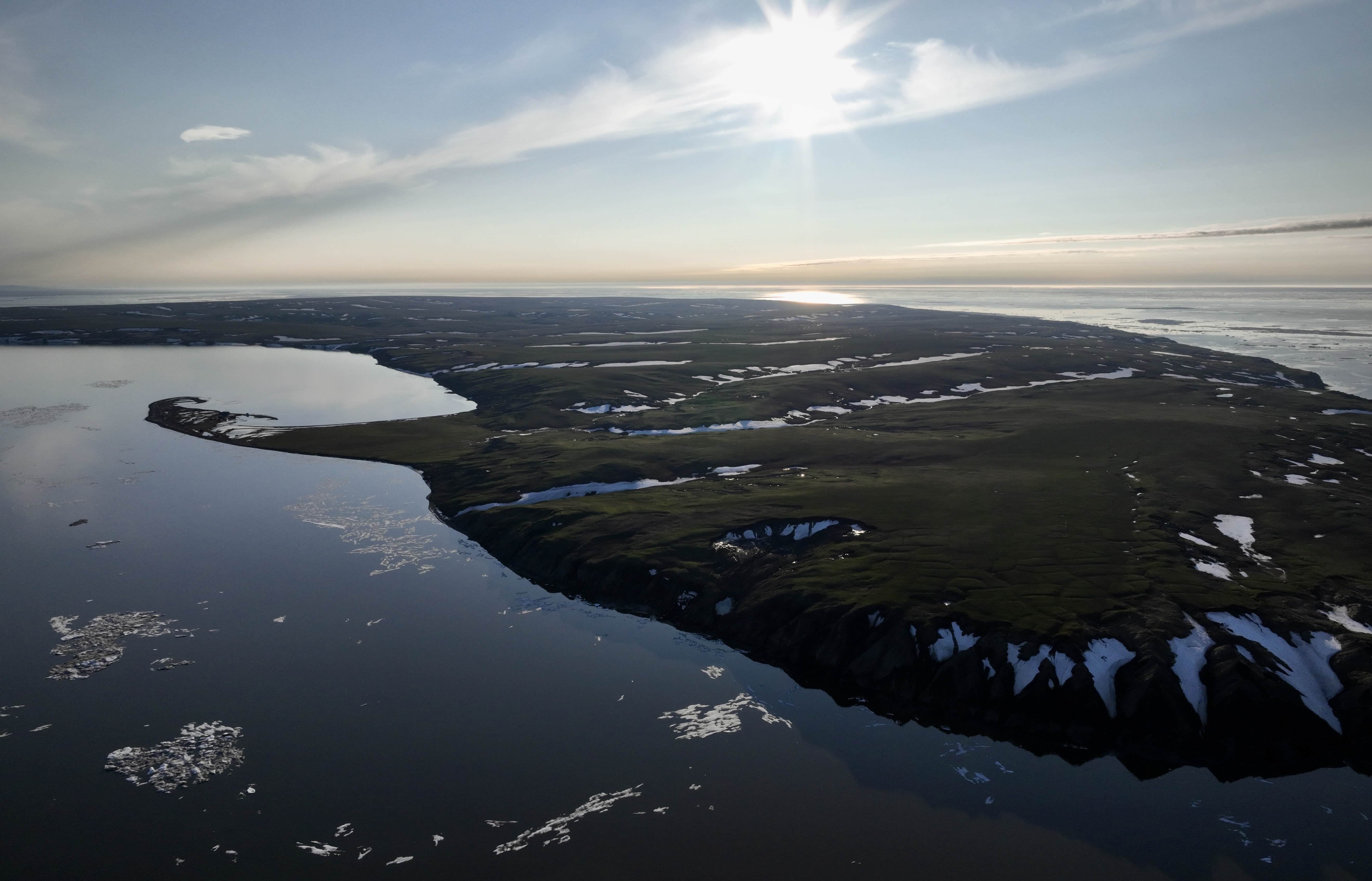
Qikiqtaruk – Herschel Island from the air on a sunny evening in late June. Photo by Ciara Norton.

This summer, we’re launching the fieldwork of the Canada Excellence Research Chair on ‘The Global Ecology of Northern Ecosystems’, continuing our work on the NERC TundraTime project, the RESILIENCE Synergy grant, the Porcupine Caribou Knowledge Hub Project, and beginning the field asset collection for National Geographic Society Funded ‘Communicating Arctic climate change impacts using immersive virtual reality’.

This past year saw the transition of Team Shrub from the University of Edinburgh to the University of British Columbia. Led by Isla, this year’s field crew consists of three undergraduate students, three recent graduates and two masters students who will join the team in July. With many in Team Shrub new to the Canadian Territories and the Arctic, the extended hours of summer daylight and cooler temperatures of Northern life are a first-in-a-lifetime experience. Once again, this year’s field crew is split between Team Southern Shrub, in the Kluane Lake Region, and Team Northern Shrub, on Qikiqtaruk – Herschel Island. 
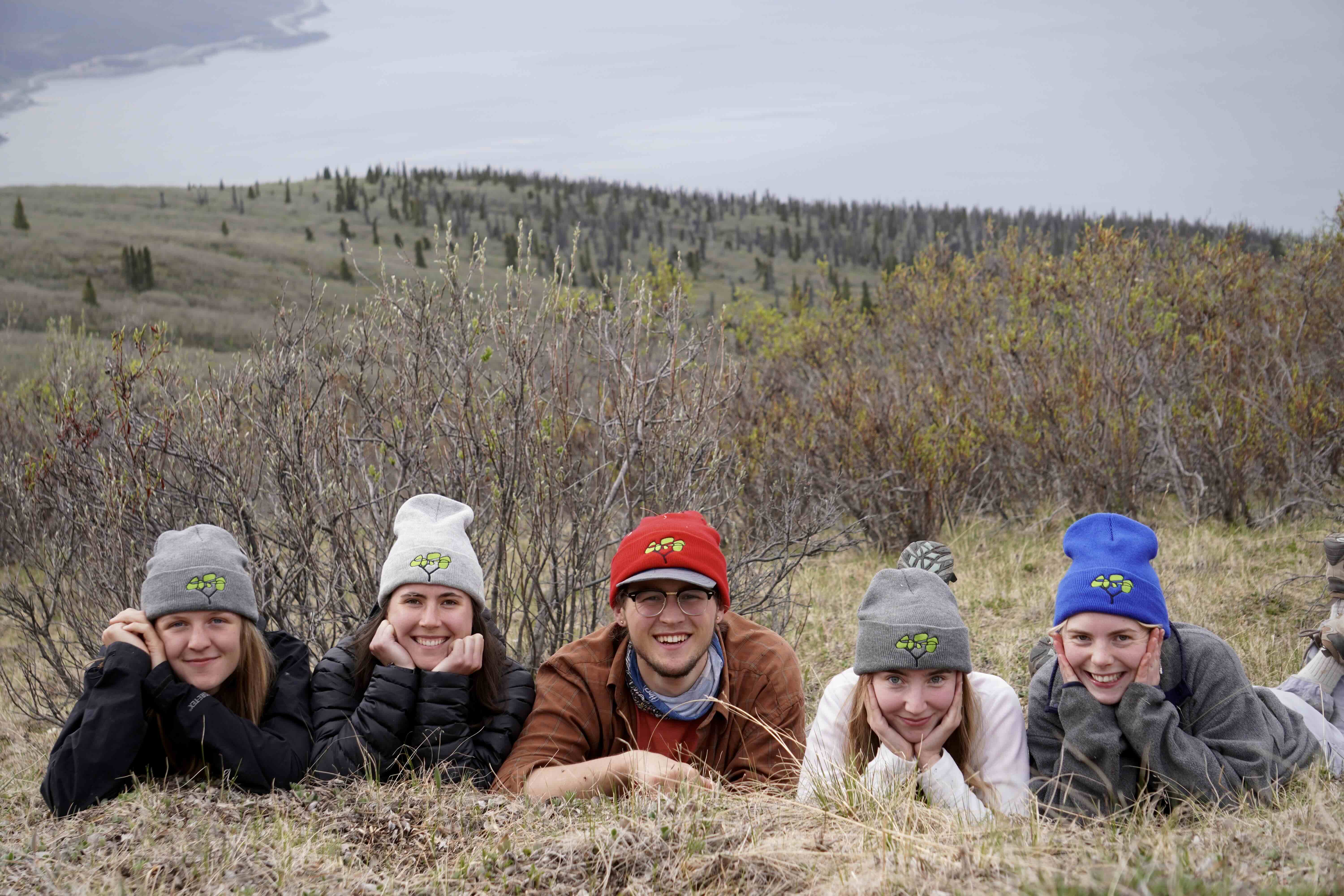
Group photo of everyone on the Kluane Plateau in early June except Alex (the photographer) and Isla (back at camp). Photo by Alex Beauchemin.

Tundra Time

Capturing tundra phenology above and below ground in a warming Tundra

This is the final field season of the Tundra Time project. This project takes place at both of our field sites on either side of the Yukon Territory. In Kluane and on Qikiqtaruk, we’ve got the phenocams all set up to measure the timing of plant growth across the summer. And, in the coming days we will be removing the first of this summer’s in-growth cores to measure the timing of root growth below ground. With two teams working at two sites, our work on this project can progress in tandem. If you want to get a sneak peak of the results of this project, check out Elise’s (Dr. Elise Gallois, that is) new preprint ‘Tundra vegetation community, not microclimate, controls asynchrony of above and belowground phenology’.

Park Rangers Gina and Phillip collecting phenology data on the long-term monitoring transect. Photo by Isla Myers-Smith.

KLUANE LAKE – Team Southern Shrub

Team Southern Shrub consists of Anya and Lauren, both recent UBC Environmental Science and Sustainability graduates. Before joining the team, Anya has three seasons of tundra field experience under her belt and Lauren has done participated in climate change research and advocacy. 

At Kluane Lake, the common garden experiment continues for an eleventh year. Common garden experiments involve collecting plant individuals from geographically differentiated populations and growing them together under shared conditions. Set up by Team Shrub in 2013, the Kluane Lake common garden is used to determine the growth rates of three key willow species driving alpine and Arctic shrubification (Arctic willow – Salix arctica, Richard’s willow – Salix richardsonii and Diamond Leaf willow – Salix pulchra) under warmer climate conditions than where their source populations were located. 

Team Shrub on the Kluane Plateau. Photo by Ciara Norton (left). Anya and Lauren on the top of the Plateau. Photo by Lauren Moody (right).

Arctic shrubs from Qikiqtaruk – Herschel Island (70°N) and alpine shrubs from the Kluane Plateau (61°N) were transplanted into the warmer environment of the Kluane Lake Region, well within the boreal forest – an environment which experiences summer temperatures 3-5ºC warmer than either source environment. The common garden helps inform predictions of shrub growth and phenology as the climate warms. Do willows grow longer and larger under warmer conditions? Or is willow growth restricted by genetic adaptation to local environments?

Willows across the growing season in the Common Garden Experiment in 2021. Video by Team Shrub.

On the Kluane Plateau, we are studying patterns of seed predation along an elevational gradient and contributing to a cross-continental study spanning the Americas. How do patterns of seed predation vary with elevation and latitude? We’re carrying out the protocols at the northernmost site in this experiment to find out. Preliminary findings confirm that seeds are eaten to a greater extent at lower latitudes, indicating greater pressures on plant reproduction towards the equator versus at higher latitudes.

The Kluane Range Mountains in the Southern Yukon. Photo by Elias Bowman.

PikARU Project

Monitoring Pika Abundance with Autonomous Recording Units

Undergraduate thesis student Charlotte will be joining the Arctic crew for the first Qikiqtaruk trip before migrating to Kluane for the remainder of the field season. New this year for the Kluane team is the PikARU Project, led by Charlotte in collaboration with the Environmental Sustainability division of the Government of Yukon. Collared pikas (Ochotona collaris) are small mammals that have been designated a species of Special Concern by COSEWIC due to their sensitivity to environmental change. 

Pikas are the inspiration for Pikachu, hence the project title “PikARU.” Shrubification may pose risks to the species because it has the potential to remove their preferred forage plants – forbs and graminoids – but the population-level response of pikas to vegetation change is unknown. Our crew will use autonomous recording units (ARUs) to study collared pikas in the Southern and Central Yukon, capturing the small mammal’s “meep”-sounding vocalizations. This will give us an idea of the abundance of pikas at each of our research sites. Could ARUs be a key tool for monitoring pika population health over time as they experience the effects of a changing environment?

A collared pika sits on a talus rock in the Southern Yukon. Photo by Cameron Eckert.

QIKIQTARUK – Team Northern Shrub

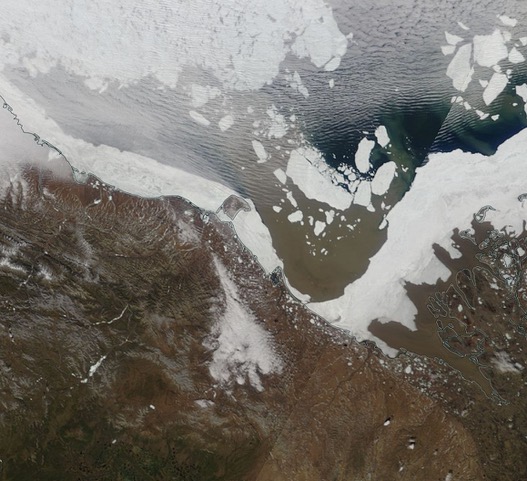
In the Arctic, it’s been a chilly start to the 2024 field season. After the exceptionally warm summer of 2023 in the western Arctic, spring of 2024 was marked by the highest June sea ice cover along the North Slope of the Yukon in over two decades. We’ve been surrounded by sea ice for the first weeks of our field season. The cooler temperatures are atypical, and spring is around three weeks later than in recent years.

The sea ice surrounding Qikiqtaruk in June. Videography by Ciara Norton.

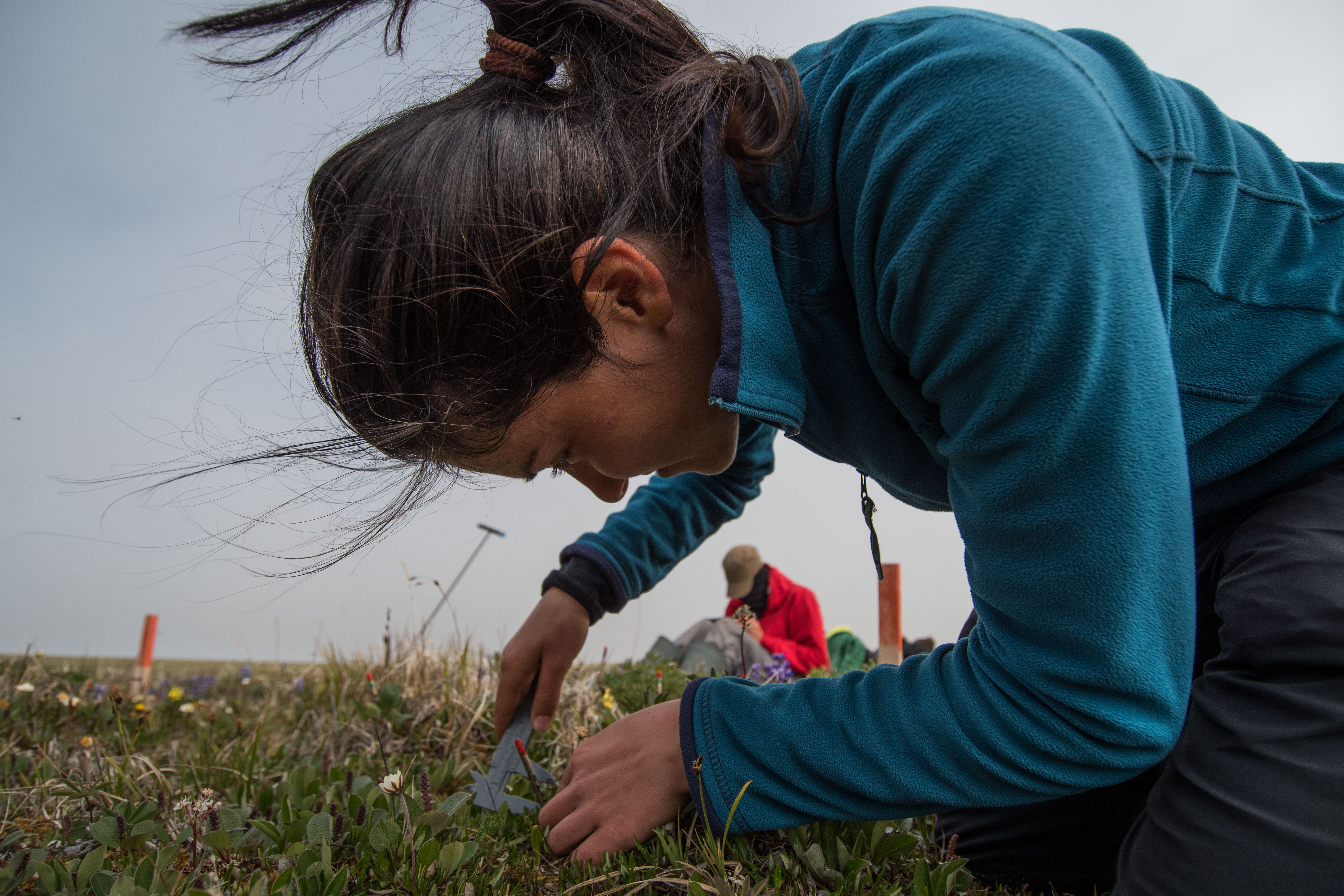
Up in the Arctic, Team Northern Shrub is continuing its monitoring of tundra plant responses to climate change. We’re using long-term plots to monitor changes to plant traits, phenology, and community structure. We’re also continuing the upkeep of our muskox-beloved phenocams. In recent days, the temperatures have warmed. The snow has been melting, the sea ice is moving offshore and summer has arrived. To keep up with the changing seasons, we’ve been running around the tundra capturing the timing of plant growth and pollinator and bird activity with wildlife cams, autonomous recording units and phenocams.

Here on Qikiqtaruk, with the delayed summer, early season plants are only just starting to flower. These Arctic gems are rare sights, often having already completed their life cycle by the time Team Shrub arrives. Being here for the very start of spring means that this year, we can capture the full summer cycles of flowering plants, pollinators and birds. Will the remainder of the growing season be pushed back due to the later spring, or will plant phenology catch up? Only time will tell.

A pollinator camera aka TURTLE, or Tetrapodal Underside Recorder-Trailcam Linkages for Ecoaccoustics, successfully installed on Qikiqtaruk. Are they muskox proof? We’ll have to wait and see. Photo by Isla Myers-Smith.

Tundra THAW Project

Tundra Terrain Hazards From Arctic Warming

Heat events associated with climate change have led to massive disturbance events in permafrost landscapes. In July of 2023, an extreme heat event on Qikiqtaruk led to the formation of over 700 landslides across the island. These landslides are called active layer detachments (ALDs) and occur when dramatic permafrost thaw triggers the active layer of the tundra to slide downslope. These landslides have left dramatic scars on the landscape spanning across the island. 

East Gully Creek flows out into the ocean in June 2024 on Qikiqtaruk. Photo by Ciara Norton.

Qikiqtaruk is also home to one of the largest retrogressive thaw slumps (RTSs) in the world, another form of mass movement which results from permafrost degradation. The incoming research data coordinator, Ciara, is leading a project that monitors permafrost disturbance across the island, through both mapping the progression of the RTSs and ALDs over the summer and characterizing their morphologies. What drives the occurrence of active layer disturbance events, and how do active layer detachments progress over time? Will the ALDs progress into RTSs?
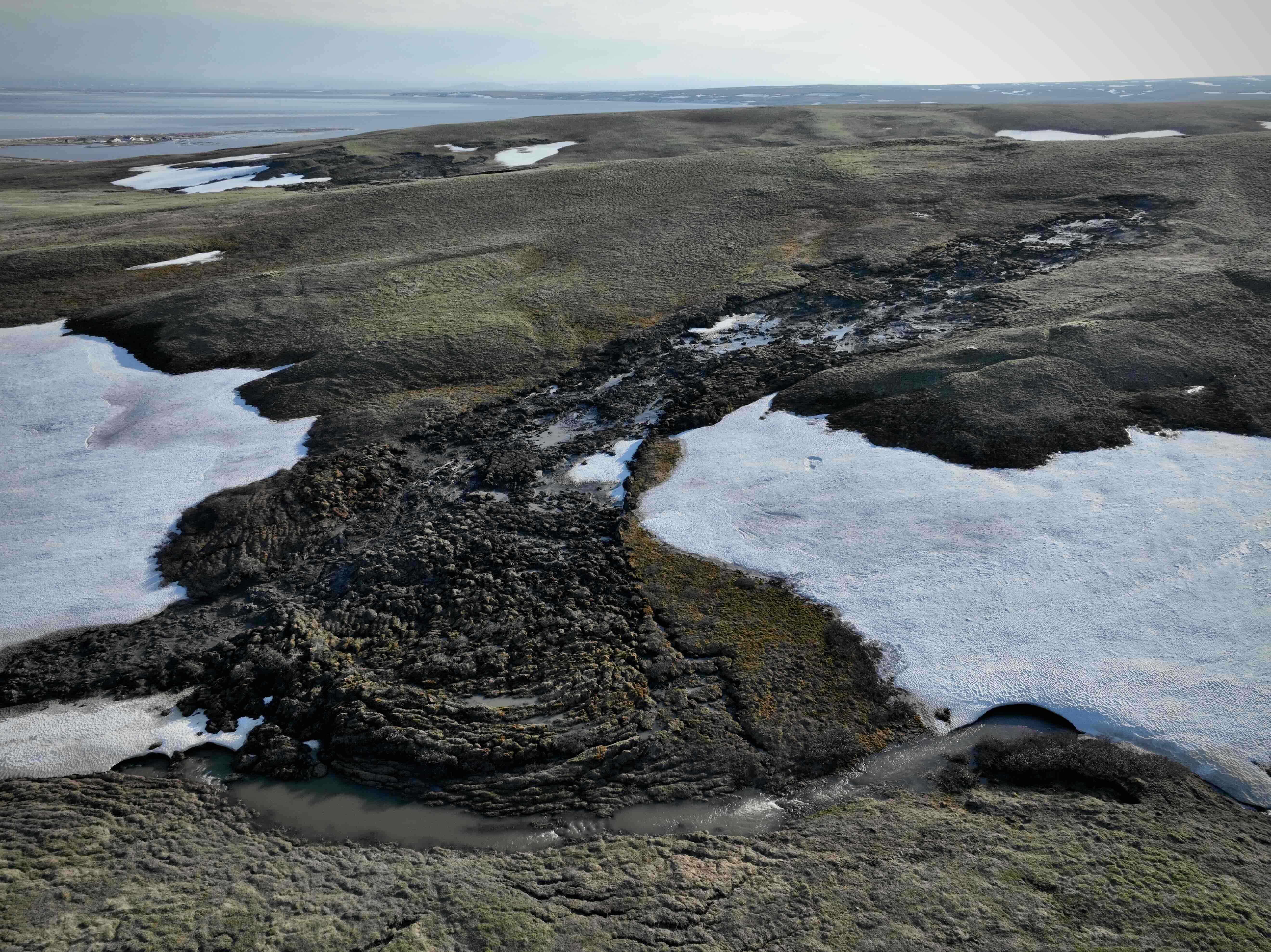
An Active Layer Detachment that formed in August 2023 thaws out of the snow pack in June 2024. Photo Ciara Norton.

Tundra BUZZ Project

Tundra Bumblebee Unoccupied Study of Zoophily Through Zooacoustics

Plant-pollinator interactions are a key part of Arctic food webs. Insect pollinators fertilize plants, allowing them to develop fruits and set seed. Berries feed wildlife, from migratory birds to muskoxen and caribou. Without pollinators, Arctic life would not exist in the way that we know it. 

As tundra plant phenology shifts forward under a warming Arctic, how does pollinator phenology change? Is shrubification reshaping pollinator communities? The Tundra BUZZ Project aims to uncover the workings of Arctic responses to climate change at the insect scale. Undergraduate thesis student Alex will be investigating bumblebee activity and phenology in relation to plant flowering time through the use of ecoacoustics and wildlife cameras.

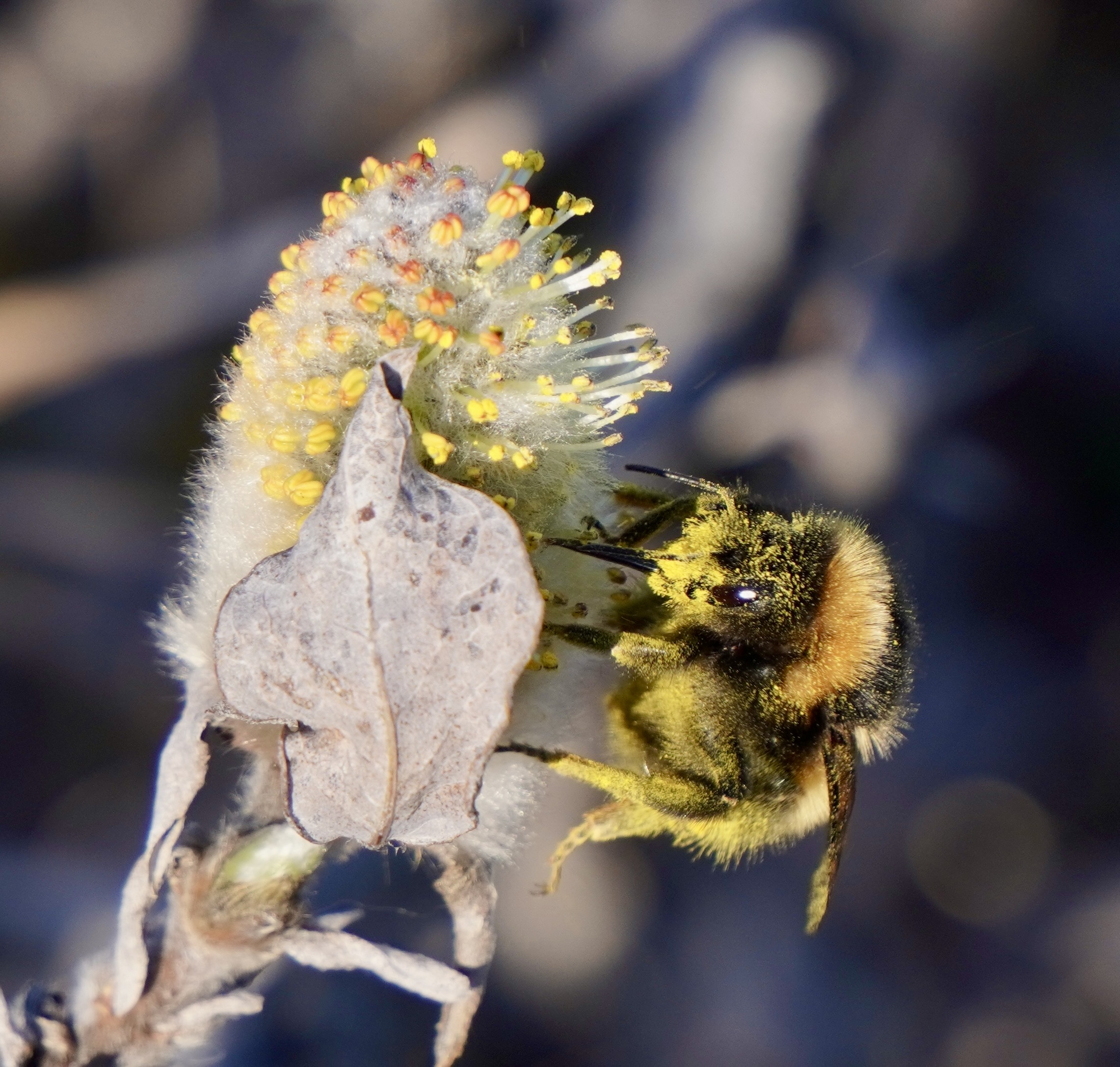
The TURTLE setup used by the Tundra BUZZ experiment and the BANQUISE Project on Qikiqtaruk (left). A bumblebee of the Arctic subgenus Alpinobombus covered in pollen from Salix richardsonii (right). Photos by Alex Beauchemin.

BANQUISE Project

Bird Abundance and Nesting on Qikiqtaruk Under Icey Seasonal Environments

Every year, birds flock to Qikiqtaruk – Herschel Island in the thousands to forage and breed. Climate change impacts which species, how many individuals and when birds are arriving and nesting on the island. Snowmelt date has been documented as a primary driver of bird and plant phenology, while sea ice dynamics also play an important role (see former Team Shrubber Meagan’s research!). 

For birds on Qikiqtaruk, every variable plays just one part in a complicated story determining their life histories. Using historic and modern records, Elias is quantifying direct and indirect impacts of environmental variables on bird abundance and nesting timing. With the addition of audio recorders and wildlife cameras to existing observations within the park, Elias will be able to tease apart how breeding birds are responding to the warming Arctic.

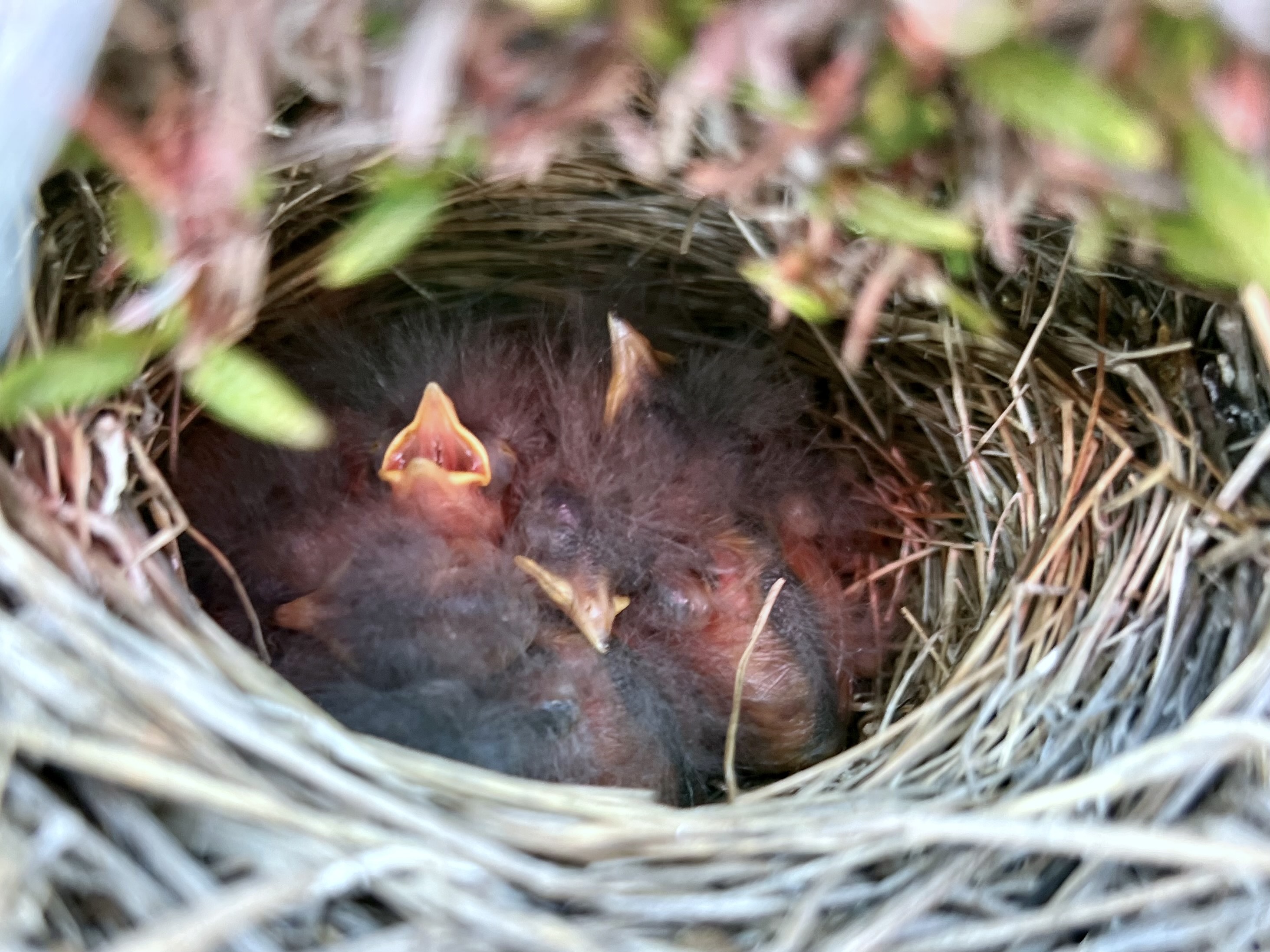
A Lapland Longspur calls in front of an audio recording TURTLE device. Photo by Elias Bowman (left). Savannah sparrow chicks in their nest on Qikiqtaruk – Herschel Island. Photo by Isla Myers-Smith (right).

Masters students Sarah and Micah will be joining the team later in the field season. Sarah will be studying drivers of borealization in Kluane while Micah will be focused on flooding on Qikiqtaruk. Stay tuned for updates on their projects later in the summer.

As we work away on our research, we will also collect imagery, video, sound and 360 visuals to capture this rapidly changing tundra environment. These assets will contribute to the next phase of our National Geographic Society funded project ‘Communicating Arctic climate change impacts using immersive virtual reality’. We’ve recently launched a website for this project, and we’re keen to figure out how best to share Arctic climate change impacts through virtual reality.

The tundra in 3D. These visuals were produced using drone data and animation as a part of the National Geographic Society Meridian Grant ‘Communicating Arctic climate change impacts using immersive virtual reality’. Visuals by Ivar Studios and the project team.

For more information on how climate change is altering Arctic and alpine ecosystems across the Yukon, keep an eye out for more Team Shrub blog posts this summer!

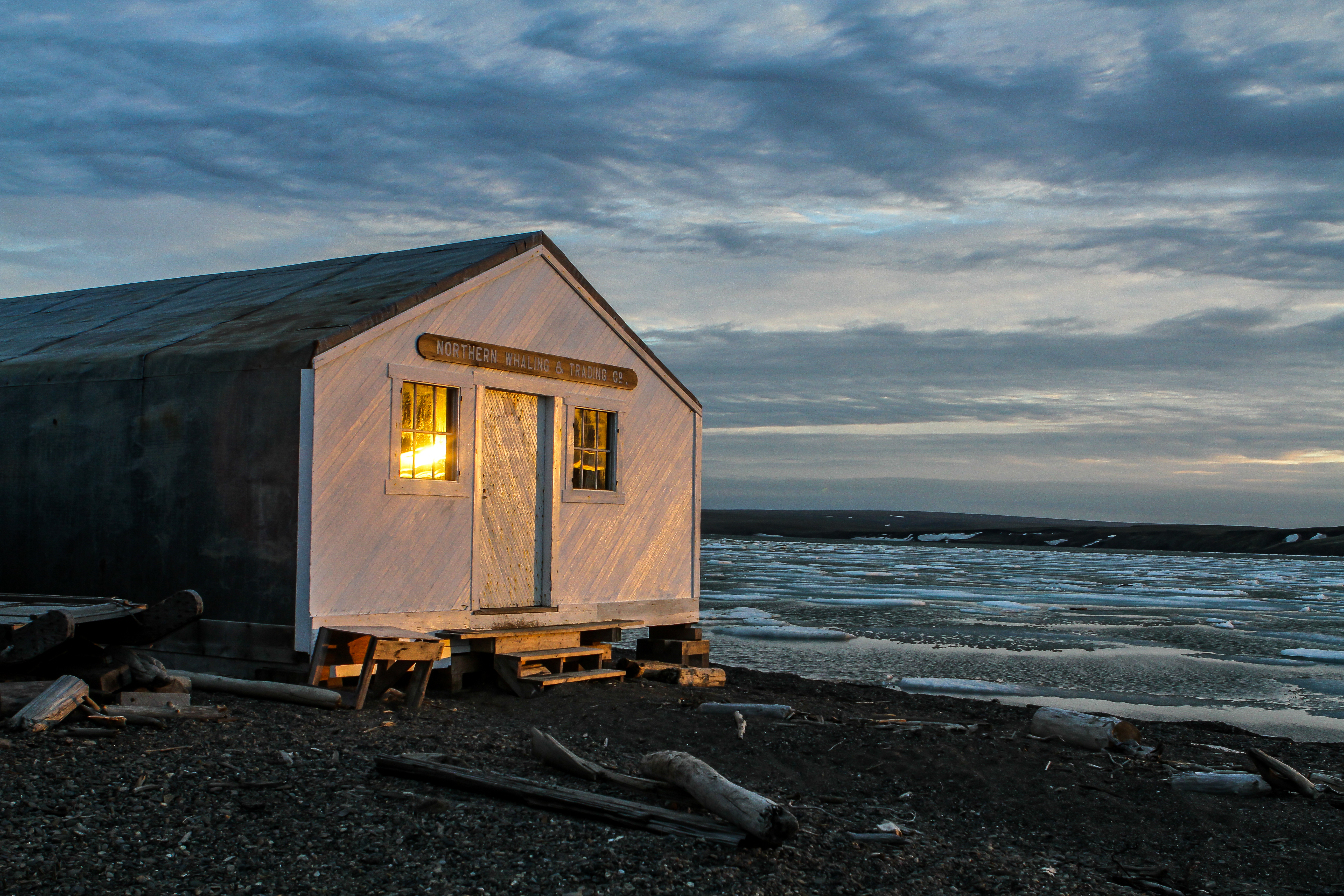
Signal’s House standing by on channel six nine in the Canadian Arctic.

Words by Alex, Charlotte, Elias, Ciara, Anya, Lauren and Isla

Signal’s House, our island home, from the air on a foggy day in June. Photo by Ciara Norton.

From the ground to the sky: fieldwork in Kluane

Roaming the common garden

Over the last five years, the common garden in Kluane has allowed us to collect data on the growth of different willow species from across Canada. This experiment enables us to better understand how plants grow in a warmer climate. Over the start of this summer, which has been particularly hot in Kluane, we have continued smothering our plants with love by fertilizing and watering them so they would allow us to take all sorts of measurements on them – including phenology, new growth, leaf length and canopy height.

At the moment, one Salix richardsonii individual is the tallest plant in the garden at 156 cm, which makes it the king or queen of the (Arctic) jungle! We will be back in August though so there is still time for other plants to have a go at dethroning it. A close-up view of our willows is spectacular, but I have to say that looking up every once in a while from callipers and measuring tapes and seeing the majestic mountains surrounding Kluane lake does not get old – this is truly is a magical place.

By Mariana

Climbing up mountains

Behind our experiment at the shores of Kluane Lake rise the mountains that gives us a chance to step, in just a few hours, into the tundra. Aside from the abundance of shrubs, grasses and beautiful alpine flowers that are our primary attraction to these climes, we have also over the last few years been helping Anna Hargreaves to examine patterns of herbivory. Laying out seeds and cages, we keep an eye out for critters and flutters, picking and scratching, and most often of all, the scraping of teeth and piles of poo that signify a small mammal has found our caches. This year we have added fake caterpillars to expand the repertoire of munching mementos. All went well with putting out the seeds, though it turned out the fake caterpillars were hard to work with in the summer heat! But we managed. Either way, the birds didn’t seem overly keen – only one, maybe three, caterpillars got pecked. Whatever the task, it hardly matters once atop the mountains: the views are reliably beautiful!

To find out more:

Hargreaves, A., Suarez, E., Mehltreter, K., Myers-Smith, I., Vanderplank, S.E., Slinn, H.L., Vargas-Rodriguez, Y.L., Haeussler, S., David, S., Munoz, J. and Almazan-Nunoz, R.C., 2018. Seed predation increases from the Arctic to the Equator and from high to low elevations. bioRxiv, p.304634.

By Gergana (and Haydn)

Flying drones

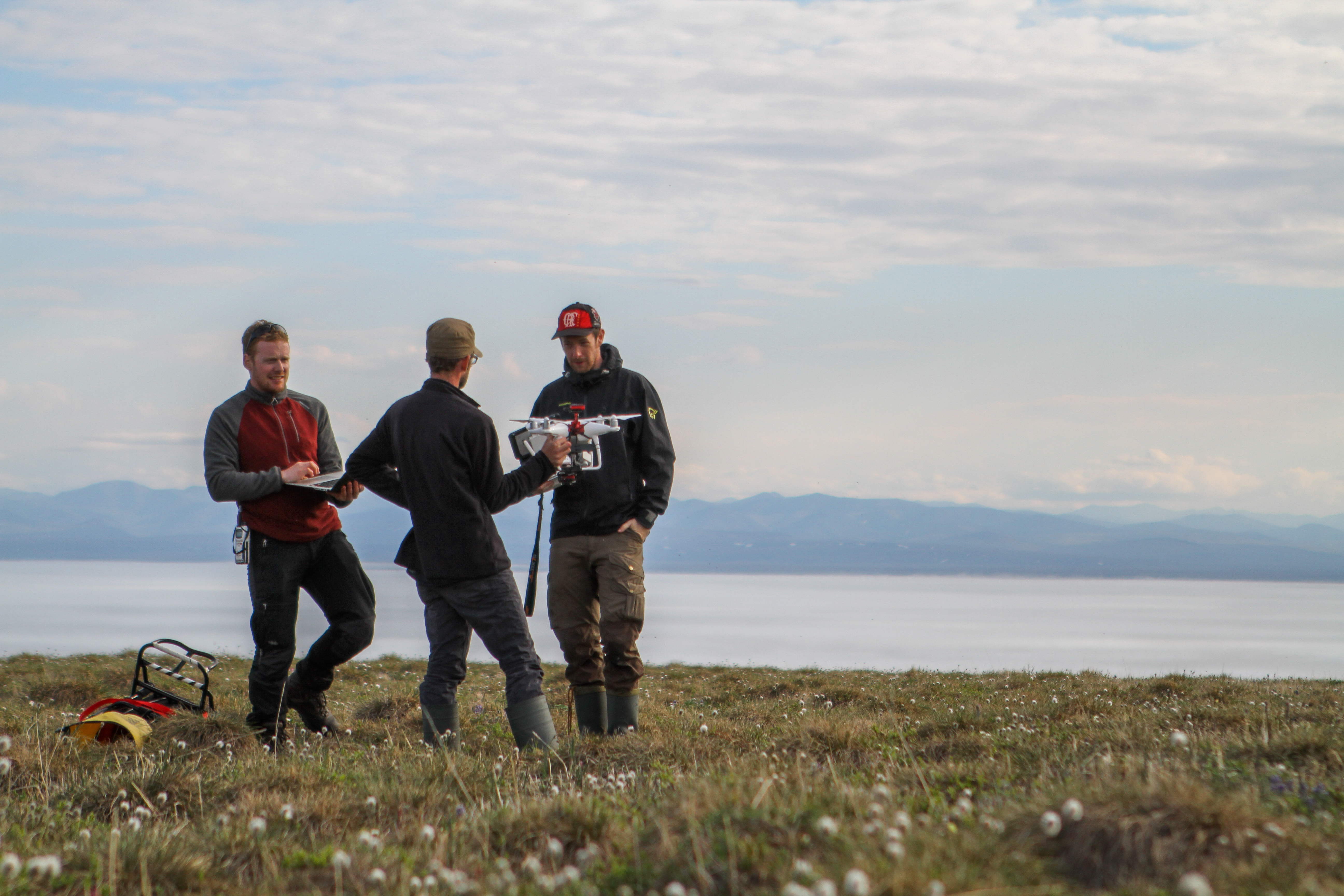
Drones! We still have them, none have broken yet. The main task of our test flights while in Kluane was adding the Sequoia multi-spec sensor to the DJI Phantom 4 Pro (editor’s note: for non-drone folks I think that means ‘added a cool camera to a mini helicopter’). The flights were a success with slight glitches that have been corrected by now. The only casualty during our flight operations were my ankles which were not properly protected from the mosquitoes during the first flight at dusk. If anything it was a proper introduction to the bugs that we’ll face while on Qikiqtaruk-Herschel Island. Once all flights were completed, we carried five gallon buckets from the lake to water the community garden through herds of black flies.

Yes, I was sore the next morning.

By Noah

Exploring – from the ground to the sky!

In between measuring leaves, counting seeds and flying drones, we also got to explore the icefields near Kluane – a magical experience! Our favourites included the super high mountains, the rich turquoise colour of the little pools among the ice, and just the all around grandeur of the place. Majestical, as the movie Hunt for the Wilderpeople would put it.

We continued the Team Shrub tradition of a barefoot icefield run – refreshingly brisque! It was quite the contrast to feel the heat of the sun and the chill of the ice at the same time.

We are now off to Qikiqtaruk-Herschel Island for the next, longer stretch of our field season! In less than two hours, us and many boxes are scheduled to depart for Qikiqtaruk. Oh the adventure that lies ahead…we can’t wait!

By Gergana, Mariana and Noah

The turning of the seasons

It’s a hot day. The sun is beating down on the damp ground, freshly cleared of melted snow, and beneath the wet surface the ice begins to retreat.

Nothing too unusual, except that it’s the middle of April, and our field site is an island off the Arctic coast of Canada. Thirty years or so previously things would still have been buried under a thick blanket of winter snow, but as the Arctic heats up, spring is advancing.

DSCN4367.JPG
Springtime in the great white north

One of the big questions we are trying to answer is how an earlier spring alters tundra plants. Are they flowering earlier? Does that mean growing seasons are longer? What about different species, do some do better than others? Are there knock-on effects for pollinators, birds, caribou? Can we predict how things will change in the future?

All big questions, all with big consequences for the shape and colour, the sights and smells, the ebb and flow of life for plants, animals and people alike in these cold northern lands. We are faced with one big problem though: come the spring, there’s no-one yet around to measure anything.

But, to butcher a quote, we have a cunning plan. Three, in fact.

1. Eyes in the sky

While we may still be enjoying the cherry blossom on the Meadows and the blustery showers blowing in from the North Sea in April, our field sites are still being watched from above. Satellites give us a great deal of information, all year round, that we can use to track the timing of life (phenology) across the Arctic.

QHI 2017-07-07 TERRA True Colour Composite
Qikiqtaruk locked up in sea ice this spring

One approach is to use the ‘normalised difference vegetation index’ (or NDVI for short) to measure the ‘greenness’ of the landscape as the spring unfolds. That works well enough, but the resolution is coarse, and clouds are causing a lot of trouble (no data) particularly in the cloudy summers of the Arctic.

Part of our research aims to link satellite data with ground-based observations. We do this using drones to collect high-resolution imagery and NDVI measurements at the landscape level: ‘bridging the gap’ between coarse resolution images from space, and very detailed monitoring data from small-scale vegetation plots. This way we get a much better understanding of what is going on when we’re not at our field sites, and at all the other places around the Arctic we will never get the chance to visit.

Will_flying_drone
Bridging the gap

2. Boots on the ground

One of our local breweries has recently started a series called ‘Advancement Through Collaboration‘, teaming up all sorts of different groups to create something new. We try to take the same approach to our own science, whether it is sharing data and ideas with other Arctic researchers around the world, or creating artwork out of shrub rings.

When it comes to phenology, we are incredibly lucky to be able to collaborate with Yukon Parks rangers on Qikiqtaruk – folks who not only welcome us to their lands each summer, but provide insight into the changes in the tundra in ways we never could. Three times each week from late April to early September, every year since 2001, the rangers make the half an hour hike up to sets of long-term monitoring plots to record life stages in three tundra species. They diligently record when their first leaves appear, when they flower, and when they die. Overall, this is one of the longest continuous phenology monitoring datasets in the tundra!

SAB-6079
Checking up on the long-term phenology plots with Ricky-Joe and Sam

With data like this, we can track how plants are responding to change in much more detail. We can also compare different species: are there winners and losers? And we have the data to link things across scale: the information to build the bridge up from individual plants to the whole biome.

DSC_4746.jpg
Gergana and Will collecting detailed growth and phenology measurements

3. Fly on the wall

It’s never going to pull in the TV audiences of Big Brother, but a bunch of 24 hour cameras trained on Arctic plants really floats our boat. Last year we installed a couple of phenocams – basically time-lapse cameras – to track in more detail how plant communities are changing over the growing season.

This year we were fortunate enough to secure some additional funding from the Royal Geographical Society (with IBG) to expand the project. Hugely exciting for us, we will now be able to track vegetation communities across the island, scaling up our findings from the long-term monitoring plots to the landscape scale.

IMG_1411
A phenocam standing tall above the Arctic tundra on Qikiqtaruk

Even more exciting, we are using the cameras to link differences in phenology across the Arctic through our ‘common garden’ experiment in the south of the Yukon. Here we have planted willows collected from across the Yukon to examine whether different populations will respond to change in different ways. One of the biggest differences we have seen so far is that northern populations seem to stick to their ‘home’ growing season: they leaf out late and senesce early compared to southern individuals of the same species growing just 50cm away.

Does the difference in senescence timing explain the difference in growth in these two willows? Willows are of the same species, collected as cuttings in 2013 from a southern tundra site (left) and northern tundra site (right).

At present we can only track phenology changes in the garden thanks to input from more wonderful collaborators – Sian Williams and the folks from Icefield Discovery working down at Kluane Lake. With our new phenocams we can for the first time track differences in phenology over the whole year, not just in our experiment, but at the sites where willows were collected! We think this is the last piece in the puzzle to be able to answer exactly what is going on – whether willows have responded to new conditions, or whether their genes mean that old habits die hard. Our phenocams in the common garden are now installed, and we’ll be installing the remainder at our remote field sites as soon as the summer expeditions get underway. Watch this space!

By Haydn

Haydn is the recipient of a Dudley Stamp Memorial Award on behalf of the Royal Geographical Society (with IBG).

Fieldwork Milestones

The icy waters that welcomed us to Qikiqtaruk are long gone – past are the beautiful sunsets with light reflecting off big chunks of ice, and instead we now see dark blue or grey waters and occasionally even beluga whales swimming by. It’s a great time of the summer, with some flowers still in bloom, while others are setting seeds. The sandpiper and plover chicks are growing up, and we have been spending lots of time out in the field – through sunshine, wind and fog, the data are rolling in!

Now that we have already celebrated our two week and three weekiversaries on the island and are approaching a month on the island, we thought we’d reflect on our fieldwork milestones so far!

21st June

We celebrated solstice by arriving on the island, checking out the vast expanse of sea ice in the water and exploring our home for the summer and all the breeding bird species with Park Biologist Cameron Eckert.

IMG_5357.jpg

1st July (Happy Canada Day!)

Canada Day dinner with the rangers – for some of us it was our first Canada Day ever and it was the big 150 this year, and we all had a great time sharing stories and enjoying a tasty feast on a day celebrating the confederation of peoples including all the original people of this vast country.

DSCN4394

2nd July

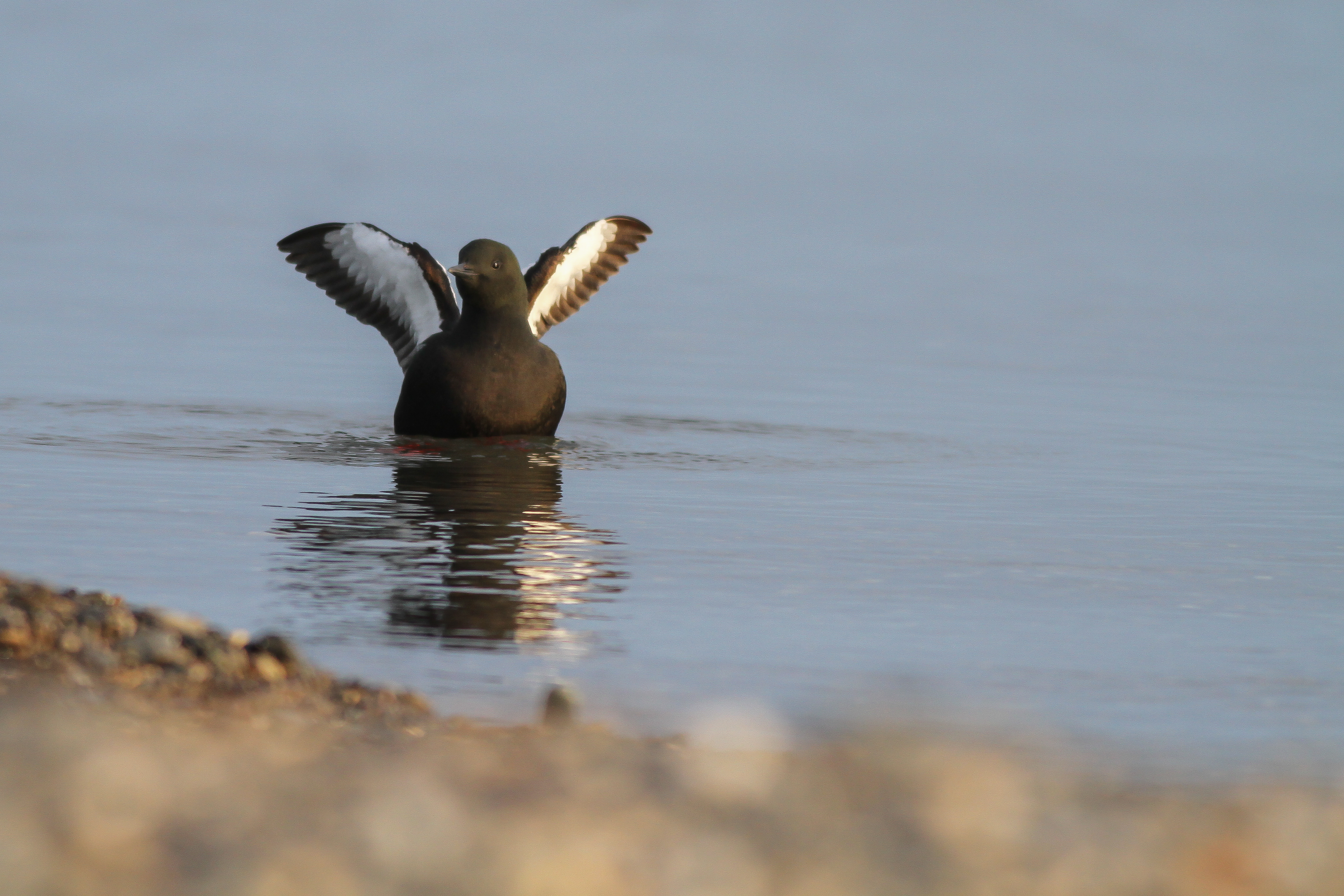
Wildlife sightings – some of our favourites include a herd of 25 caribou with calves, the four majestic muskoxen, a short-eared owl flying over camp, black guillemots riding the waves, waders dashing around on the spit, and belugas and bowheads off the cliffs from Collinson Head (14th July).

4th July (Happy Independence Day!)

Six new phenocams are all set up and hopefully well enough to resist any muskox encounters (none so far)! It will be great to see all the photos stitched together at the end of the season from May to August, thanks to the rangers setting things up for us before we arrived. The ongoing on-the-ground phenology observations have also been no less exciting, though they are a bit more of a pain to collect when the mosquitos are at their most ferocious like yesterday!

6th July

The first twisting of the filaments of the Dryas (mountain avens) in our phenology monitoring! We’ve also been counting how many flowers there are in each of the phenology plots and we are now past peak flower time – now there will be fewer and fewer pretty coloured flowers, but watching the Dryas seed heads develop and twist round and round and the fluffy flowers of the Eriophorum take flight is beautiful too!

Screenshot 2015-07-30 20.27.06

7th July

A Team Shrub record for largest area surveyed with drones in one day – 3,000,000 meters squared. We now have 193,735 images (as of 15th July) and counting for this field season so far. As soon as the winds die down the drones are out – with three pilots in the field, there has been lots of drone action – different drones, different scales of investigation, different spectral bands, which together will hopefully give us a comprehensive view of vegetation change across the tundra.

DSCN4302

8th July

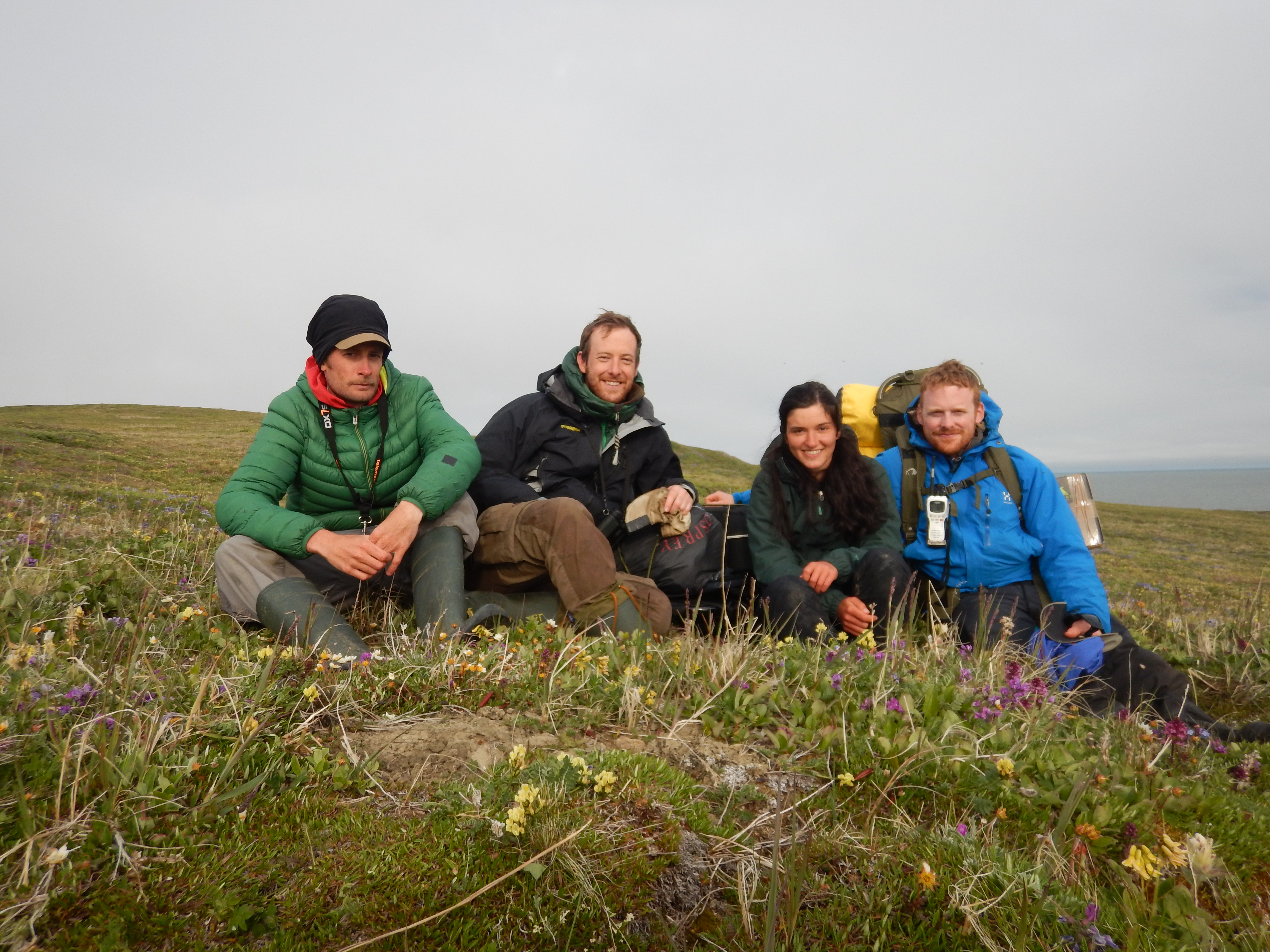
Our first group photo (minus Isla who hasn’t arrived yet)! Team Drone surrounded by tundra flowers and arctic willows.

DSCN4439

10th July

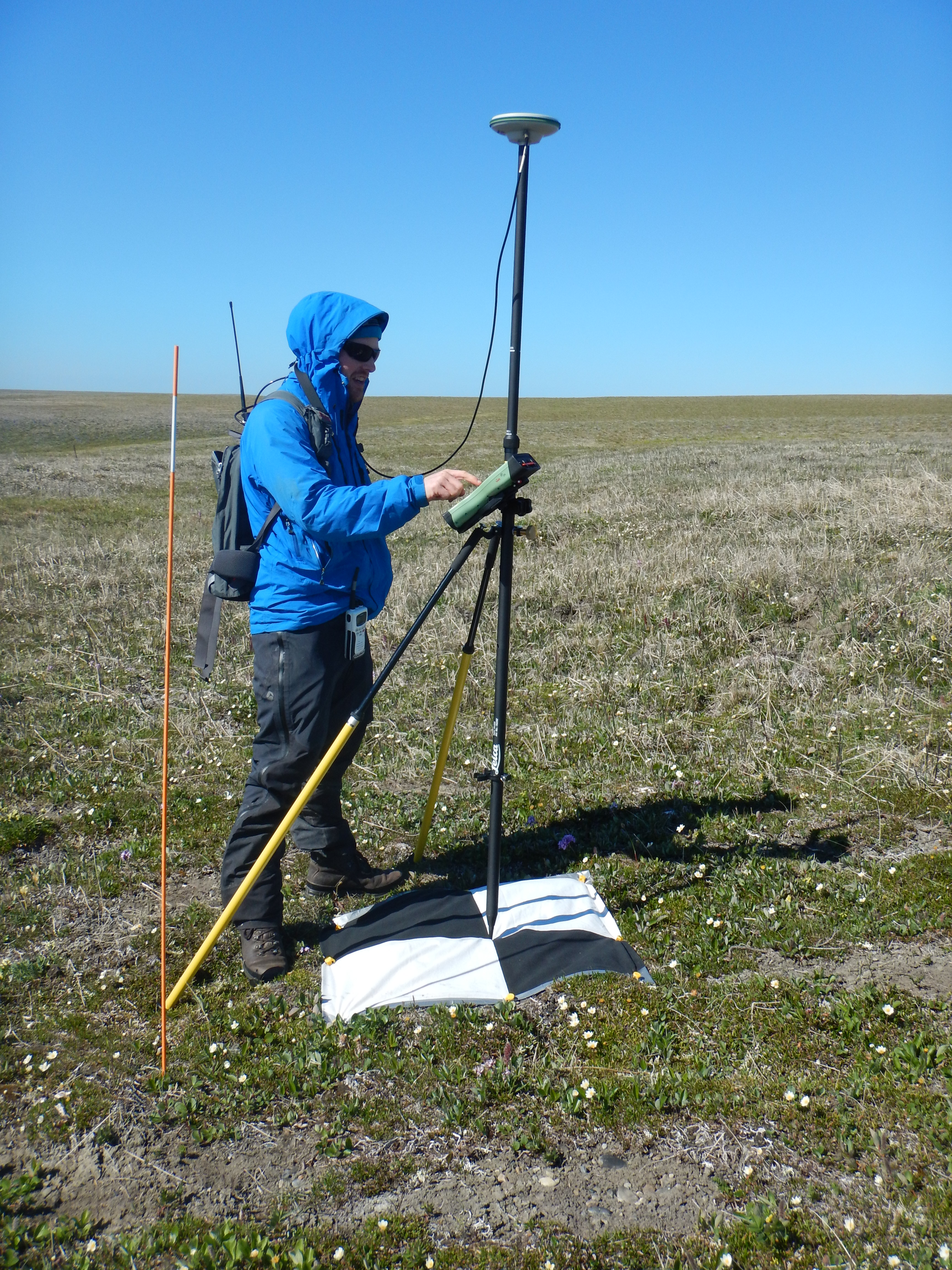
A milestone in the making – surveying all of our sites with GNSS (a type of GPS system) – a super precise way to know exactly where all of our markers and plots are. Around a week ago, we met with representatives of Canada Parks and it was very cool to learn that they also use GNSS technology when mapping historical sites – always interesting to see how people use the same technology in different ways.

DSCN4388.JPG

11th July

Perhaps the most exciting milestone of all (at least for Isla): Isla has arrived!!!  I have finally made it to the island after five days of trying.  Finally, on Tuesday the 11th of July my float plane successfully touched down in Pauline Cove as a seal curiously watched on.  Most amazing of all was that the “freshies” the fresh fruit and vegetables that had been sitting in a hot plane for more than two days were actually for the most part fine and still as fresh and delicious as vegetables tend to be in the North.

IMG_5177 (1)

14th July (Happy Bastille Day!)

Another Team Shrub record of 50 drone flights in one day! And, the excitement of finding a two-way radio in the tundra, several days after it was last seen.

DSC_5366.jpg

15th July

Active layer depth has reached its highest value yet at 68cm this week! Strong winds delayed some of our initial drone flying, but there have been lots of ground observations made. The metal probe we’re using for the active layer depth measurements is also a pretty good walking pole! And when dragged along the ground sounds a bit like that noise from that horror movie “The Shining’.

DSC_4699

Every day

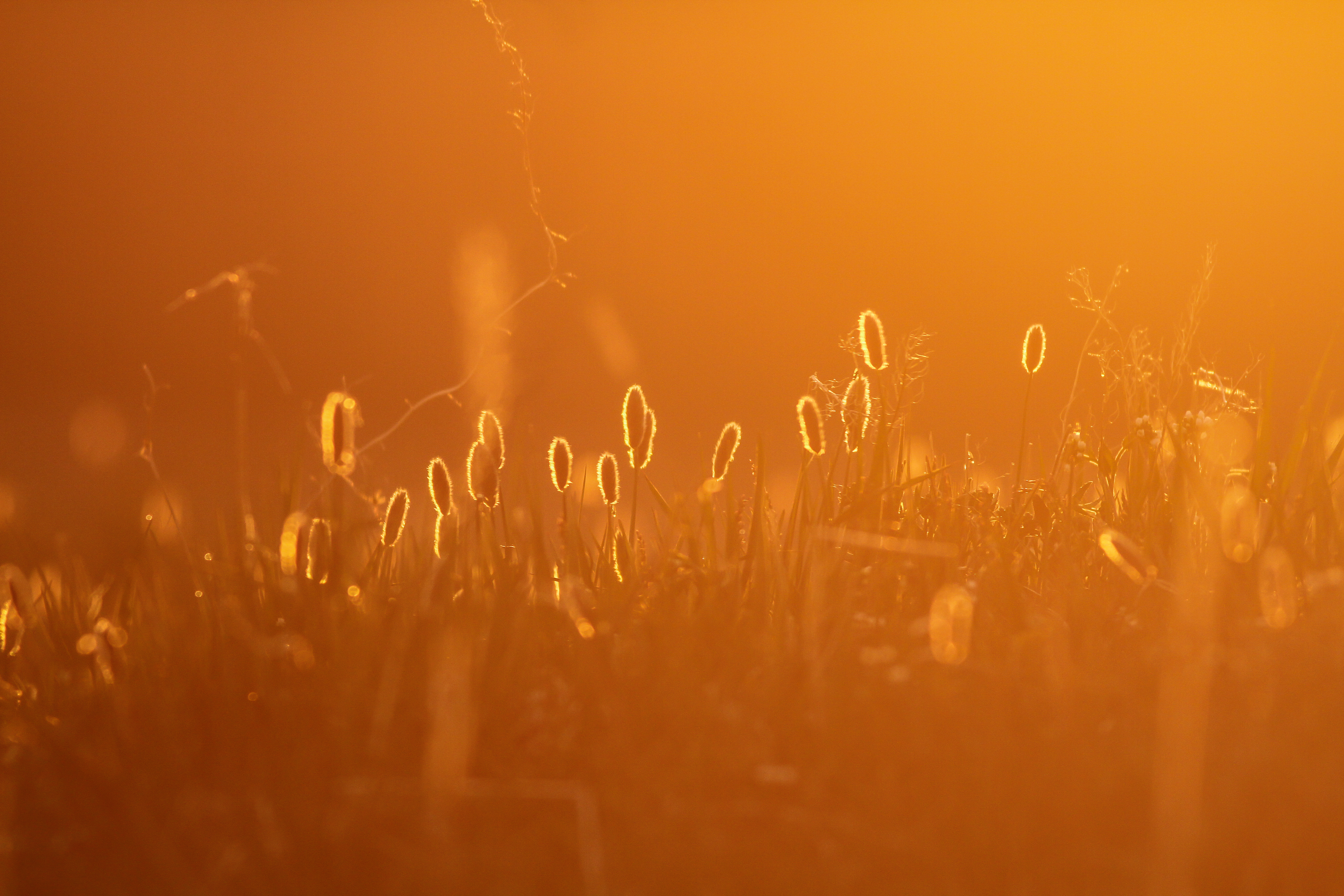
Awe-inspiring sunsets – Qikiqtaruk is beautiful at all times of the day, but the evening light makes it all extra special! There are also many ittle moments of beauty in the field – be it a particularly fluffy patch of cottongrass, backlight lupines, a family of ptarmigans walking by, or just the sheer grandeur of the landscape, it’s been great to stop during data collection for a second to take it all in.

IMG_5532

So at nearly one month in there are many milestones to go.  What will we see or experience next?  Only time will tell…

By Gergana, Isla and Team Drone

Fieldwork pickles

Fieldwork often results in funny situations.

Some of these situations are frustrating as they happen, but they can be funny afterwards. From forgetting and/or loosing things and various pieces of equipment not working to unpredictable weather getting in the way of drone flights, there is no shortage of opportunities for us to find ourselves in a real pickle. A strong smell of vinegar fills up our cabin right now, so it seems like an appropriate time to share stories about our fieldwork pickles so far, both real and metaphorical!
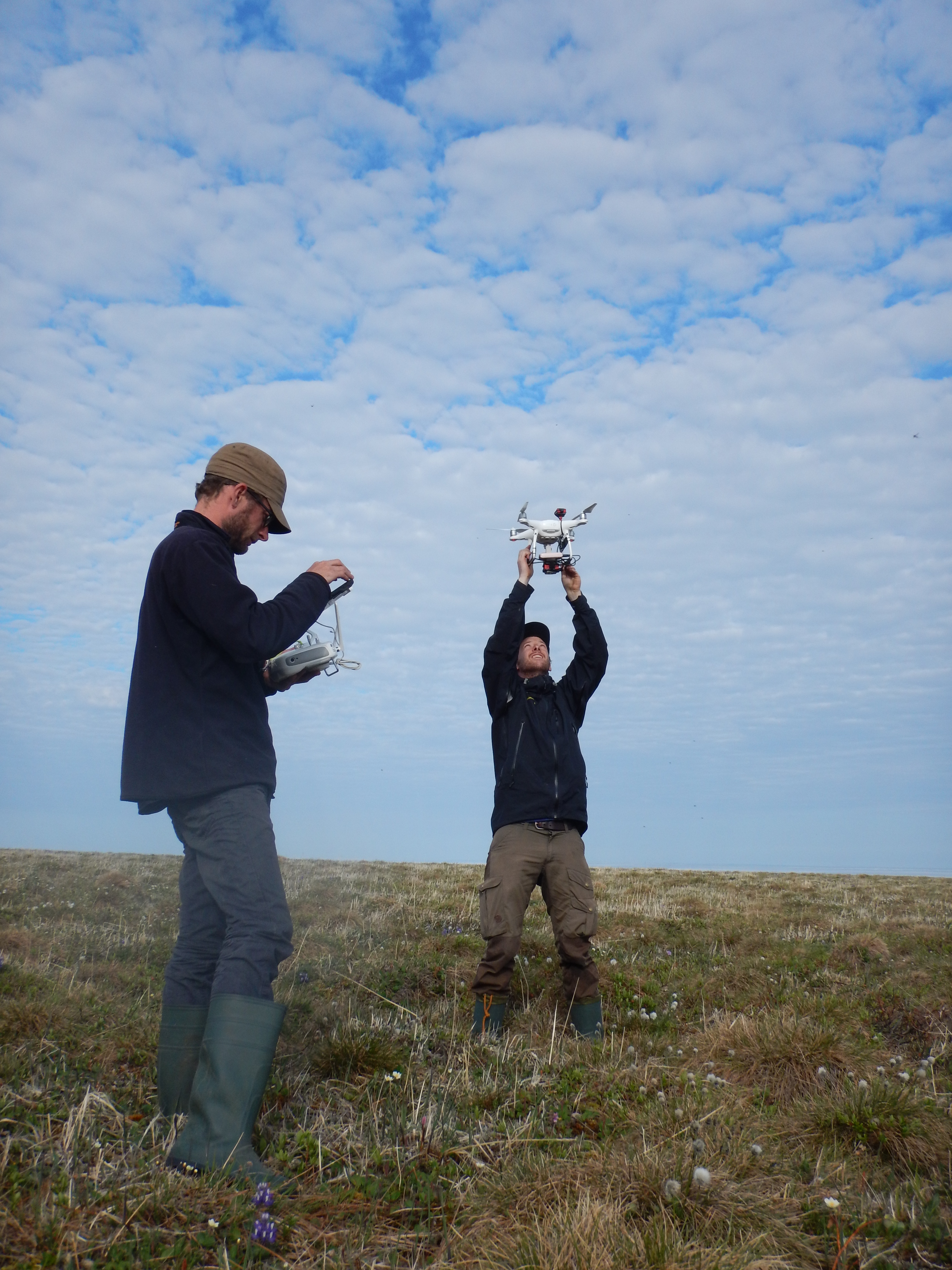
Last year the team put out sets of markers to identify our drone sites. Most of the markers made it through the winter just fine – they are still exactly where they were pinned down… but some now have around 10-15cm of water above them! One of the sites is flooded – we were wading through the water, aiming for the dry grassy areas beyond the wet patches, when we realised we are actually already in the site! After looking through the murky water we eventually managed to find a fair few of the markers. We’ll still need to wait for the site to dry off a bit before we can fly the drones above it, so hopefully all the wind and sunshine will help with that1

DSC_5039.jpg
Wading in the willows

This field season we arrived on the island with a serious drone fleet – several multicopters and fixed wings, some of which we are using for the first time. Troubleshooting drone problems on a remote Arctic island has already given us the chance to ponder creative solutions, as we can’t look up things on the internet or send the drones back for repairs. Luckily, this season we have three drone pilots, so hopefully we are in for some smooth flying! Nevertheless, we did still accidentally cut a very important wire 2km away from camp making the drones inoperable – at least it was a beautiful day for a walk back to camp to get a new one!

IMG_5327.jpg
“You broke what?!”

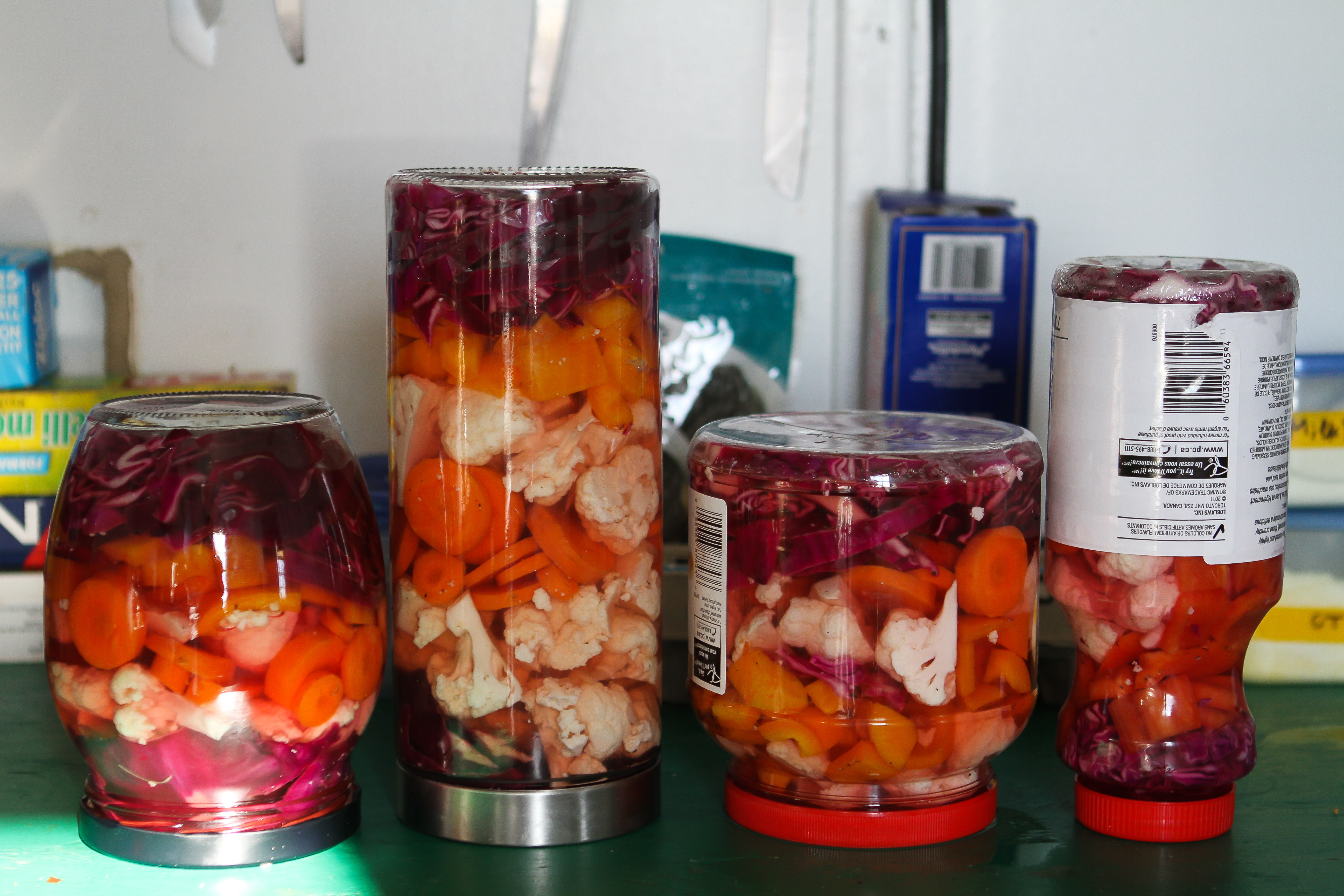
And then, of course, there are the real fieldwork pickles! I used to do a lot of canning (and I still have jars of pickles left from when I pickled over 100 jars of gherkins – it was a great year for cucumbers!), so I thought I could whip up a batch of island pickles. After all, Qikiqtaruk is our home for almost two months, and what makes a place feel like home? A lovely community to welcome you… and a few jars of homemade pickles! So with veggies, jars and a recipe from back home in toll, I set out to make “Парена царска туршия”, which translates as “mixed pickled salad for kings”.

Making pickles turned into one pickle of a situation though, when I found brine shrimp swimming around my pickling jars, certainly not the brine I was going for! I have since found more jars and in two weeks’ time the pickles should be ready to eat!

So here’s to a field season where we seldom find ourselves in a pickle and instead, enjoy some nice pickled veggies!

IMG_5647.jpg
Mixed pickled salad for kings

By Gergana