Droning on about Arctic change

“Droning on about Arctic change” was a joke title that collaborator Jeff Kerby and myself came up with for a presentation recently, but it does actually accurately describe some of the research that we are doing here on Team Shrub. Nearly three years ago our research project – the ShrubTundra project, was funded by the Natural Environmental Research Council and that has given us the opportunity to get into the drone ecology business and travel for the past three summers up to the Canadian Arctic to bridge the gap between satellite and on the ground observations of vegetation. In this long-awaited blog post, I will tell you all about the drone research we have been conducting on the island, the new collaborations that we are building with drone ecologists around the Arctic and the preliminary results of our work thus far. Is the Arctic greening that satellites are sensing the same vegetation change that we observe on the ground?  Here I go… droning on about Arctic change.

20170720-Andy_DJI_0024 (8)
Drones offer a very different perspective of the tundra. How small we are here!

Much of drone technology has been out there for decades, including remotely controlled planes and military unmanned aerial vehicles, but with the commercialization of high powered batteries and the development of automated flight technologies, drones have literally taken off! In the past half-decade or so, the promise of drone technology for scientific research has begun to be realized and we hope that the ShrubTundra project is leading the way for drone ecology in tundra ecosystems. Drones are allowing ecologists to observe ecological processes at the landscape scale such as phenological changes, plant growth and community composition change. We have learned a lot over the past three years in our drone research and made some important discoveries so far, but there is much work to do.  As we continue to collect terabytes of data out here in the Canadian Arctic, we can look forward to the data presents that will be revealed over the coming year.
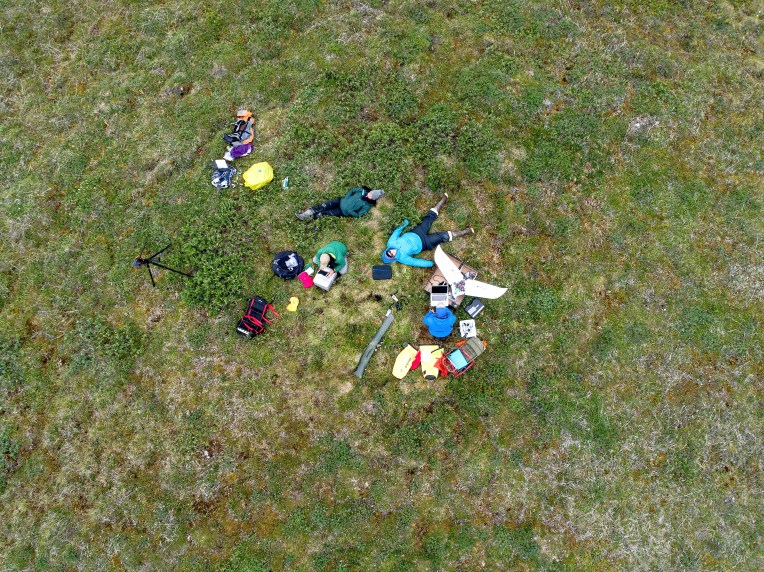
20170723-DJI_0691
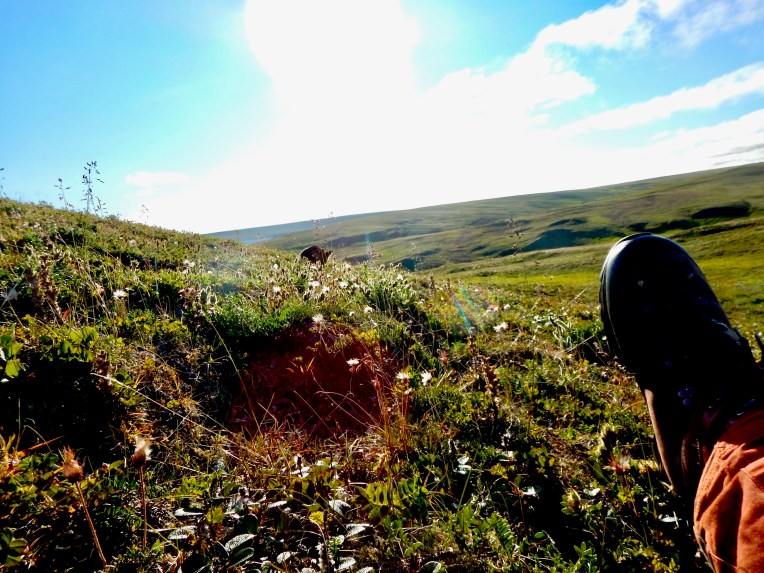
It takes a whole team to fly a drone… Although we sometimes have time for a tundra nap while the pilots set things up.

The drone team up on the island is led by postdoc Andrew Cunliffe or as it says on his drinking glass – “Y Up”, and visiting researcher Jeff Kerby, “J-man the K-dog”.  We are joined this year by drone pilot Will Palmer aka “Tool Bag”, our first commercial drone pilot on the team.  Providing assistance to the team here on the island is soon-to-be PhD student “33 Thimbles” Gergana Daskalova, and me “Magnum PI” or “Captain Shrub” Isla Myers-Smith.  And back in Edinburgh is our support team including PhD student Jakob Assmann, NERC Airborne GeoSciences manager Tom Wade, the NERC Field Spectroscopy Facility, NERC Geophysical Equipment Facility and the rest of Team Shrub. I will also give a shout out to a new Team Shrub member Karol Stanski who is an informatics master’s student co-supervised by Chris Lucas working on automated processing of some of our drone data – counting flowers from above.  Drone research definitely takes a whole team and as always we are indebted to you guys on the outside for helping us keep the drones in the air and the sensors working to keep the data flowing in.

In the ShrubTundra Project, we are using the drones to understand the following four scientific questions:

  1. How does landscape-level phenology (the timing of green up, flowering and browning and browning of tundra plants each year) relate to on-the-ground and satellite observations?
  2. What environmental factors (such as soil moisture) explain where the greenest parts of the landscape are found and where vegetation change is occurring most rapidly?  And are there particular spatial scales of investigation where these relationships are strongest?
  3. How can we scale vegetation change observations from the individual plant, plant community, landscape to biome?  And are the relationships between on-the-ground, drone and satellite data found at our focal research site on Qikiqtaruk-Herschel Island consistent with data from other sites around the Arctic?
  4. What are the rates and volumes of permafrost and coastal erosion disturbances across the landscape and are these rates accelerating?
20170720-Andy_DJI_0024 (2)
Why are some parts of the landscape greener than others, and how quickly sediments are being carried from the thaw slumps to the ocean, are some of the questions we are addressing with our drones.

In our final year of the project, funded by the UK Arctic Bursary programme, we are teaming up with Trevor Lantz from the University of Victoria and Robert Fraser from Natural Resources Canada working at other sites in the Western Canadian Arctic, and other researchers working at sites around the Arctic through the High-latitude Drone Ecology Network to try to test these questions in a coordinated way across the tundra biome.

Collecting data using drones is a bit different from other ecological work. You are much more dependent on the weather. Too much wind, any rain, any fog, even just clouds can all get in the way of drone flights. There is nothing so frustrating as carrying all of our equipment out to the most remote of our sites only to find that the weather has changed and we can no longer fly. This summer we have been chased out of the field by thunderstorms, sudden wind gusts and downpours of rain. But recently the weather has been pretty good for drone flying and we have had some really big data collection days – with over 26,000 images and 70 GBs of data collected in six hours of airtime around solar noon, using quadcopters and fixed wings. When you collect that much data in one day there is a lot of post data collection work to do that we have been calling “metadata”, but that really only describes part of the work from charging drone batteries to collating images, reviewing their quality and writing up all of the flight information.
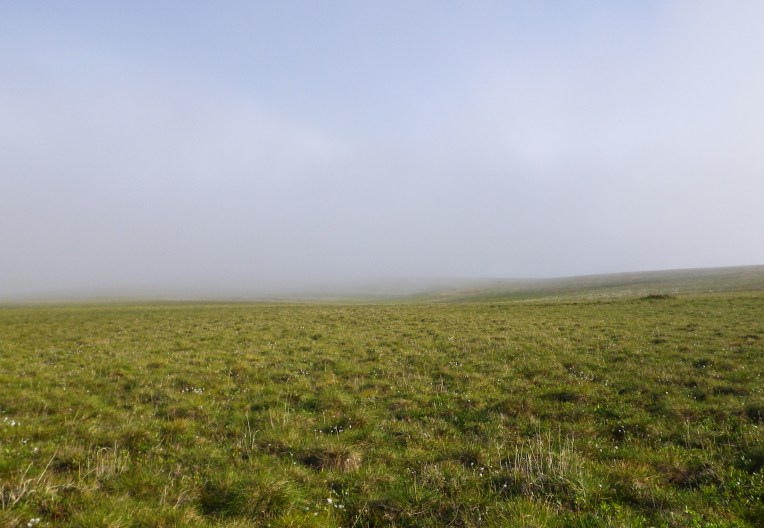
SAB-0143
A sudden turn in the weather, like fog rolling in, means we are grounded until it improves again. Time to be revert to being a plant ecologist who looks down instead of up, and carry out our other protocols!

The thing with working with drones is sometimes you run across “drone troubles”.  Whether it is too few satellites, compass calibration issues, funky cable connections to the camera sensors, there are always different types of challenges to the work. One thing we have learned from doing drone work in the Arctic is to bring spares and to plan for every contingency. This summer we have expanded our drone fleet: at one point, we figured there were around 15 drones or potential drones on the island, including spare parts. We have brought with us two hexacopters (Tarot 680s), five fixed-wing drones with most of the spare parts for around three more (Zeta FX-61s), three DJI Phantoms (two DJI P4 Pros and one P4 Advanced), two 3DR Iris+ and, for the first bit of the season we also had a Parrot Disco Ag and a DJI Mavic. All of these different drone platforms provide us with many options for data collection, from fine-scale data collection flown at 20 m height for structure-from-motion work to make 3D models of shrub canopies to ‘high altitude’ 120 m flights for large extent models of tundra greenness across the landscape.

So, what have we found so far with our drone work? Most of the data processing is still ahead of us, but there have been some data presents so far this season. We have observed over 10 m of coastal erosion in a two-week period at the edge of the floodplain near our camp – that is very fast even for this rapidly eroding island. We have also observed rapid rates of thaw in the permafrost disturbances known as retrogressive thaw slumps, with large sections of the ground being lost to the mud cesspool below over the past year. Our on-the-ground phenology data indicates that this is an early year, and we are hoping that the drone data also shows that pattern in the time series of multispectral imagery.

DSCN4871
We’re so excited about the amount of data we can collect with drones. Now let’s get this thing up in the air!

For future updates on all things drone, stay tuned to the blog over the field season and through the fall.  And if you are keen on high latitude drone ecology yourself, then sign up for the HiLDEN network!

By Isla
Arctic Smellscapes

Over the last two months we have often asked you to imagine what it would be like to be here with us in the Arctic. Through words, photos and videos, we have tried to bring the Arctic closer to you. So close that if you just imagine, you may well see it. You could even hear it. If you ponder the many changes occurring on Qikiqtaruk Herschel Island, from changes in vegetation structure and community composition to changes in what our life is like here, and listen again, you could hear a change. The Arctic – you can see it, you can hear it, and now, for a fuller experience, we present the Arctic smellscape of Qikiqtaruk, so you can smell it, too. It may have started as a joke, and there may or may not be talk of an Arctic taste- and touchscape, but for now, we do think that the Arctic smellscape represents a unique blend of aromas – smell alone could often reveal what is going on around us and how the landscape, and our day to day camp life, is changing.

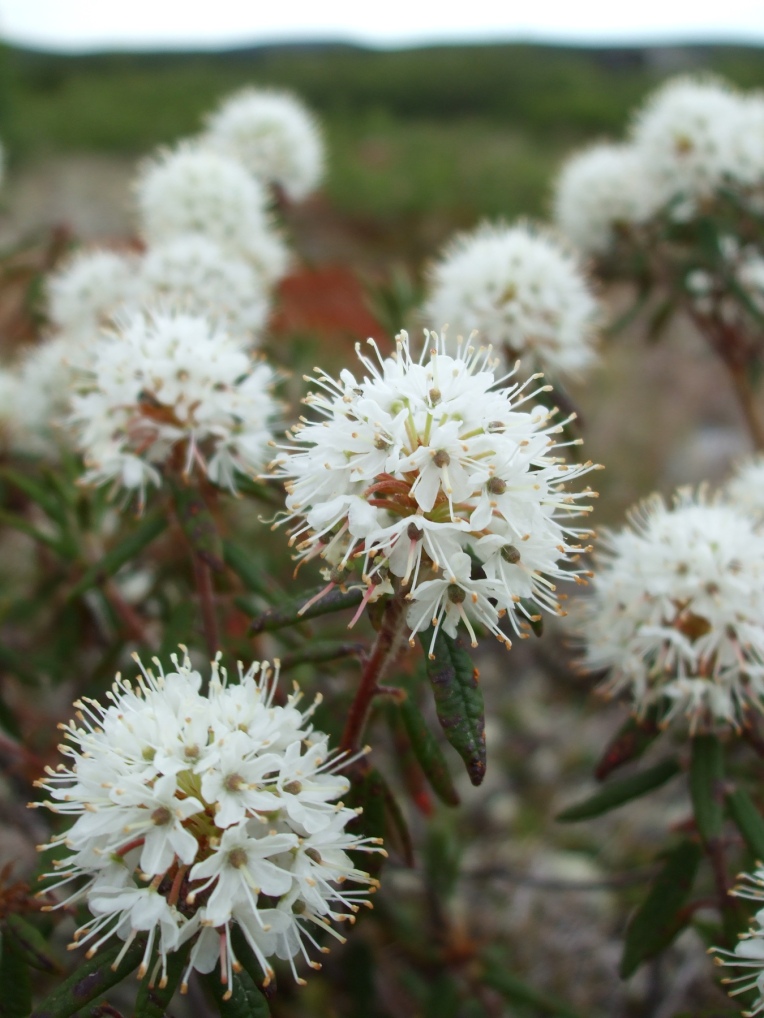
As we step through the tundra, we often think of Team Shrub members that are not out in the field with us this year – though of course we do that regardless of what the air around us smells like, there are particular aromas we associate with people. A whiff of Ledum reminds us of Haydn who dedicated a song to this fragrant flowering plant: “Ledum, I want to get some… Ledum, you rhododendron”. It has been quite hot here, and patches of Ledum bring a bit of freshness like a fine perfume into the stale mosquito-ridden air!

Ledum
We are crazy about the fragrant smell of Labrador tea

Of course, it is almost always followed by a much more prominent smell that follows us almost everywhere we go – mosquito repellent! Layers and layers of mosquito repellent quickly disguise any smell of cleanliness one might have acquired from the sauna the night before. But the chemical smell brings with it reprieve from the persistent insect attacks, and thus the smell is now associated for us with a major sense of relief.

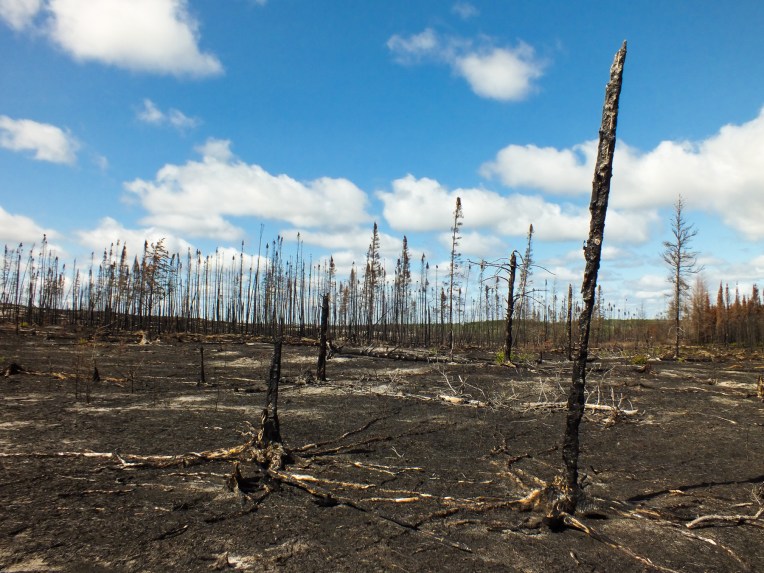
We managed to catch a whiff of forest fires far away – perhaps in Alaska or down by Old Crow the other day? Tundra fires are becoming more frequent across the biome, and though we haven’t seen any here on Qikiqtaruk, we think we’ve smelled fires further away either in the tundra out west or boreal forst down south – making us realise how the impacts of disturbances often extend beyond the places where they directly occur.

DSCF5203
Boreal forests in Canada burn frequently.

On a jollier smell note, the smell of burned wood, in particular when around camp, could also mean grilled char cooking on the fire! We have been treated to delicious char caught by the rangers, and it has been the perfect addition to our meals – from smoked char, grilled char, char soup and char fishcakes, we have enjoyed bountiful char that the ocean and rangers have to offer, both its taste and smell!  A whiff of smoke while returning to camp could also mean that the sauna is on and a chance to get clean and relax after a hard day’s work.  We miss Santeri’s sauna songs and Finnish sauna expertise, the sauna experience isn’t quite the same without him: “Herre Letonen, herre Letonen…”.

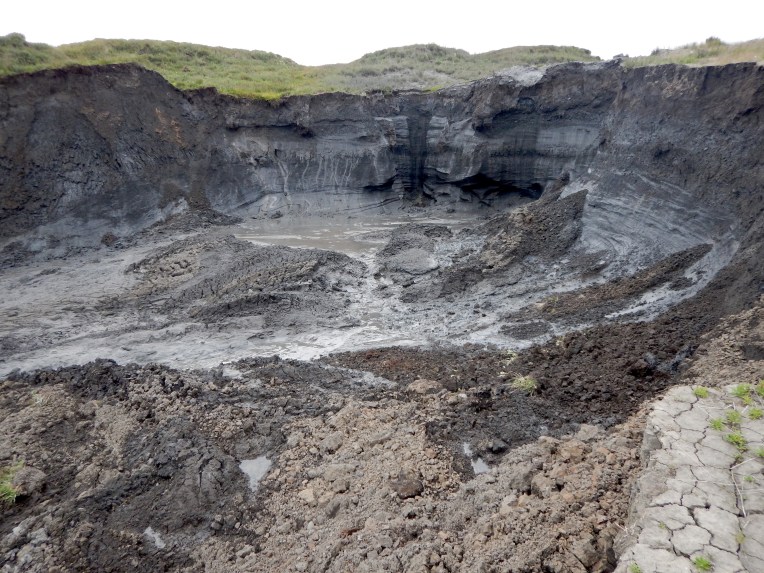
The last two weeks have been marked by the strong and very distinct smell of slump – we have been to slumps ABC and D, where complex biochemical reactions fill up the air with a smell no less complex – it is not a bad smell as one might imagine initially, just very specific to the slumps and coastal erosion. It smells like freshly turned earth, like rotting compost, but stronger, and different in a way that is hard to pin down.  What are those complex molecules filling the air associated with anaerobic decomposition?

SlumpA
The slumps are letting off a rather peculiar perfume

Slump D is one of the largest retrogressive thaw slumps in the Northern Hemisphere. It would certainly be hard to mistake it for something else, but if ever in doubt, its smellscape certainly confirms that we are near a massive retrogressive thaw slump! Recently we have been picking up that smell near camp as well, where big chunks of ground have been disappearing into the water – on some days as much as 3m of land has been succumbing under the waves, This rapid coastal erosion has already reshaped the Qikiqtaruk coastline near Pauline Cove. We have been working to monitor this erosion in collaboration with the Alfred Wegener Institute using drones and time lapse cameras – documenting the rapid retreat of the coastline and blocks of tundra disappearing into the waves.

In our soundscape, silence was particularly special – peace and quiet to ponder life, reflect on our time here, or just be. Here, in our Qikiqtaruk smellscape, we have to say that lack of smell can be pretty special, too. It has been a while since our clothes have been through a proper washing machine, and though we try our best, it is pretty difficult to get our clothes properly clean using limited washing water in a bucket. Thanks to the sauna and a few brave jumps in the ocean, though, we are happy to report that occasionally, we take a deep breath, and smell pretty much nothing except for the fresh Arctic air.

By Gergana

Arctic Soundscapes: Revisited

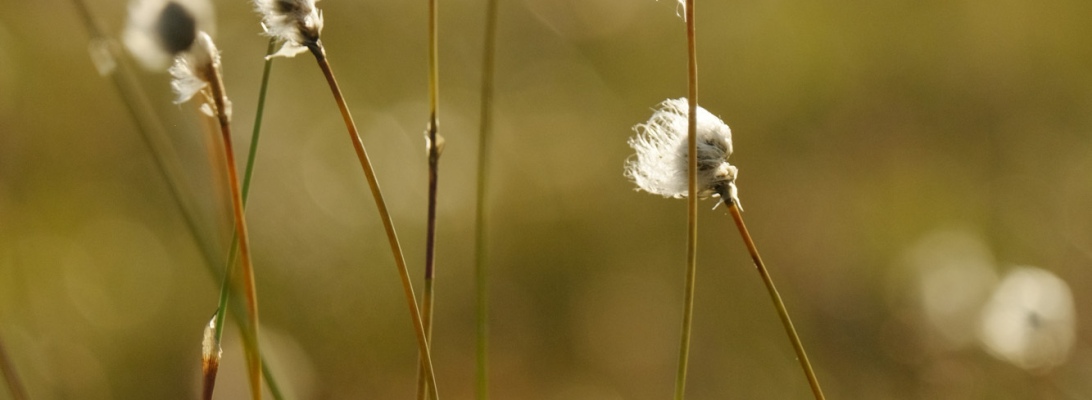
Imagine you are here with us during our field season on Qikiqtaruk – tundra stretching far into the distance, cottongrass seeds blowing in the wind and shiny green leaves of Arctic willows all around you.

DSCN0444.jpg
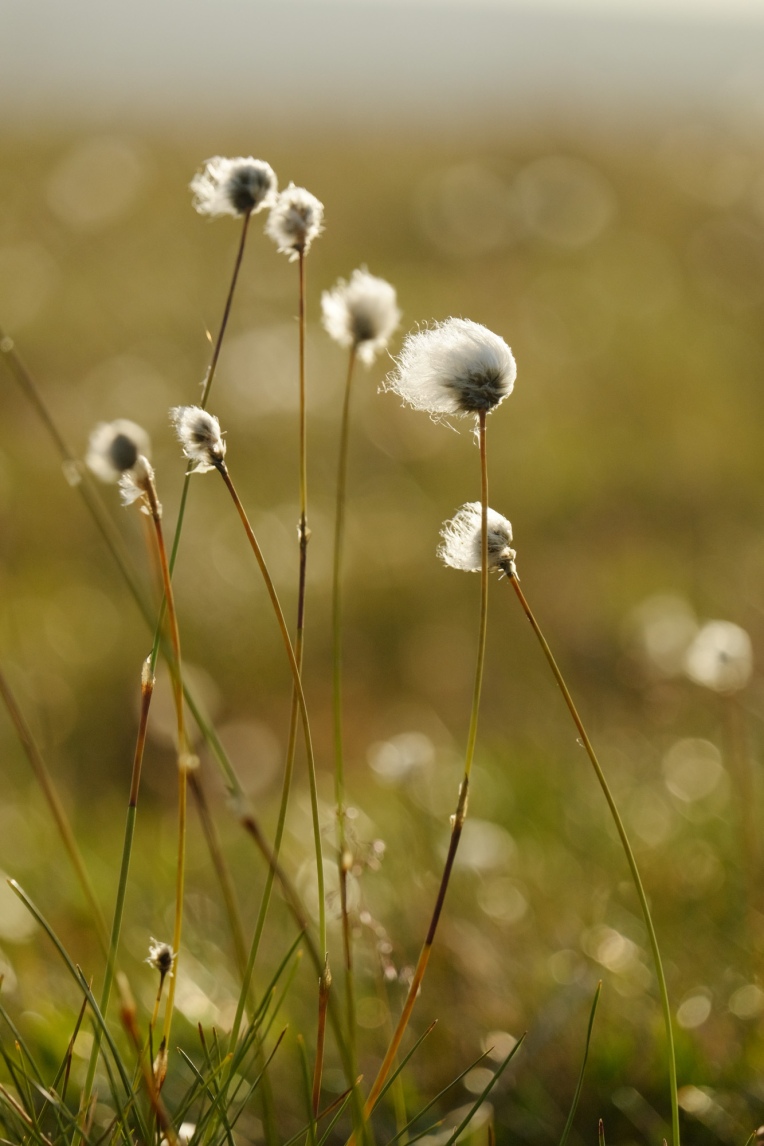
Cottongrass seeds blowing in the wind

Close your eyes and listen – we have already shared our impressions of the Qikiqtaruk soundscape – the bird songs, the gentle breeze and ferocious winds, the hum of the bumblebees and the calming quiet. But time has passed, and we are now approaching the height of the summer season. The landscape has changed, and so has the soundscape. There are still the ubiquitous calls of waders and the occasional moments of silence, but today things are a bit noisier – so let’s revisit the soundscapes of Qikiqtaruk.

·       Radio chatter. The Qikiqtaruk radio channel, channel 69 – the pleasure craft channel – is the main way of communication between the rangers, researchers and visitors here on the island and beyond. We can even communicate with folks at Shingle Point over 50 km away and any passing boat traffic. It can sometimes get a bit lonely while you’re out in the tundra, so it’s nice to overhear talk on the radio, be it conversations about the weather (“Do you see whitecaps at Qikiqtaruk?”, “Yes.”, “Are there whitecaps at Shingle?”, “Yep, there are whitecaps here too”), the stats relayed usually refer to how many char have been caught that day, and daily check-ins to make sure all is well. A new radio channel has been added to our usual playlist, number 72, leading us to the next unexpected element of today’s soundscape.

DSCN0480.jpg
Radio chatter

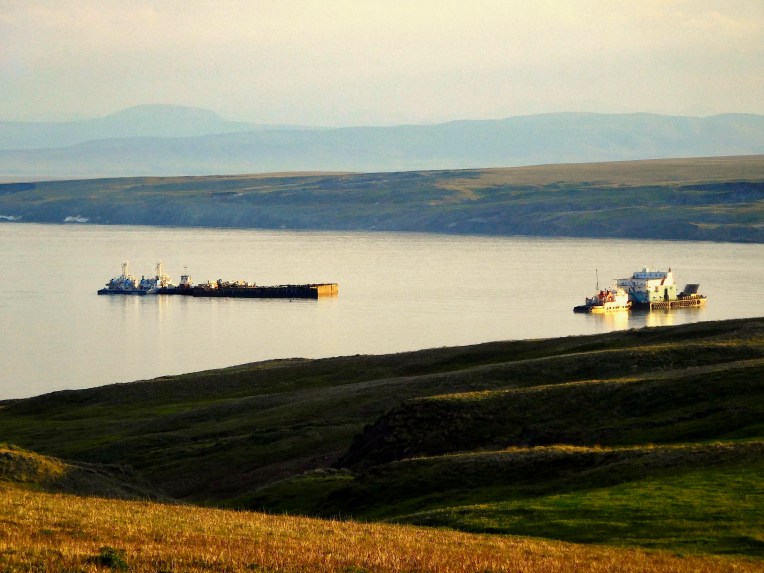
·       Construction noises! An old caisson – a large concrete submerged artificial island –  near the shore is getting removed nearly 40 years after it was last used during the oil extraction period in the 1970s and after almost a decade of planning. The other day the peace and quiet of our Arctic summer home was overcome by the sounds of an industrial site setting up next door. The usually unoccupied waters around Qikiqtaruk are now home to four big ships, two barges and several smaller vessels that seem to be working away both day and night. It’s a peculiar mix to have first the bird cranes singing, then the construction cranes adding in less poetic notes to our Arctic soundscape!

DSCN0641
An industrial site setting up next door

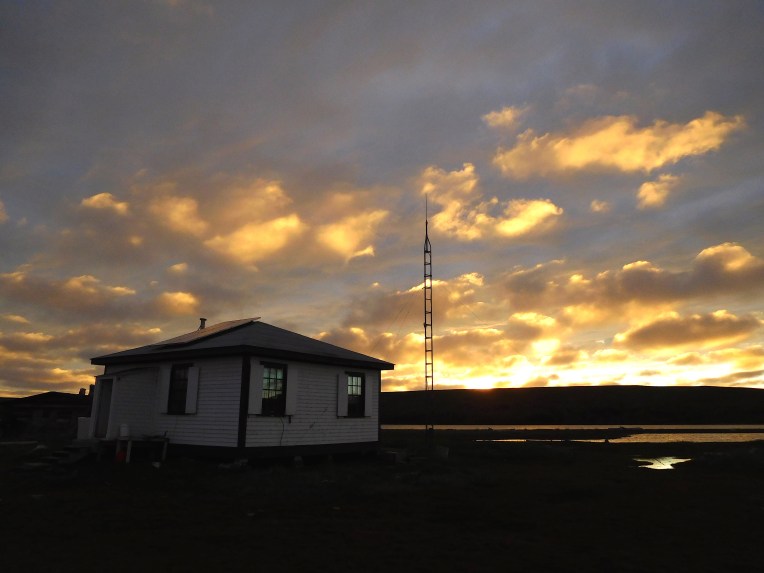
·       Speaking of noises from industry, we have our own man-made noises to contribute! Every evening into the small hours of the morning and every morning until we are ready to head to the field we now add the purr of our little Honda generator into the soundscape mix.  We have moved house from Signals House to the Trappers cabin that doesn’t have solar panels so we are now more reliant on a more ancient sunshine to charge drone batteries, computers and equipment. There is nothing like the peaceful sound of a generator to lull you to sleep in the evening when you are out in a remote Arctic field site.

DSCN0771
The peaceful sound of a generator in the evening

·       For several weeks now the sound that accompanies you on less-than-super-windy day – particularly on the hottest day of the year – is the whine of mosquitos.  Now that we are approaching peak biomass and summer is in full swing it can actually be pretty hot out, and the tundra can feel more like the tropics.  And with the warmth come hundreds of mosquitos that have no respect for your personal space. Is it the incessant whine of the cloud of mosquitos in your ears, the fear of hives developing after countless mosquito bites or the thought of perhaps loosing your mind all together out on the tundra that makes this particular sound so hard to handle?  There is a reason we wrote a death metal song with the chorus “Mosquitos die, die, die” last year.

DSCN0625
The incessant whine of the cloud of mosquitos in your ears

·       “Telemetry lost, telemetry recovered”, “Bad HRS”, “Compass error”, “Bad EKF” – have you ever listened to a radio show for so long that you feel like you know the hosts? Well, we have similar feelings towards the person providing the voice over for the software we are using to plan our drone flights – Mission Planner. Though the software sometimes delivers bad news, it is nice to have that sense of familiarity with the beeps and constant (but not always helpful) updates. There is a lot of uncertainty in Arctic fieldwork and there is little we can predict in advance, but it’s good to know that whatever happens, the Mission Planner lady will be there to tell you about the state of the telemetry. But if only she could tell you not only what is “bad”, but how to fix it.

DSCN0697.jpg
Whatever happens, the Mission Planner lady will be there

We are well over halfway through the field season, and the Arctic soundscapes of Qikiqtaruk continues to surprise us.  All senses are engaged when you are out here on the island – what will tomorrow look like, sound like, even smell like?  We have been here for over a month now without a real shower, perhaps we can write a post about the smellscapes of Qikiqtaruk next!

By Gergana & Isla

The hottest day of the year (and the epic storm that followed)

Imagine yourself alone in the tundra.

But imagine it isn’t quite as cold as you might think.

DSCN0747.jpg
Baking in the tundra sun

The sweat is dripping down your back, the whine of mosquitos is incessant in your ears.  As you gasp for air while climbing the hill with your heavy backpack on, you just suck in the mosquito netting wrapped around your head.  DEET coats your skin with a shiny plastic-dissolving sheen as polymer bonds around you are destabilized and carcinogens seep into you through your skin.  This is the hottest day of the year on Qikiqtaruk.

Tough decisions have to be made on days like this – none more so that the perfect balance between having enough layers to avoid mosquito bites, but not so many as to boil in the humid Arctic heat. There came a point when the heat brought us to a naïve sense of bravery – the layers of clothing were coming off! Out of the frying pan, so to speak, and into the fire of mosquito bites and the eternal itching.

Flying drones in such hot weather brings its own challenges, too – we have to protect our reflectance panels from mosquitos (squished or alive), and avoid exposing too much skin when piloting during take-off, landing and general drone prep. If even the tip of your nose is exposed it will get bitten, and that can break your much need concentration.

To help us through the heat, we turned to a spin-off version of a popular Arctic fieldwork game. Usually one would play “warm thoughts”, where we all take turns trying to imagine the warmest of scenarios to help us battle the cold.  On the hottest day of the year warm thoughts were in no shortage, so “cold thoughts” it was! From turquoise mountain creeks in New Zealand, sea breezes back at Pauline Cove and several flavours of ice cream, our imagination took us on a refreshingly cold journey and soon enough we were back to camp where we could cool down for real thanks to a quick dip in the Arctic Ocean.

On the following day, we were well prepared, for the instead of losing layers we had to start putting on more and more clothing: the skies were darkening, the wind was picking up, and a menacing sheet of dense fog was moving towards us. A storm was on the way!

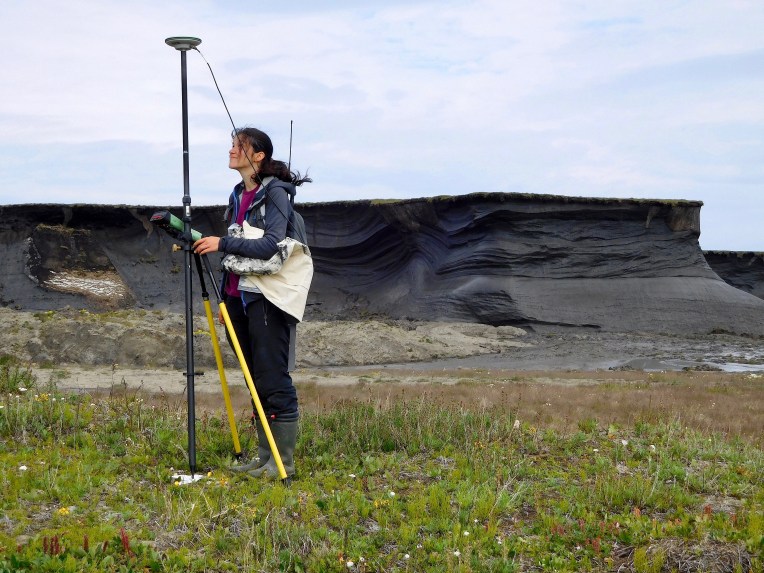
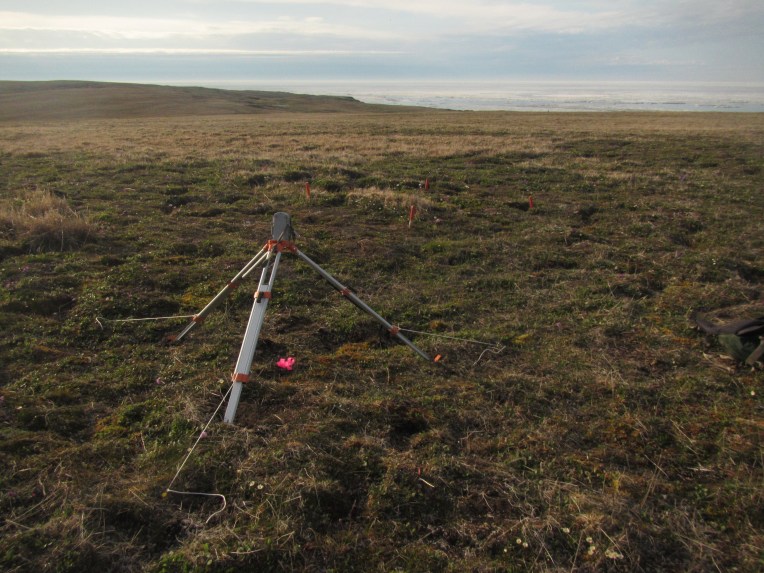
After getting all set up and ready to fly, the weather grounded our drone flights – no data drone collection, sigh! So, we turned to collecting the precise locations of our ground control markers and deploying our new large and multispectral-approved markers we had made in Inuvik earlier on. As the dark clouds approached, we put on full waterproof clothing in anticipation of the rain, and went on what felt like a pretty epic journey from marker to marker. We could hear thunder in the distance and soon enough heavy raindrops were splashing off the screen of the GNSS equipment. What were once little creeks of sediment water making their way from the slump to the ocean now looked like quick streams gaining more and more power as the storm intensified.

DSCN1741.jpg
The oncoming storm

It was a pretty “majestical” scene (as they say in the New Zealand movie “Hunt for the Wilderpeople” – guess what we watched later that night…) to be GNSSing during an oncoming storm, made all the more atmospheric by our songs about rain and thunder. Soon enough though the storm was becoming too strong, so we headed back to shore by doing what felt more like mud skiing than walking in the quickly liquefying slump floor. Thanks to the research crew from the Alfred Wegener Institute, we got a ride back to camp in their trusty Zodiac boat Christine past the new barges and boats camped next to Pauline Cove.

Once at camp, we got out of our muddy boots, dried our wet clothes, warmed ourselves up with tea and a fire in the wood stove and enjoyed a movie night. Outside, the rain continues to pour and the wind continues to howl – hard to imagine that less than a day earlier we were totally overwhelmed by the Arctic heat!

By Gergana and Isla

Things don’t always go to plan

Today’s post is supposed to be about using drones to detect changes in phenology. However, when you’re trying to communicate with remote Arctic islands, things don’t always go to plan.

For those excited about drones, don’t worry. That post will be here soon.

For everyone else, we’re keeping up the phenology theme with TWO fantastic new videos that made it off on the latest plane flight!

DSCN0631.jpg

We have been using phenocams (time-lapse cameras) to track the changing of the seasons at both our sites. Yesterday Izzy wrote about setting up the cameras at our southern site, but today we are focusing on the North, hopping up the length of the UK to Qikiqtaruk – Herschel Island.

Nestled amongst the shrubs, we have phenocams tracking when the willows come to life, capturing the burst of tundra green spectacularly.

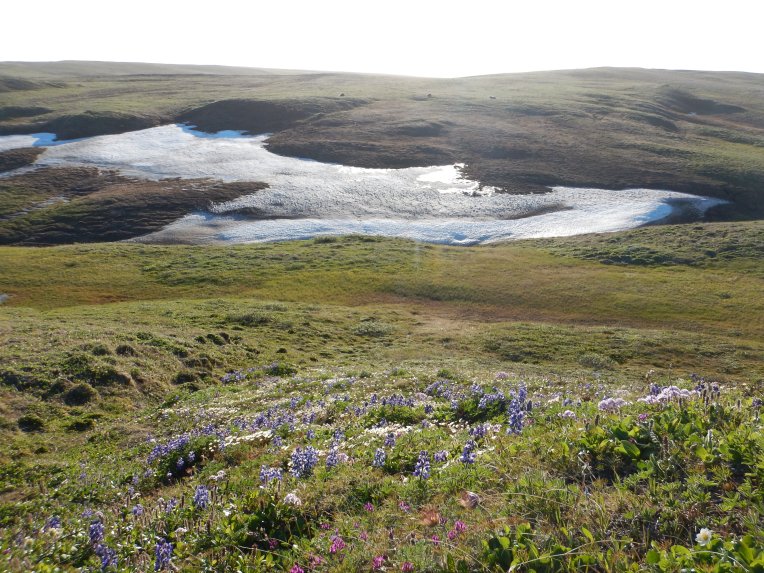
Out on the hilltops the snow melts away and the flowers fight for the midnight sun. And, true to form, things don’t go fully to plan as a musk-ox tries to muscle in on the action.

By Haydn

Shrub surveillance

One of my first tasks as the Kluane Research Assistant was to set up phenocams in the common garden experiment. Phenocams, or more generally time lapse cameras, take pictures every hour to create a video of what has happened over time. Differences in the timing of life events (phenology) – things like when leaves appear or die – are probably one of the biggest drivers of the difference in growth we are seeing between willow populations. With phenocams we can now track this throughout the whole year!

IMG_4470
Posts awaiting phenocams

My first step was to unbox them, which, I have to say was the most time consuming! I was to put up 12 cameras around the garden to monitor certain plots, with another one going to be put in a tree to get an aerial view.

pasted-image-18

After all was unboxed, it was time for the set-up. The instructions were very clear and allowed for the cameras to be customized to our liking. I inputted the time and date and chose the name for each camera. This information will be displayed at the bottom of each picture when the whole video comes together. Being able to name each camera makes it very easy to differentiate between each camera, especially when we have so many! 

Once the set-ups for all cameras was complete, I headed over to the common garden to put them up. Team Drone, who stopped in Kluane earlier this summer, thankfully put up the posts where I was to attach the cameras. At first I wasn’t too sure how I’d be able to set them up but thankfully each camera came with a connecting band and clasp that I found was long and strong enough to attach each camera securely. The outcome looks pretty good and hopefully the final resulting images will too!

pasted-image-12.jpeg
Shrubs under 24 hour surveillance

By Izzy

Our phenocams were purchased thanks to a Dudley Stamp Memorial Award from the Royal Geographical Society (with IBG).

Phenology Today

Phenology Today
A semi-weekly periodical about the reproductive lives and growth of tundra plants on Qikiqtaruk – Herschel Island.

DSC_0145.jpg
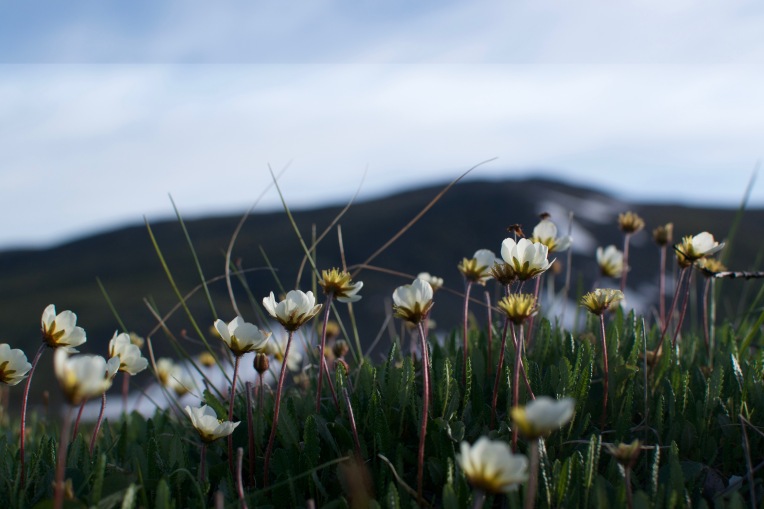
The pretty white petals of Dryas integrifolia or mountain avens.

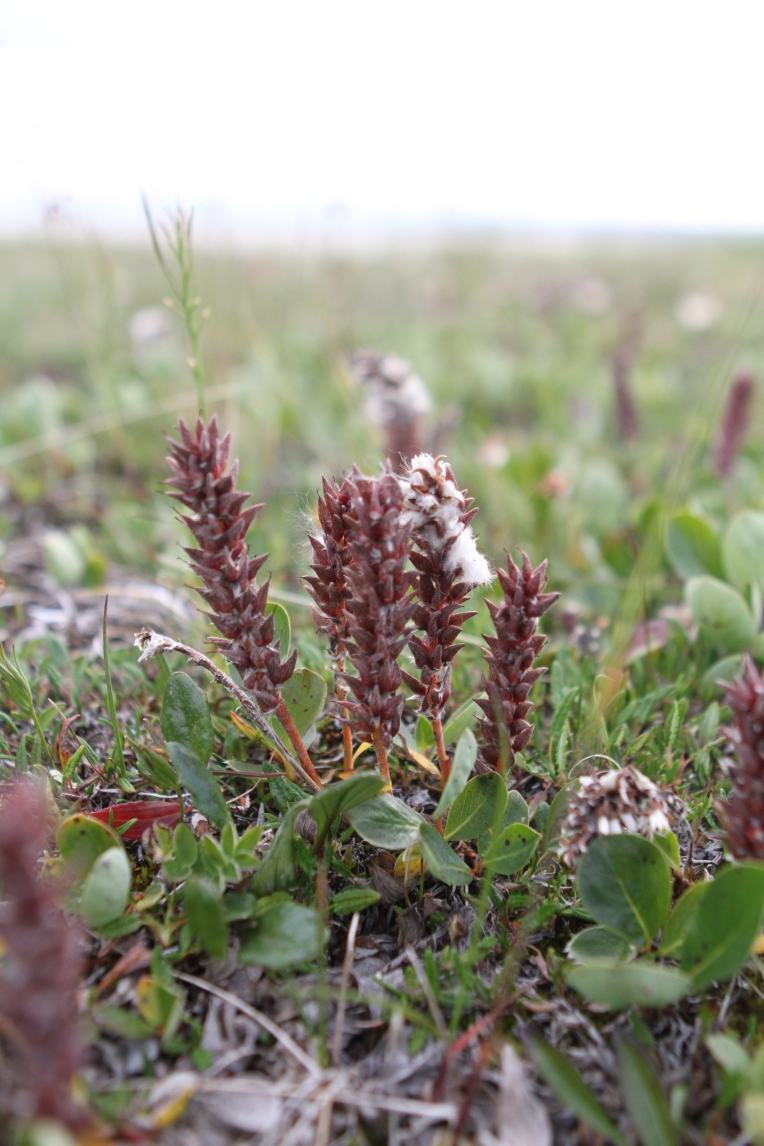
A lone white petal on a Dryas (mountain avens) flower resists today’s wind, keeping its status as the last remaining open flower in our phenology plots. An increasing trend of flower seed heads, made up of intricately twisting filaments, can be observed across all sites. Arctic willows continue to grow, but no seed catkins have open yet to reveal their fluffy seed.

The breeze stirs up the gossip among the grasses: who is reproducing, when and where? What will today bring for phenology on Qikiqtaruk? Providing you with all the latest updates on flower blooming, plant growth, seed dispersal and all things phenology, this is Phenology Today!

On the 5th July 70 Dryas flowers fill a single 1x1m plot. Eleven days later, only 4 remain. Summer comes and goes quickly in the Arctic. By the time this news reaches you, there might not be any white Dryas blossoms left – all replaced by twisting seed heads. No seed heads have unfurled so far, and we have yet to record Dryas seed dispersal. But certainly, with the inevitable passing of time, dispersal will happen.  After all, winter is coming…

DSCN1568
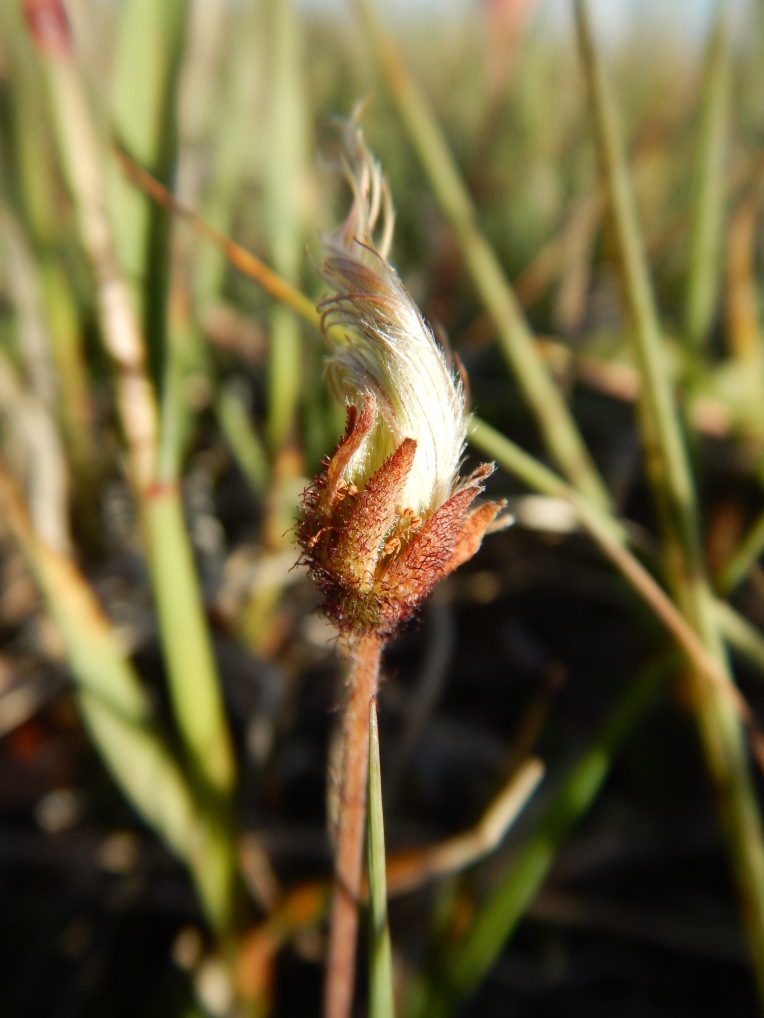
The elegant twisting filaments of Dryas integrifolia or mountain avens.

Isla’s arrival marks the resolution of a month-long quest to quantify the level of fluffiness of Eriophorum (cottongrass) flowers. Precisely when does fluffiness start to decrease? It will signify the end, the end of the flowering period and beginning of seed dispersal. Gergana and Isla have visited all phenology plots, and in a shocking twist of events, we now report that some flowers are fluffier than initially perceived by Gergana. More seed dispersal is bound to happen soon. Until then, we shall be standing by continuing to measure leaf length, waiting for the incessant winds to start carrying off Eriophorum seeds.

Eriophorum
The fluffy flowers of Eriophorum vaginatum also known as cottongrass.

How high will the grass species, Arctagrostis latifolia, grow? We visit twice a week, reveal ing a whooping maximum height of 43.1cm so far this year! That’s tall!  There is pollen visible on some flowers, but for now grass seed dispersal seems to be a distant future that we can only but imagine.

Around this time last year Team Shrub was wishing upon willow flowers to bring good weather to both blow away the mosquitos and hasten the arrival of the second half of our crew. Today, very few willow catkins have released their fluffy seeds into the wind in the phenology plots, hindering wish making. The willows are still steadily growing though, surprising us with larger and larger lengths of new stem growth.  How much will they grow this year? Only time can tell.

IMG_6069
The sturdy Salix arctica (arctic willow) flower dispersing seeds.

Thanks to a team effort in eating small pots of yoghurts, we have successfully manufactured new radiation shields for the iButtons on the phenology plots. What can temperature sensors, ground observations and drones tell us about phenological changes? Check out the ShrubTundra project to find out more.

This is Team Drone reporting for Phenology Today from Qikiqtaruk – Herschel Island. And remember, you heard it here first.

By Gergana and Isla

The turning of the seasons

It’s a hot day. The sun is beating down on the damp ground, freshly cleared of melted snow, and beneath the wet surface the ice begins to retreat.

Nothing too unusual, except that it’s the middle of April, and our field site is an island off the Arctic coast of Canada. Thirty years or so previously things would still have been buried under a thick blanket of winter snow, but as the Arctic heats up, spring is advancing.

DSCN4367.JPG
Springtime in the great white north

One of the big questions we are trying to answer is how an earlier spring alters tundra plants. Are they flowering earlier? Does that mean growing seasons are longer? What about different species, do some do better than others? Are there knock-on effects for pollinators, birds, caribou? Can we predict how things will change in the future?

All big questions, all with big consequences for the shape and colour, the sights and smells, the ebb and flow of life for plants, animals and people alike in these cold northern lands. We are faced with one big problem though: come the spring, there’s no-one yet around to measure anything.

But, to butcher a quote, we have a cunning plan. Three, in fact.

1. Eyes in the sky

While we may still be enjoying the cherry blossom on the Meadows and the blustery showers blowing in from the North Sea in April, our field sites are still being watched from above. Satellites give us a great deal of information, all year round, that we can use to track the timing of life (phenology) across the Arctic.

QHI 2017-07-07 TERRA True Colour Composite
Qikiqtaruk locked up in sea ice this spring

One approach is to use the ‘normalised difference vegetation index’ (or NDVI for short) to measure the ‘greenness’ of the landscape as the spring unfolds. That works well enough, but the resolution is coarse, and clouds are causing a lot of trouble (no data) particularly in the cloudy summers of the Arctic.

Part of our research aims to link satellite data with ground-based observations. We do this using drones to collect high-resolution imagery and NDVI measurements at the landscape level: ‘bridging the gap’ between coarse resolution images from space, and very detailed monitoring data from small-scale vegetation plots. This way we get a much better understanding of what is going on when we’re not at our field sites, and at all the other places around the Arctic we will never get the chance to visit.

Will_flying_drone
Bridging the gap

2. Boots on the ground

One of our local breweries has recently started a series called ‘Advancement Through Collaboration‘, teaming up all sorts of different groups to create something new. We try to take the same approach to our own science, whether it is sharing data and ideas with other Arctic researchers around the world, or creating artwork out of shrub rings.

When it comes to phenology, we are incredibly lucky to be able to collaborate with Yukon Parks rangers on Qikiqtaruk – folks who not only welcome us to their lands each summer, but provide insight into the changes in the tundra in ways we never could. Three times each week from late April to early September, every year since 2001, the rangers make the half an hour hike up to sets of long-term monitoring plots to record life stages in three tundra species. They diligently record when their first leaves appear, when they flower, and when they die. Overall, this is one of the longest continuous phenology monitoring datasets in the tundra!

SAB-6079
Checking up on the long-term phenology plots with Ricky-Joe and Sam

With data like this, we can track how plants are responding to change in much more detail. We can also compare different species: are there winners and losers? And we have the data to link things across scale: the information to build the bridge up from individual plants to the whole biome.

DSC_4746.jpg
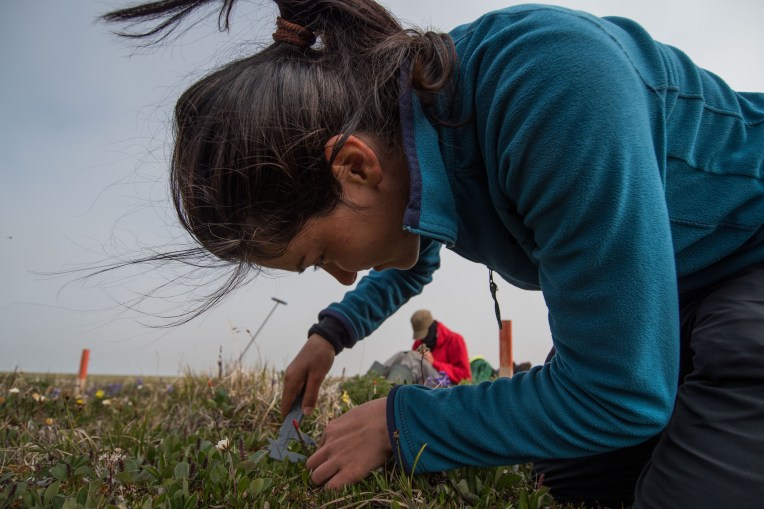
Gergana and Will collecting detailed growth and phenology measurements

3. Fly on the wall

It’s never going to pull in the TV audiences of Big Brother, but a bunch of 24 hour cameras trained on Arctic plants really floats our boat. Last year we installed a couple of phenocams – basically time-lapse cameras – to track in more detail how plant communities are changing over the growing season.

This year we were fortunate enough to secure some additional funding from the Royal Geographical Society (with IBG) to expand the project. Hugely exciting for us, we will now be able to track vegetation communities across the island, scaling up our findings from the long-term monitoring plots to the landscape scale.

IMG_1411
A phenocam standing tall above the Arctic tundra on Qikiqtaruk

Even more exciting, we are using the cameras to link differences in phenology across the Arctic through our ‘common garden’ experiment in the south of the Yukon. Here we have planted willows collected from across the Yukon to examine whether different populations will respond to change in different ways. One of the biggest differences we have seen so far is that northern populations seem to stick to their ‘home’ growing season: they leaf out late and senesce early compared to southern individuals of the same species growing just 50cm away.

Does the difference in senescence timing explain the difference in growth in these two willows? Willows are of the same species, collected as cuttings in 2013 from a southern tundra site (left) and northern tundra site (right).

At present we can only track phenology changes in the garden thanks to input from more wonderful collaborators – Sian Williams and the folks from Icefield Discovery working down at Kluane Lake. With our new phenocams we can for the first time track differences in phenology over the whole year, not just in our experiment, but at the sites where willows were collected! We think this is the last piece in the puzzle to be able to answer exactly what is going on – whether willows have responded to new conditions, or whether their genes mean that old habits die hard. Our phenocams in the common garden are now installed, and we’ll be installing the remainder at our remote field sites as soon as the summer expeditions get underway. Watch this space!

By Haydn

Haydn is the recipient of a Dudley Stamp Memorial Award on behalf of the Royal Geographical Society (with IBG).

Phenology Week

This week on Team Shrub we are focusing entirely on one aspect of change in the tundra: phenology.

DSC_4746

What is phenology?

Phenology (or “fun-ology” as my wife calls it) is, to put it simply, when things happen. It is the timing of life events.

As a PhD student, gazing out of the office window instead of writing up my thesis, phenology is what keeps the view interesting – when the leaves appear in spring, when the birds hatch, when the berries appear on my walk home, and when the trees turn auburn to mark the end of the year.

As a tundra ecologist, phenology offers a way to track the huge changes we are seeing as the Arctic warms. We track when things happen in our study ecosystems – when the snow melts, the leaf buds burst, the flowers appear, and the leaves begin to turn.

DSCN1900

Why phenology?

Monitoring the timing of life gives us a great deal of information that can shed light on how the tundra is changing, how fast, and what it might look like in the future.

For example, we can use phenology to see whether we are seeing an earlier spring, or longer growing seasons for tundra plants.

We can look at if plants can keep up with earlier snowmelt – and if the birds and the bees can keep up with the plants.

We can look at winners and losers: if some species respond to changes while others don’t, and if that tells us anything about community change in the tundra.

And we can look a little deeper still at whether phenology is somehow ingrained, tied to the genetics of an individual or a species, or whether it can respond to the rapid environmental changes going on in the Arctic.

What’s in store this week?

This week we have five posts focusing on the different ways we measure and monitor phenology at our field sites.

So settle in, reach for the popcorn, and get ready for a wild, wild week of science.

Haydn