
Isla and Gergana wrote a post on the concept of ‘data presents’ for dynamic ecology. Check out the post and comments here:
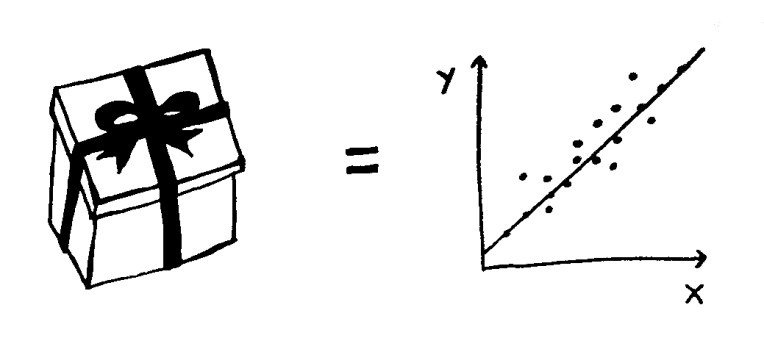
Isla and Gergana wrote a post on the concept of ‘data presents’ for dynamic ecology. Check out the post and comments here:
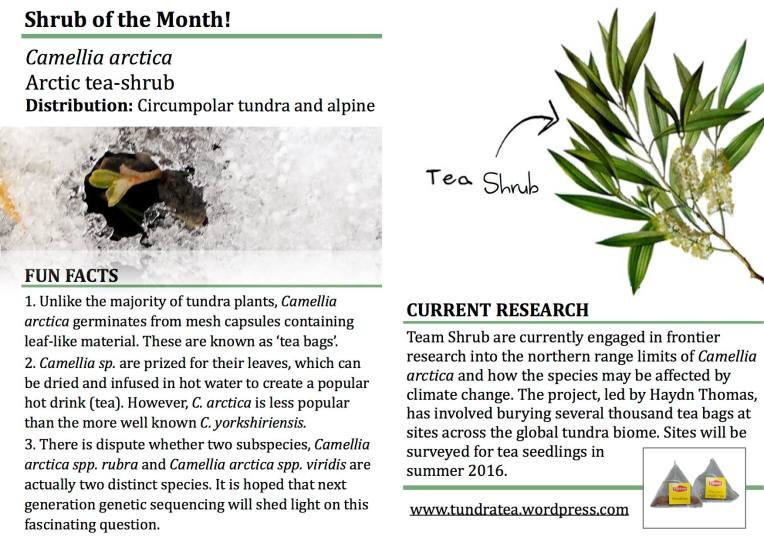
Haydn had fun with our shrub of the month for April fools day…
Check out Sandra’s awesome post on the Royal Botanic Gardens Edinburgh webpage:
Reading between the rings: detecting competition between tundra shrubs using dendrochronology
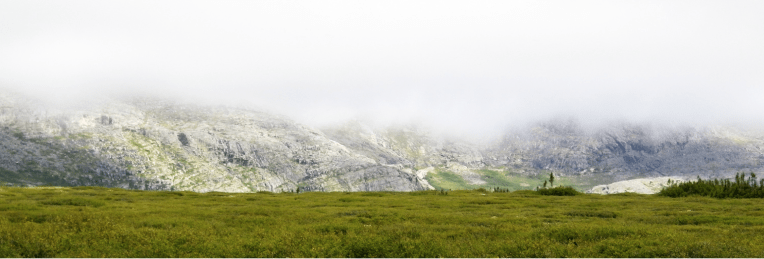
Typical of Sandra’s work, it is beautifully written with gorgeous photos accompanying the excellently explained science.
by Isla
This week for TeamShrub Lab meeting we did Isla’s intro workshop to piping in R. I discovered piping nearly a year ago and it has changed my coding life! No more nested loops for me, well maybe not quite as many. I am still on my way to learning all the functionality of dplyr, but in case you haven’t discovered the wonders of piping and dplyr here are a few useful links.
Intro to dplyr
https://cran.rstudio.com/web/packages/dplyr/vignettes/introduction.html
Here is a blog on the concept of piping in R
http://www.r-statistics.com/2014/08/simpler-r-coding-with-pipes-the-present-and-future-of-the-magrittr-package/
Here are a couple of blogs that put piping and dplyr together!
http://seananderson.ca/2014/09/13/dplyr-intro.html
http://neondataskills.org/R/GREPL-Filter-Piping-in-DPLYR-Using-R/
And finally here is Haydn’s piping joke converted to dplyr for Robbie Burns Day.
library(dplyr)
RobbieBurnsDay <- the haggis %>% do(“in”)
Do you get it? Piping in the haggis!
by Isla
Today Jakob and I joined Tom Wade, head of the Airborne GeoSciences Facility to teach about drone ecology (or should it be “dronecology”) – the science of using drones to test ecological questions – in Caroline Nichol’s Current Issues course.

Tom gave a lecture on the platforms that can be used for airborne GeoSciences including planes and drones (manned and unmanned systems) of different sizes and the data that they can collect. Then Jakob and I gave a lecture on the developing field of drone ecology and what ecological research questions drones can help answer with a focus on our Arctic drone research on what is driving the observed tundra greening patterns.
Then after watching a couple of drone videos of Shrubcopter in action and fixed-wing drones being flown in Greenland to understand plant phenogy, drones finding chimpanzee nests in African forests (Check out Conservation Drones for more info), we had a brainstorm and pitch session for the best drone ecology research ideas.
The winning ideas were:
Best Scientific Question – Understanding movement patterns of the elephant shrew in relation to predation under the grass canopy using aerial heat-sensing photography or video (RATS project).
Best Conservation Project – Using fixed-wing drones to monitor deforestation using slash and burn techniques and measuring the impacts of this biomass burning on black carbon emissions (“Who Are We?” project).
Best Use of Novel Drone Technology – The amphibious drone for collecting above- and below-the-water-surface imagery of coral reefs to estimate productivity changes over time (Coral Conservation project). – With an additional shout out to the StarFish project that had designed an aquatic drone to pierce invasive starfish as a form of invasive species management!
Then we got to explore the flying of drones using flight simulators, to see how the research drones work in person and to test out flying a toy-size drone for ourselves.

I think students and lecturers alike got enthused by both the fun and scientific potential for the emerging field of drone ecology!
By Isla
We are looking for an enthusiastic postdoctoral researcher to join the TeamShrub research group at the University of Edinburgh to explore tundra greening patterns using drone ecology (a.k.a. UAVs or remotely piloted aircraft systems).
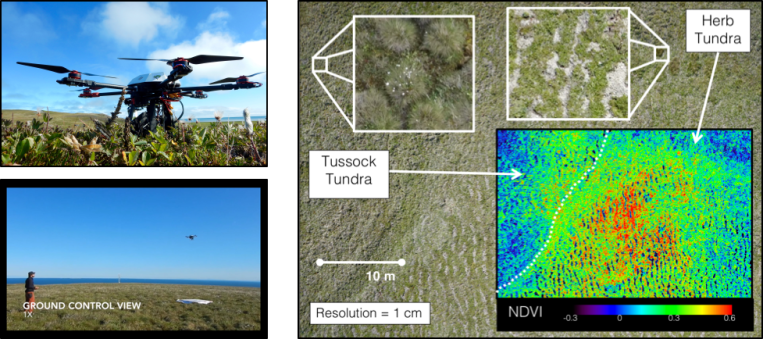
This postdoc position will focus on testing the correspondence between remotely-sensed tundra greening and plot-based measures of tundra vegetation change.
The research will involve the coordination of field data collection in the Canadian Arctic and hierarchical modeling of remotely sensed data and large tundra vegetation change datasets in the programming language R, interpreting results and writing manuscripts.
This postdoc position is part of the Natural Environment Research Council (NERC) funded grant “Climate as a driver of shrub expansion and tundra greening”.
The candidate will be based in the School of GeoSciences at the University of Edinburgh, but also encouraged to engage fully with international collaborators based at institutions across Europe and North America.
This post is full time, fixed term for 24 months and is available from 1st March 2016; or as soon as possible thereafter.
Apply here:
https://www.vacancies.ed.ac.uk/pls/corehrrecruit/erq_jobspec_version_4.jobspec?p_id=035133
For more information contact Isla Myers-Smith.
 Team Shrub