Arctic Change 2017 – Wednesday round-up

IMG_8708.jpg

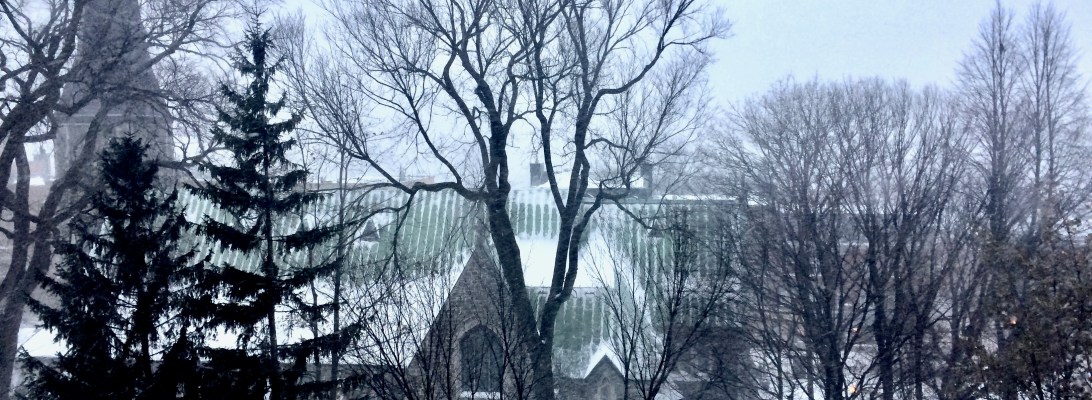
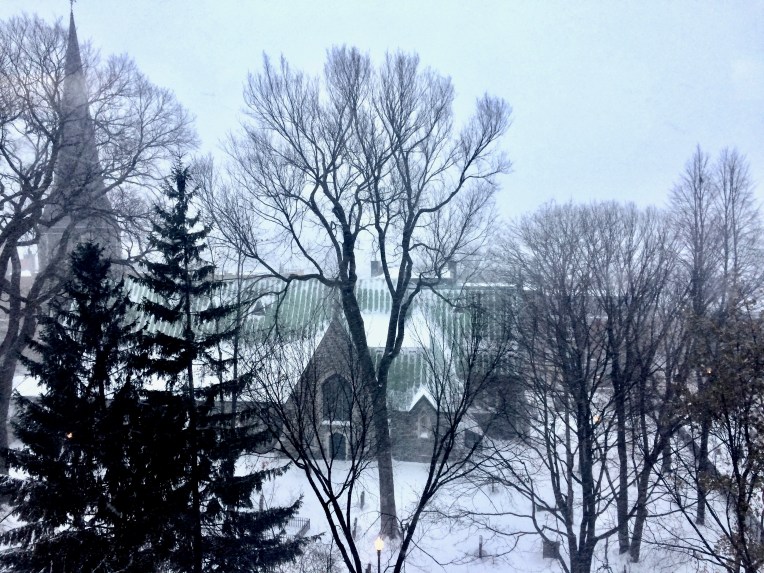
Another day of snow in Quebec City, another day of Arctic conferencing at Arctic Change 2017. Another packed plenary, hearing from Larry Hinzman on how we can and must adapt as not only the climate changes, but many other factors as well. We heard the fascinating, and certainly complex debate around the ownership and use of the northwest passage. Finally, we stood together to celebrate the work of Dr. Michel Allard, winner of this year’s Weston Family Prize for Lifetime Achievement in Northern Research.

Team Shrub was well represented in the first session of Monitoring, Modeling and Predicting Arctic Biodiversity. Isla made a convincing case for detection of various components of vegetation change and their attribution to warming. Jeff then demonstrated the scaling issues we have when going from ground-based to satellite observations – impressing the audience with drone footage at the same time.

In this session we also heard from Paul Grogan of Queens University with a fascinating talk on birch expansion driven by a decrease in herbivory rather than by increased temperatures. Last up was Pascale Ropars (who first taught me the art of digging shrubs up many years ago), presenting a whole-food-web approach to predicting biodiversity change in Northern Québec.

After a delicious lunch (the food here!) which peaked with three helpings of profiteroles, it was time to go back to the second part of the Arctic Biodiversity session. Katriina O’Kane showed us how species move individually rather than as a community during succession at a glacier’s edge. Cory Wallace and Jennifer Baltzer from the Forest Ecology Research Group at Wilfrid-Laurier also took us on a tour of alder shrubs, topographic variation, and the factors controlling black spruce abundance.

Finally, eyes starting to itch and brains hurting from a day packed full of new knowledge, we heard from Caroline Coch on the role of small catchments for dissolved organic carbon inputs, and from Dustin Whalen on how drones are being used to map coastal erosion in the Arctic.

Haydn, Jakob and myself were still on duty by our posters in the evening. Between lively scientific discussions and running into old friends, the two hours flew by and our team set out hungrily in search of poutine. Unfortunately, my insider knowledge of Québec didn’t extend to knowing Ashton’s opening hours, so the door shut in our disappointed faces. We had to turn to (highly satisfying) falafels eaten on the street in -10 degrees C weather to get back to the conference centre in time for the first screening of Breaking Ice, a documentary that took us on the Canadian research ice-breaker the Amundsen.

IMG_8729.jpg

I suspect Haydn, Jakob, Isla and Andy are in various stages of anticipation for their Thursday talks. Good luck all!

By Sandra
Arctic Change 2017 – Tuesday round-up: Blizzards, Biodiversity and Beluga Snot

The second day of Arctic Change 2017 hit town like the snow storm raging outside the Centre des congrès de Québec. Today the main hall was full, packed right to the edges, as we were welcomed by ArcticNet, Laval University and the Inuit Circumpolar Council.

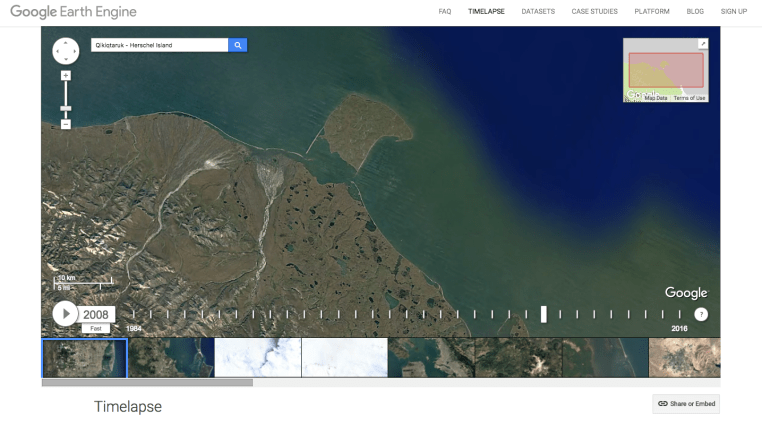
After the welcome and official opening, Raleigh Seamster from Google Earth, and Joel Heath and Lucassie Arragutainaq from ArcticEider/SIKU demonstrated the power of remote sensing and its potential for community based environmental monitoring in the Arctic. The speakers clearly had to battle the inquisitiveness of researchers as hundreds reached straight for their laptops and phones to immediately check out these awesome tools! Louis Frontier, scientific director of ArcticNet, followed with a reminder that cutting carbon emissions remains paramount for tackling all issues around Climate Change. Anyone not from Norway or Paraguay might have left feeling a little bruised, but despite the world being only 5% of the way towards its renewable goals, there was still a sense of optimism. And indeed, the plenary closed with optimism in full swing with a touching short film on the Schools on Board project of the Canadian research icebreaker Amundsen and the potential future leaders of Arctic policy change.

Screen Shot 2017-12-12 at 22.17.15
Google Earth Timelapse, winding back time on Qikiqtaruk – Herschel Island our Arctic research site.

Refreshed after heaps of pastries and coffee, the conference headed into the first topical sessions. Alas, we can barely scratch the surface of the vast array of talks on offer here. Justine Hudson method’s of assessing Hudson’s Bay’s beluga whale stress level using snot samples was much discussed on twitter and made an engaging talk with videos of curious belugas “donating” their snot to science. Memorable also were Benjamin Lange’s findings that multiyear sea-ice supports much more algae life than first year ice. We on Team Shrub appreciated hearing about Zoe Panchen’s research on tundra plant phenology showing that microclimate matters more than latitude or elevation for flowering in the Canadian High Arctic.  And Team Shrub was also a fan of Esther Frei’s work on plant trait change over time and her beautiful figures!  We also really liked pondering future fox housing using Florence Poulin’s new index of Arctic fox den vulnerability.

The scientific part of the day concluded with the first poster session, with legions of well designed posters (every conference should have such a great reward for poster awesomeness!) and an astonishing amount of great science. Ruminating in front of our fake log fire we remember Jeffery Saarela and Paul Sokoloff’s enthusiastic poster presentation – working with the Canadian’s Museum of Nature, they are sampling plants all across the Arctic islands to improve our understanding of high Arctic biodiversity. Also sticking out was Sarah Shakil’s poster on chemical composition of slump discharge on the Peal Plateau in the Yukon and Christine Anderson’s beautiful poster about her exciting proposed PhD research on shorebirds in a changing Arctic.

Now we are all tired from a long day of sciencing, talking at our posters, braving the still raging blizzard and running away from snow-spitting Quebecois snow ploughs on our way home to the apartment. After two exciting days, we’re looking forward the great Arctic science to come and take up Allen Pope’s challenge to kick him off the top of the twitter leader board. So keep your twitter ears pricked and see you tomorrow!


by Jakob and Team Shrub

p.s. You can also catch up here on what’s happening across the pond at the the Ecology Across Borders conference in Ghent.