‘Twas the week before Christmas, when all through the planet,
Not a university was stirring, not even a hamlet;The posters were hung on the poster boards with care,
In hopes that ecologists soon would be there;The PhD students were nestled all snug in their beds;
While visions of statistical models danced in their heads;‘Twas the BES Conference, at the end of the year,
This was the conference to bring ecological cheer,What a week it was – I can tell from the posts,
And for those of us who missed it, we feel it the most,But the ecology remains, for those that are keen,
In this humble blog post, for all to be seen.And I hear you exclaim, ere I sit down to write —
Isla adapts a classic poem
“Happy holidays to all, and to all a good night!”
The British Ecological Society Conference has wrapped in Edinburgh and Team Shrub (if not me) was there! Here are some of the photos of the action so that you too can join from afar, if you didn’t make it to BES 2022 yourself.
Team Shrub attended BES in style this year with presentations by postdoc Mariana García Criado and PhD student Joseph Everest and former lab member Schmidt Fellow Gergana Daskalova and posters by PhD student Elise Gallois and MSc by research students Erica Zaja and Jiri Subrt. Here is a rundown of the different Team Shrub contributions, so you can catch up.
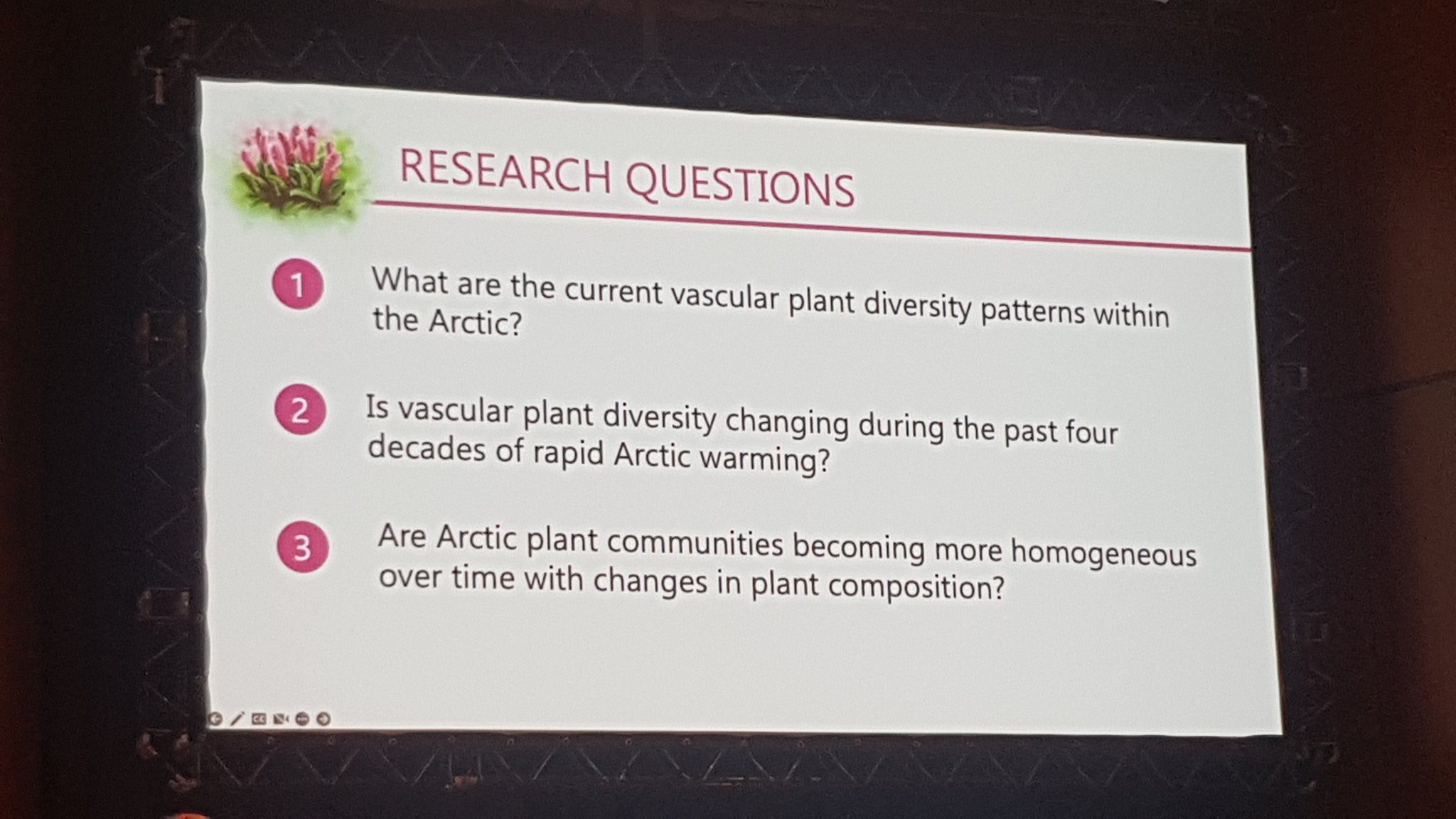
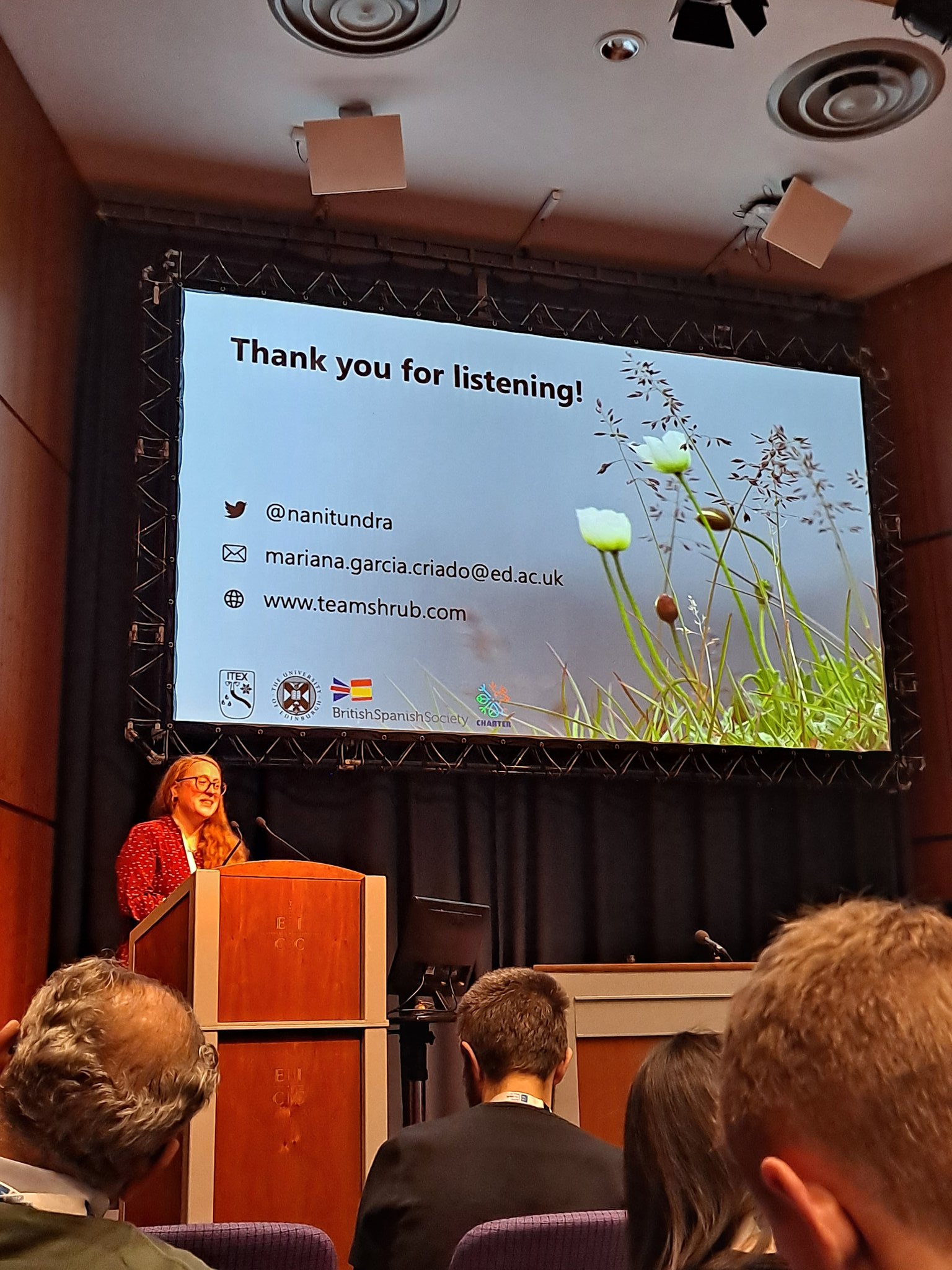
‘Plant diversity dynamics across temporal and spatial scales in a warming Arctic‘ by Mariana García Criado
Co-authors: Mariana García Criado (University of Edinburgh), Isla Myers-Smith (University of Edinburgh), Anne Bjorkman (University of Gothenburg), Sarah Elmendorf (University of Colorado Boulder), Signe Normand (Aarhus University)
The Arctic is experiencing unprecedented warming rates, and plant communities are responding through abundance, phenology and distribution shifts. However, biodiversity spatial patterns and its direction of change over time remain unquantified. Using a database with 37,452 records of vascular plant composition from 1,327 plots across four decades, we explore how multiple biodiversity axes vary across space and time. We found that Arctic species richness decreases as latitude increases, but overall species richness has not changed over time. Species trajectories were related to climate, with warmer and drier areas experiencing fewer local extinctions. Plant community abundance change was pronounced, and increasing shrub dominance corresponded with extinctions and reduced diversity. However, Arctic plant communities have not homogenized, and are more resilient when they have a diverse and even composition. Overall, our results suggest limited biodiversity change, but indicate early signs of directional biotic changes that could result in Arctic biodiversity tipping points.



‘Paws for thought: Impact of dog yards on tundra greening in Svalbard‘ by Elise Gallois
Co-authors: Elise Gallois (University of Edinburgh), Jesamine Bartlett (NINA), Kristine Bakke Westergaard (NTNU), Logan Berner (Northern Arizona University)
Dog-sledding in High Arctic Svalbard is a key tourist attraction, and pony trekking and the keeping of livestock is also in practice in the central areas of the archipelago. Animal husbandry waste disposal practises – particularly those involving the disposal of animal faeces – hugely enrich soils with excess nutrients. Here, we utilise NDVI (normalised difference vegetation index) analysis to explore the impact of both abandoned and contemporary animal husbandry on Svalbard’s tundra. We found that while peak-season greenness was increasing across all of our study sites, the greening signal was enhanced at active dog-yards and historic animal husbandry sites. Across sites, the date of tundra greening has shifted earlier, and the date of plant senescence has shifted slightly later between 1986-2021. Our results suggest an immediate positive impact of nutrient enrichment from animal husbandry on tundra productivity, and a lasting impact of nutrient enrichment at abandoned animal husbandry sites.
This poster comes with it’s own Spotify Playlist – check it out and listen along!
https://open.spotify.com/playlist/6Rmq52EPg3JH2JcH3r7RGb

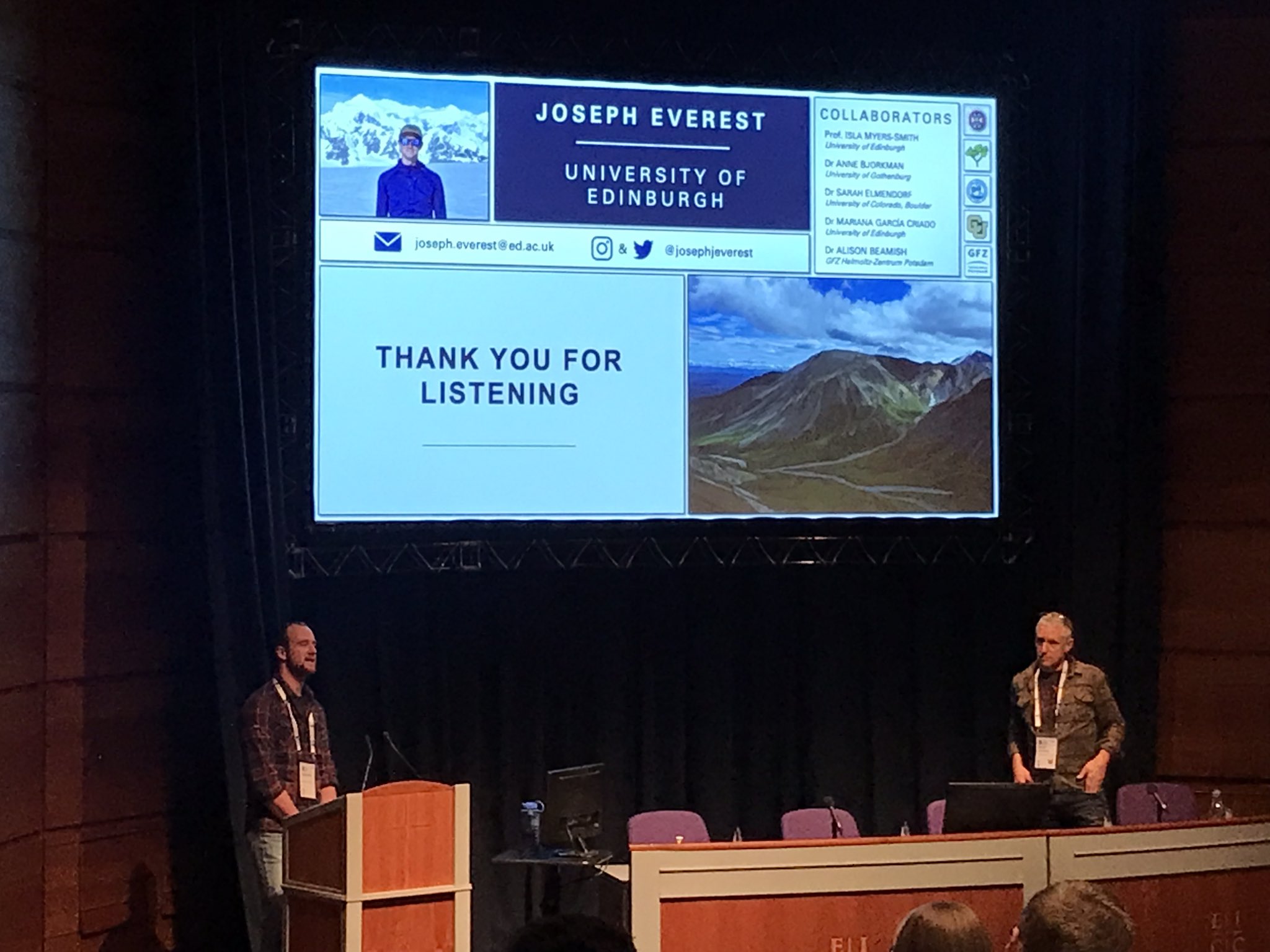
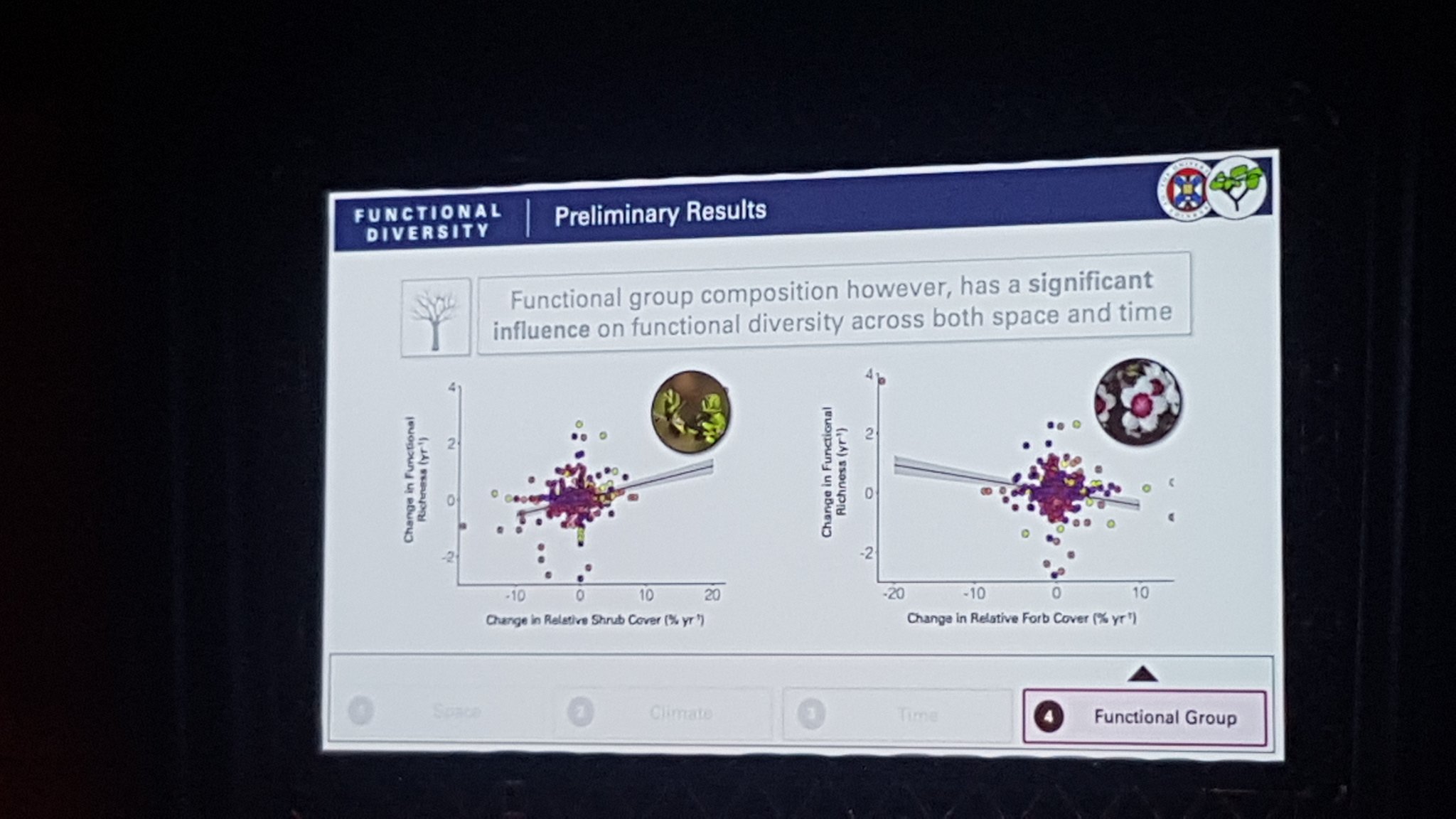
‘Shrubification not climate is the main driver of tundra functional diversity across space and time‘ by Joseph Everest’
Co-authors: Joseph Everest (University of Edinburgh), Isla Myers-Smith (University of Edinburgh), Anne Bjorkman (University of Gothenburg), Sarah Elmendorf (University of Colorado Boulder), Mariana García Criado (University of Edinburgh)
A tundra-wide vegetation regime shift is underway in response to accelerating Arctic warming. Greening and browning, phenological shifts and functional trait change are relatively well documented, however resulting impacts on ecosystem function remain unclear. Functional diversity encompasses the range, variability and evenness of key functional traits and captures responses in tundra processes and ecosystem functions. We analysed biogeographic patterns and change over time in tundra plant functional diversity across sites over decades of change. We found that trends in species richness and its dominant drivers are not mirrored in functional diversity metrics. Instead, spatial and temporal patterns in plant functional diversity are controlled by the dominance of different functional groups within plots and the variation in key functional traits, such as plant height. Our results suggest that continued tundra compositional change (e.g., shrubification) with warming will drive changes to ecosystem functions despite slower rates of change in tundra plant biodiversity.




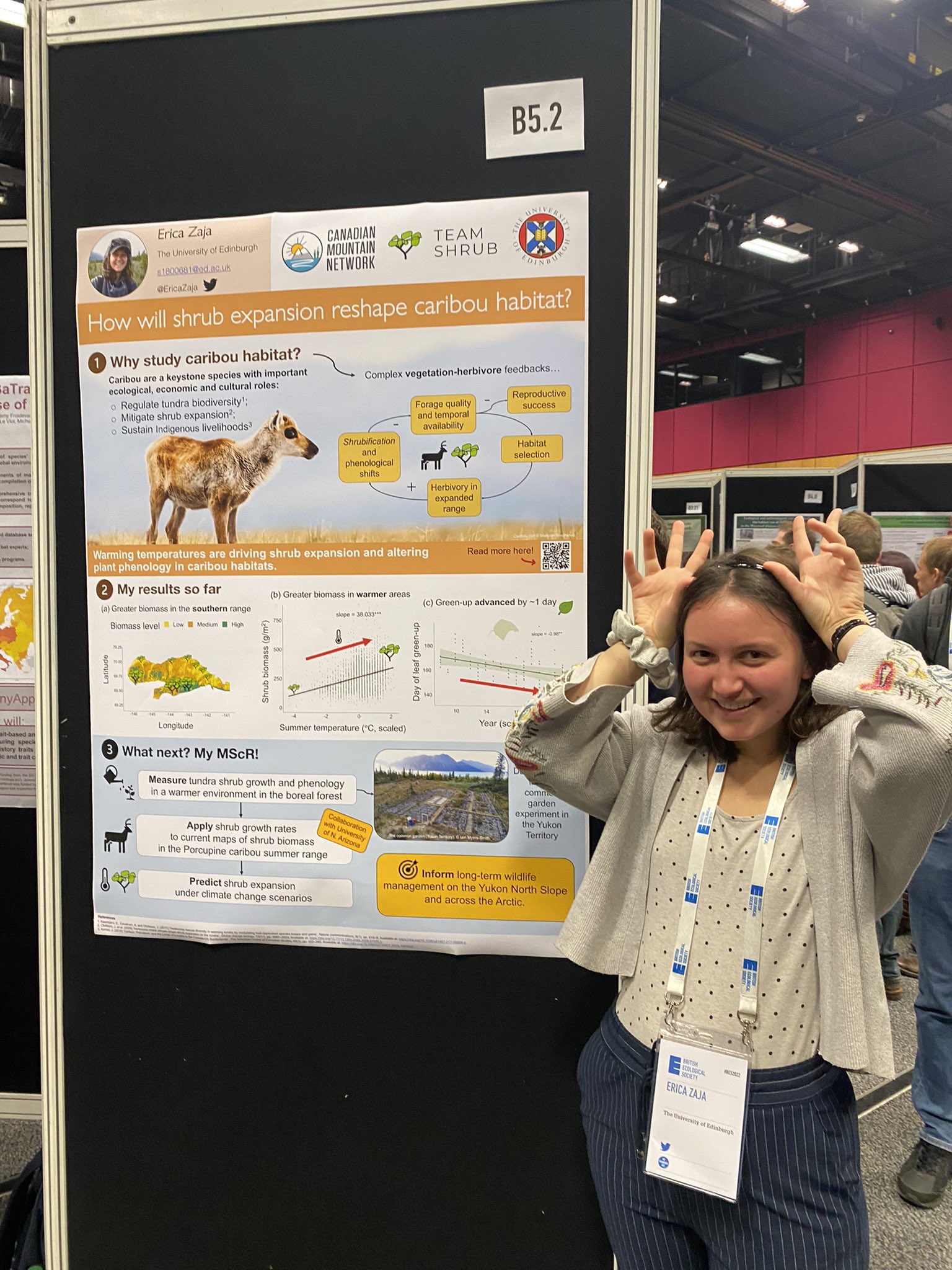
‘How will shrub expansion reshape caribou habitat?’ by Erica Zaja
Co-authors: Erica Zaja (University of Edinburgh), Isla Myers-Smith (University of Edinburgh), Mariana García Criado (University of Edinburgh)
The Arctic is warming three to four times faster than the global average, altering vegetation communities and the timing of lifecycle events. Shrubs are encroaching into wildlife habitats, altering forage quantity, quality, and temporal availability. I used linear models to investigate whether shrub biomass was related to summer temperature and precipitation, and linear mixed effects models to study the change in timing of shrub leaf emergence in the Porcupine Caribou Herd’s (PCH) (Rangifer tarandus granti) Alaskan summer range. I showed that shrub biomass was greater in warmer and wetter areas, and that the timing of leaf emergence advanced in one out of four sites within the range. These findings suggest that climate change might further increase shrub encroachment and advance the timing of shrub green-up within the caribou summer range. This study can inform caribou habitat conservation and contribute to the protection of Indigenous livelihoods depending on the PCH.

‘Human depopulation has stronger impacts on plant biodiversity in lowland versus mountain villages‘ by Gergana Daskalova
Co-authors: Gergana Daskalova (International Institute for Applied Systems Analysis, IIASA), Piero Visconti (International Institute for Applied Systems Analysis, IIASA), Volker Radeloff (University of Wisconsin-Madison), K. Vassilev (Bulgarian Academy of Sciences), B. Genova (Bulgarian Academy of Sciences), M. Nazarov (Bulgarian Academy of Sciences)
Rural populations around the world have nearly halved in the last century, leaving behind abandoned land with unknown consequences for biodiversity. Focusing on Bulgaria, the quickest depopulating country in the world, we quantified plant biodiversity across 120 sites and 30 villages along a human depopulation gradient. In lowland areas, depopulating villages supported higher plant richness than those with increasing human populations. In montane regions, species richness was similar across fully abandoned villages and villages with decreasing or stable human presence. We found lower species richness in villages that had been abandoned further in the past. In both lowlands and mountains, villages with stable human presence had distinct plant species composition from that of depopulating villages. The heterogeneous ecological fingerprint of human depopulation needs to be incorporated in biodiversity scenarios to capture both the benefits and threats that land abandonment poses for biodiversity.
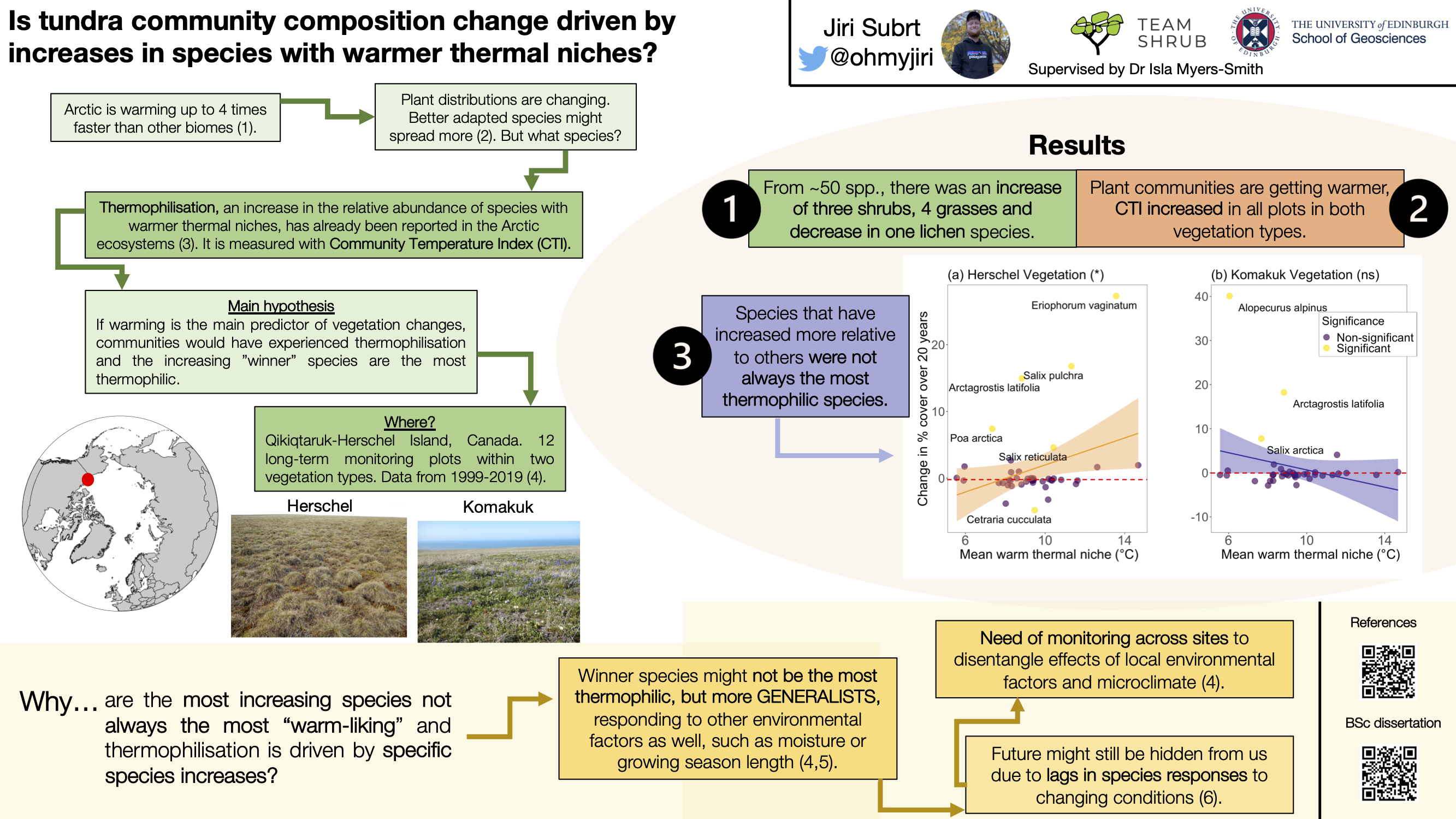
‘Is tundra community composition change driven by increases in species with warmer thermal niches?‘ by Jiri Subrt
Co-authors: Jiri Subrt (University of Edinburgh), Isla Myers-Smith (University of Edinburgh)
Arctic is experiencing rapid warming, impacting vegetation communities. Thermophilisation, the increase of warm-loving species in response to warming was detected across the Arctic. There is heterogeneity in site-specific responses to warming and uncertainty on whether vegetation responds primarily to warming. I studied thermophilisation and vegetation changes on Qikiqtaruk Island, Canada. I analysed vegetation composition data and calculated how plant community temperatures changed from 1999 to 2019. My results indicate that plant communities exhibit a signal of vegetation cover change in response to warming and species that have increased more relative to others are not always the most thermophilic. My findings suggest that warming is likely not the only predictor of vegetation changes in tundra. My findings also highlight that vegetation responses are heterogeneous, influenced by local environmental factors, and may experience lags. This study emphasises the importance of long-term monitoring of the Arctic to predict the response of vegetation to warming.


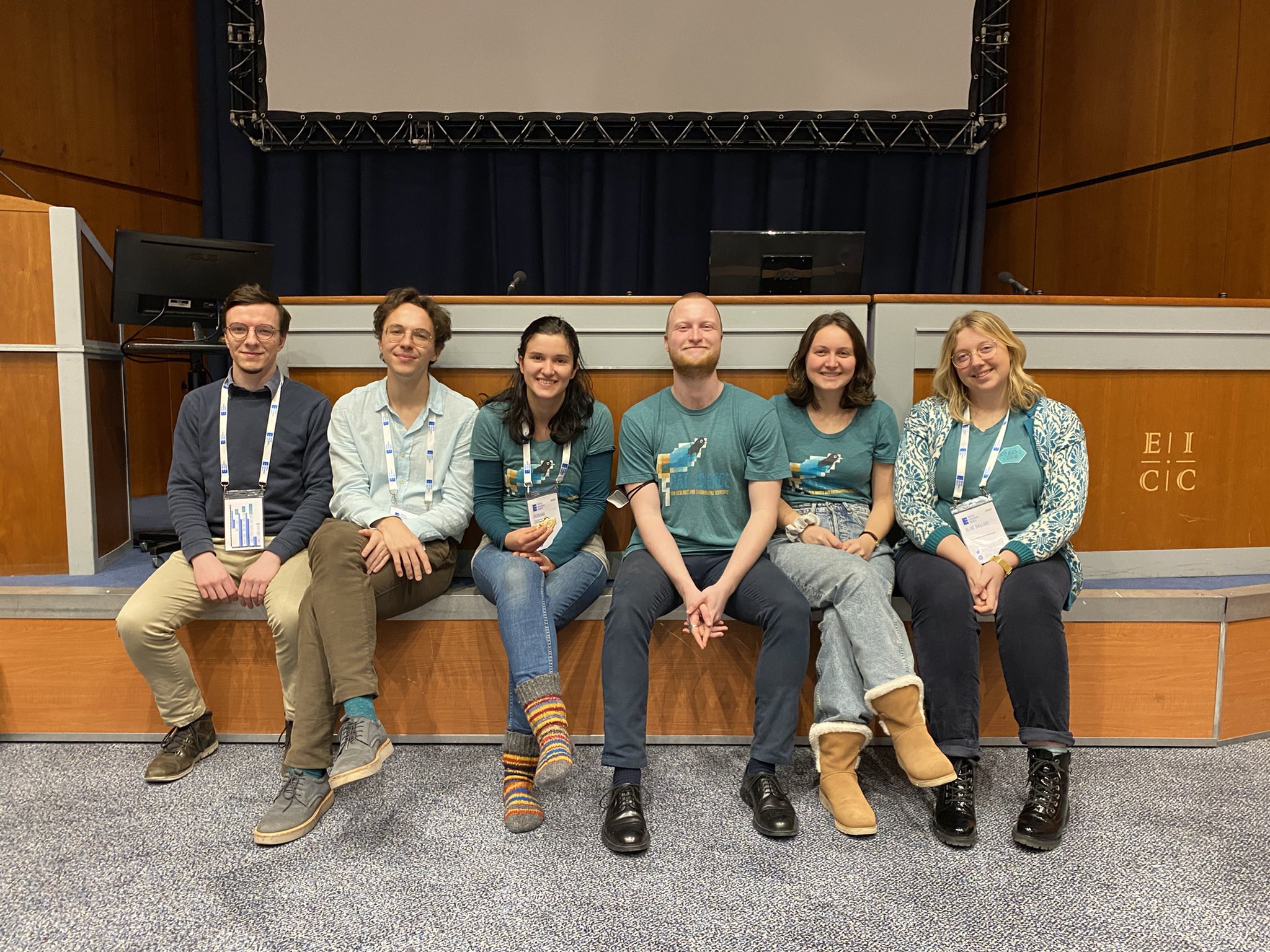
Storytelling with Data – Data visualisation meets graphic design to tell scientific stories
Members of Team Shrub lead a Coding Club workshop on Data Visualisation. It looks like it was a very successful workshop, though the team does look exhausted by the end!
Our workshop is for anyone wanting to amplify their data visualisation skills to tell powerful scientific stories. Through individual and team activities and tutorials, we will take participants from figure conceptualisation and graphic design to the weaving of stories and the R code to make it all happen.
If you want to complete this workshop in your own time, you can follow along at the Coding Club website:
https://ourcodingclub.github.io/tutorials/dataviz-storytelling/





Team Shrub also met up with our ArcticHub colleagues Jonathan von Oppen from Aarhus University and Laura Turner from the University of Nottingham.

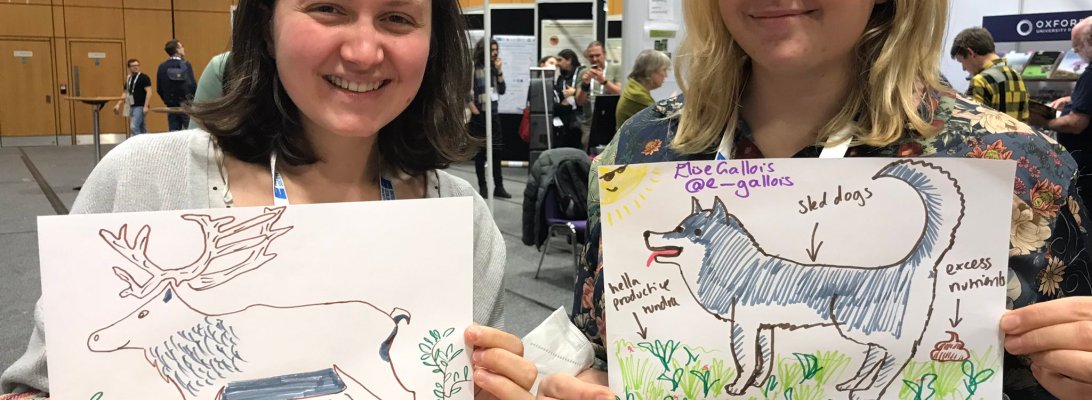
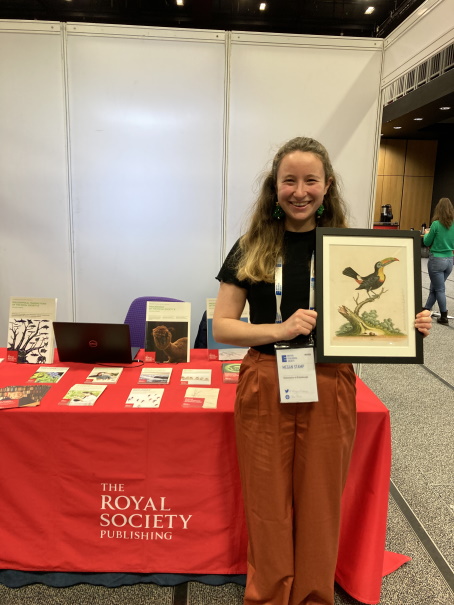
Team Shrub co-supervised PhD student Megan Stamp won a Tucan Print from the Royal Society publishing! Erica and Elise drew their research and are now planning on switching careers to become visual artists.
Shenanigans seem to have been had by all across the week. I wish I’d been there! Here’s to a relaxing holidays and to future conferences in 2023.


Words by Isla and photos by all of the peeps on Twitter!




 Team Shrub